How Long It Takes
A straight roller swap on a standard double door, ten rollers, hinges checked and track cleaned, is usually a one-visit job. Houses in Seabrook mostly went up around 1991, which means the original hardware is steel rollers on steel track, the setup that was standard on sectional doors at that time.
Flattened steel wheels
Thirty years on, those steel wheels have usually flattened a little on one side, which is what makes the door grind or stutter about two feet off the floor.
Ten-roller swap takes longer
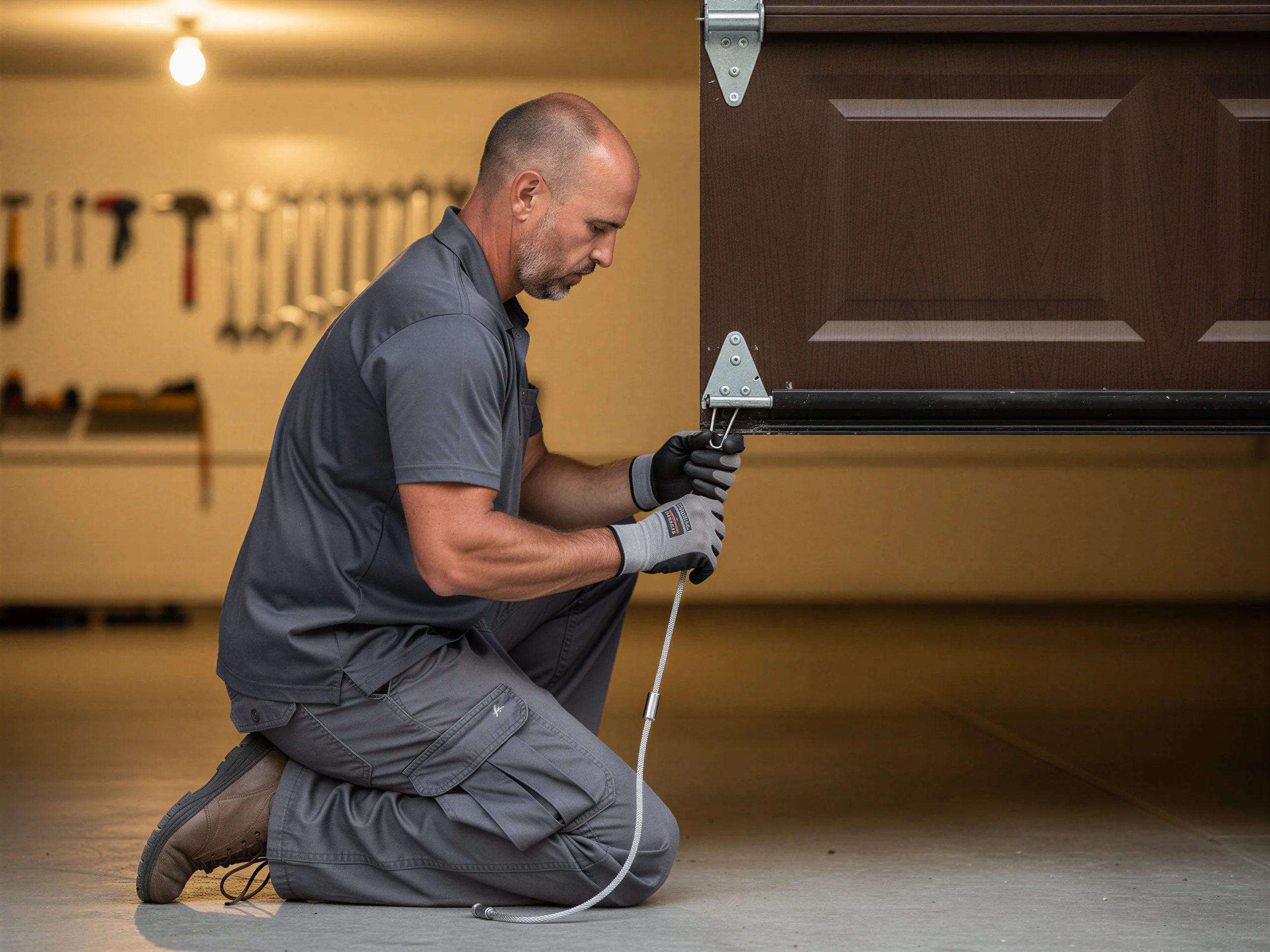
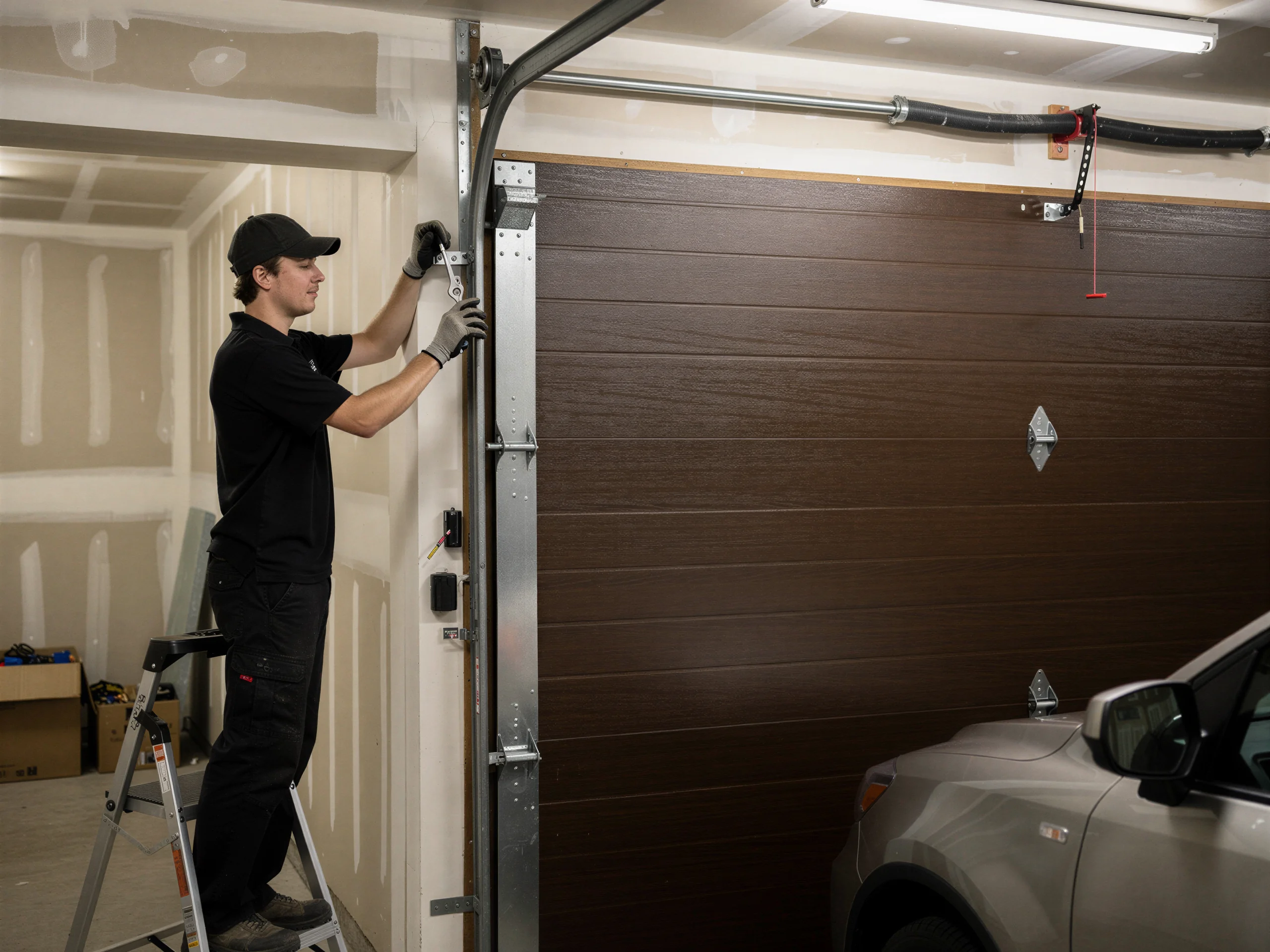
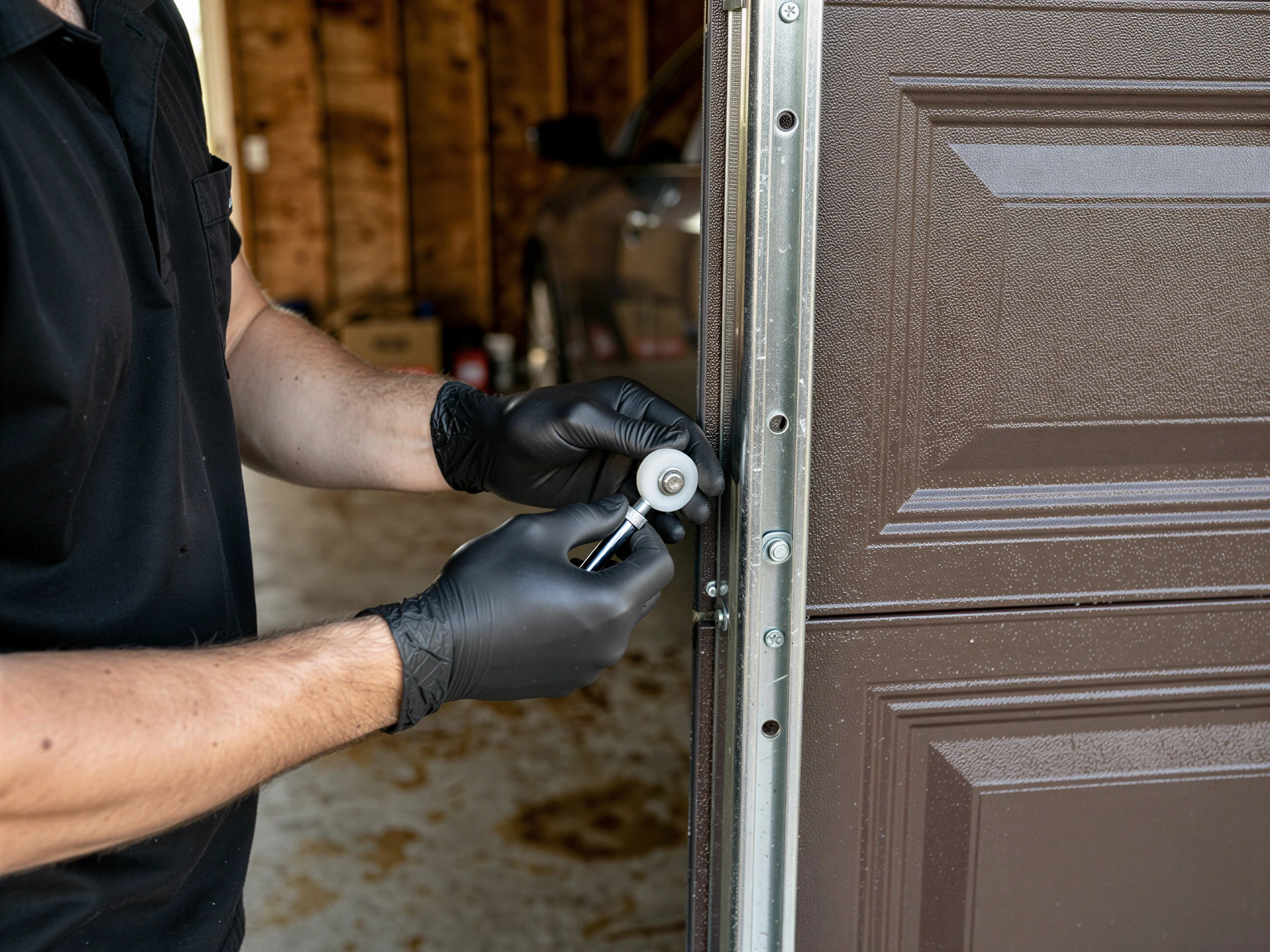
Swapping all ten rollers for sealed nylon takes longer than a single-roller fix, since the truck needs to pull the door most of the way off track section by section to get at the rollers near the top.
Hidden track damage priced separately
If a bent track or a cracked panel shows up once the door's apart, that adds time and gets priced separately before any work continues. We don't stretch a roller job into a full teardown without telling the homeowner first - if the track's bent enough to need straightening or replacing, that's a different conversation, not an upsell tacked onto the invoice.
What Is on the Truck
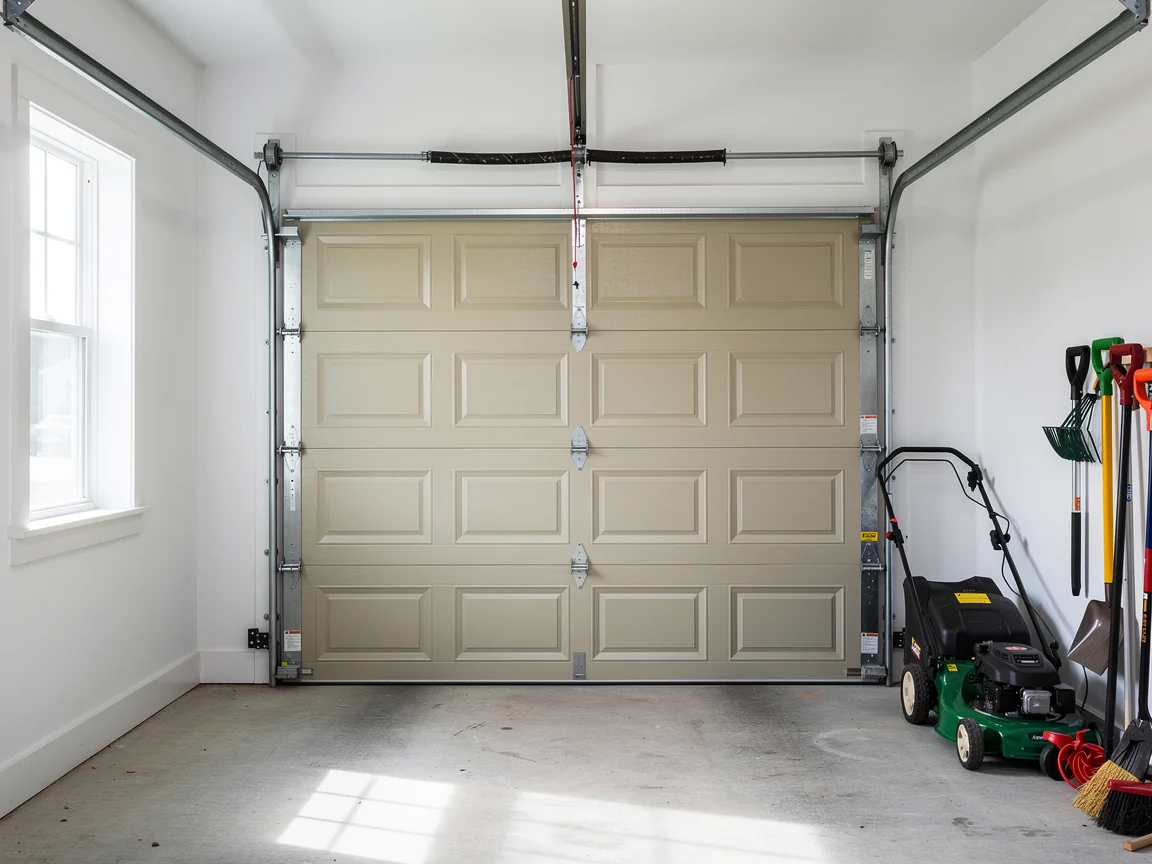
For a 1991-era door, the rollers that actually fit the stem length and wheel diameter from that build era aren't always the same part number as what's sold for a door built in the 2010s, so the truck carries a range of nylon roller stem lengths and both 7-ball and 10-ball bearing wheels to match whatever's already hanging in the track.
Sealed nylon as standard
Sealed nylon rollers are the standard swap now - quieter than steel, and they don't develop the flat spot that steel wheels get from years of sitting in one position overnight.
Grease holds up here
The mild climate here, with only occasional hard freezes, means grease doesn't cook off the bearings the way it would somewhere hotter, so a straightforward lubrication and roller swap holds up well without a short service interval.
Stretched hinge holes
Brackets and hinges come along too, since a worn roller stem often means the hinge it rides in has stretched its hole oval over the years, and swapping one without the other just moves the rattle further down the track.
The DIY Question
Replacing a bottom roller on an unloaded section with the door down and the opener disconnected is within reach for someone comfortable with hand tools.
Top rollers under tension
Replacing the rollers near the top of a door still under spring tension is a different job entirely, and that's where most DIY roller swaps turn into an ER visit or a trip to buy a new door.
1991 torsion springs fail
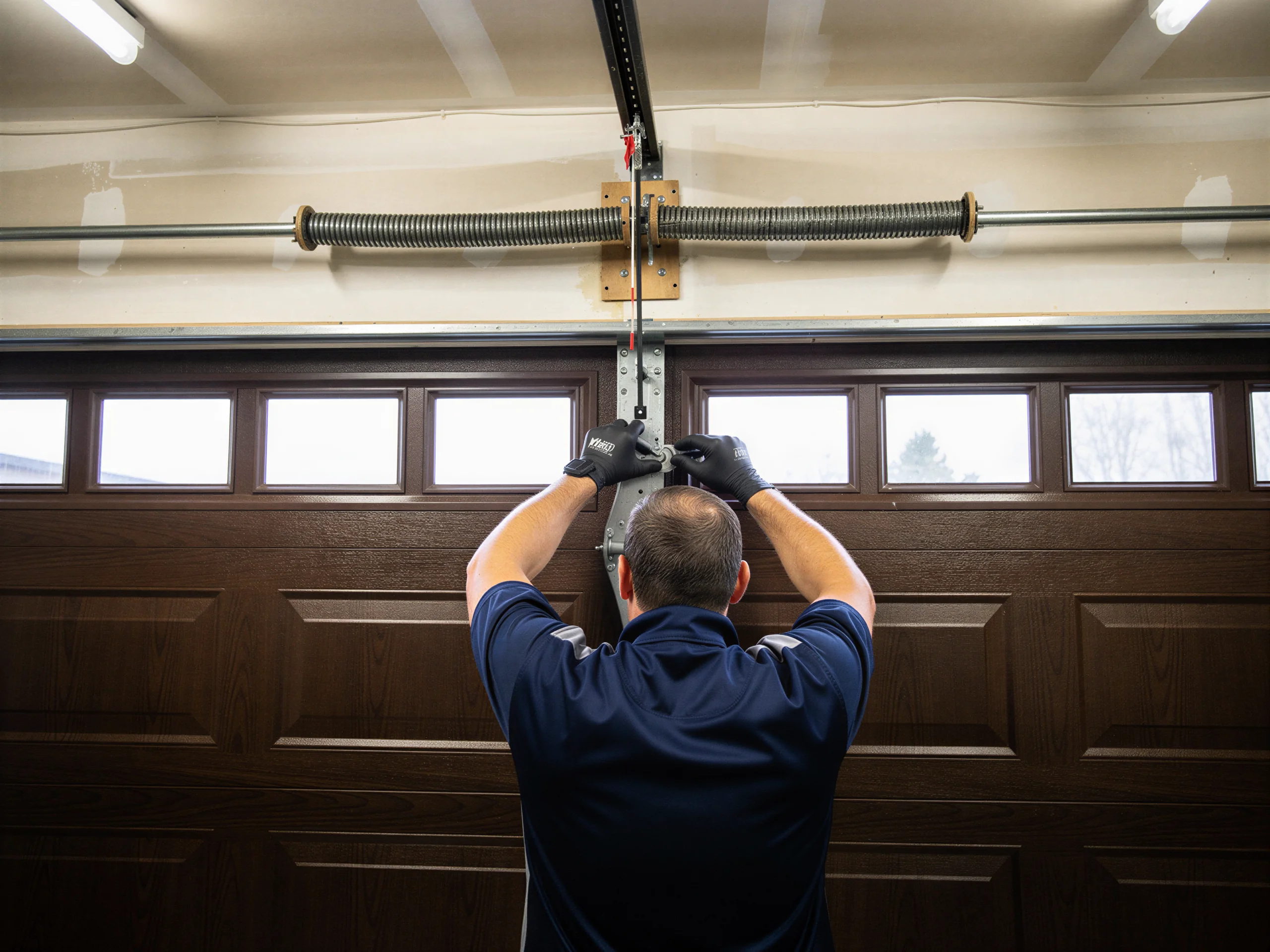
On a door built in the 1991 window, the torsion spring setup is original-era hardware too - heavier, older, and more likely to let go without warning than a spring installed in the last ten years.
Full set beats partial swap
With median household income in this area near $109,489, hiring the full ten-roller swap out rather than doing half the job solo and leaving two worn rollers in place isn't a stretch, and it's the cheaper outcome if something goes wrong under tension.
The Symptom
The giveaway on a 1991-built door is a rhythmic clunk or grinding sound as the door moves, worse at the same spot every time it opens or closes - that's a flat-sided steel roller hitting the track seam on every rotation. It's different from a spring issue, which usually shows up as the door refusing to stay up on its own or opener strain, not a repeating noise. Homeowners sometimes confuse worn rollers with an opener problem and replace the opener first, which doesn't fix the grinding at all. League City Garage Door Pros works this area out of League City, about 10 miles up the road, so a roller call here gets scheduled the same way panel, spring, and opener calls do - it's one stop on the route, not a separate dispatch. If the track itself has pulled away from the frame instead of just worn rollers, that's a bracket repair, not a roller job, and worth flagging before parts get ordered.
Talk to a local pro
Garage door service in League City?
Same-day service with honest, upfront quotes.