
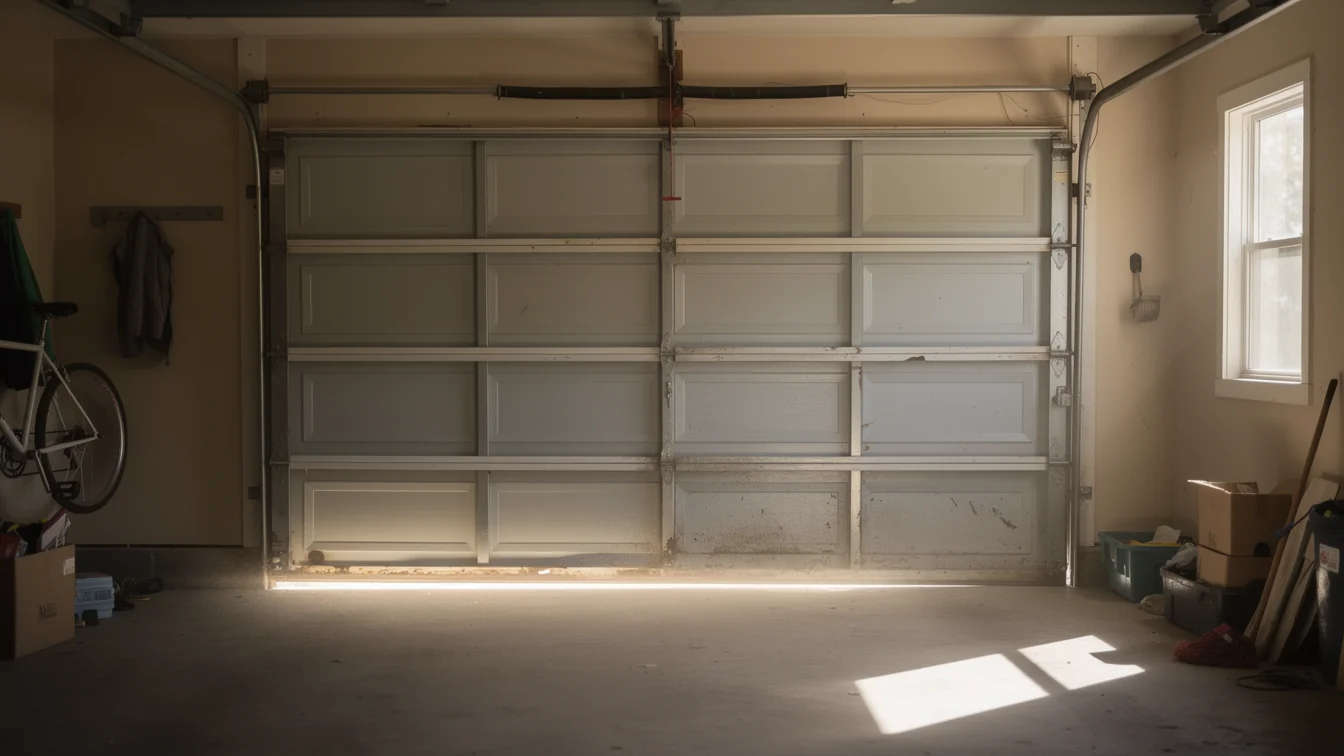
 Older Garage Doors in League City: What Pre-Insulation Construction Means for You
League City homes built 1956-2014 (median 1983) often have garage doors from before insulation codes existed.
Worth Fixing or Time to Replace: League City's Older Garage Doors
Most League City garage doors date from 1956 to 2014, median 1983. Here's how to tell if yours is worth fixing or ready for replacement, and what mild-with-freeze weather does to it.
Local detail
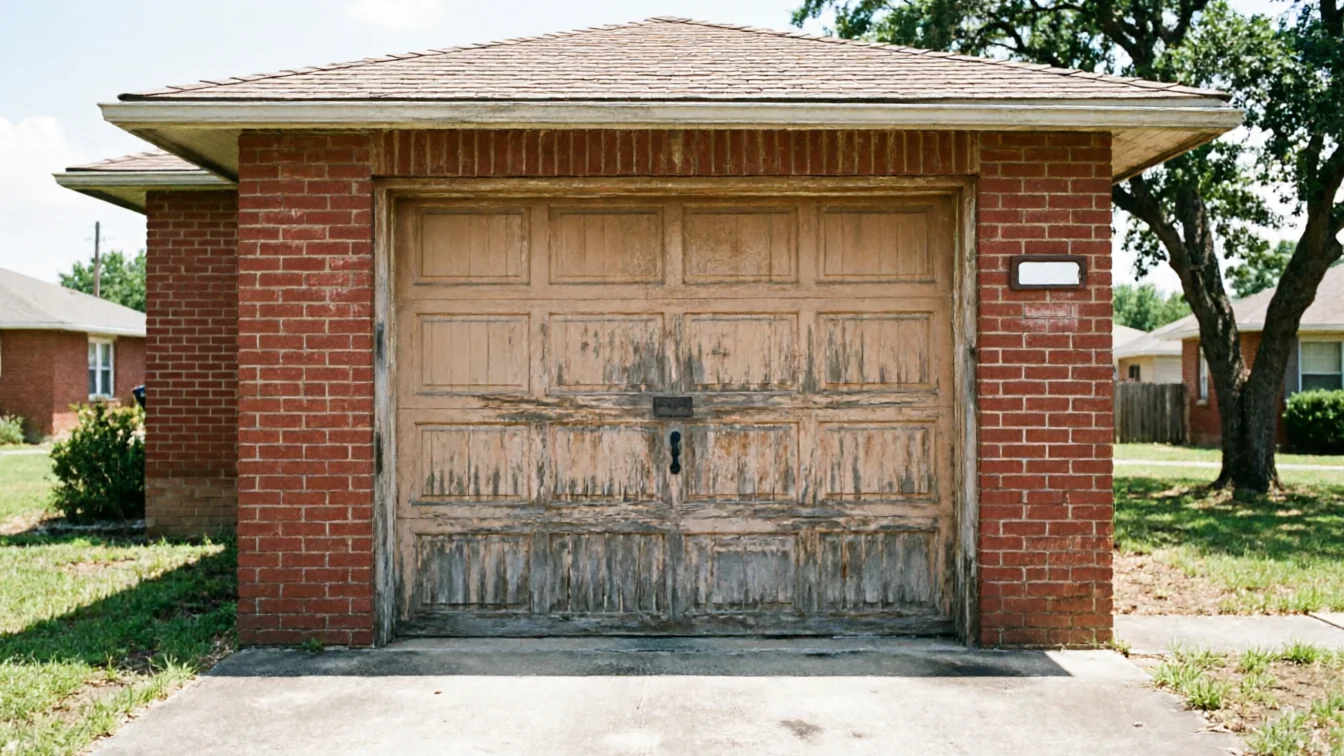
What the Weather Here Does to It
This area sits in a mild climate band with occasional freeze events, not the deep-freeze winters that crack panels up north and not the desert swings that bake seals dry in a season. That's good news for the sheet steel and the track, but it doesn't mean nothing happens. A door built in the 1980s or 90s stock that's common across this service area was engineered with grease and lubricant specs for a climate that rarely sees hard freezes. When one of those freeze events does roll through, stiff torsion springs and gummed-up rollers show up on doors that were working fine the week before. We see it most on houses from that 1956-2014 build window, median around 1983, where the original hardware never got swapped out. The door itself usually survives these cold snaps without damage. What doesn't survive as well is anything rubber: bottom seals, weatherstripping, and old nylon rollers that were never rated for repeated flex in a cold snap followed by a warm one. If your door is groaning or catching after a cold morning and runs fine by afternoon, that's a lubrication and hardware issue, not a reason to replace the whole unit.
The area
When Waiting Is Fine
Not every noise or hesitation means the door is done. If your house falls into the newer end of this area's build range, say anything put up after the mid-1990s, a door that's slow to respond or squeaks on the way up is almost always a track alignment or roller problem, not structural failure. Across the 18 named areas that make up most of the local housing stock, a lot of garage doors are original to the house and still running on their first set of springs. That's not unusual here given the 1983 median build year. If the panels aren't dented, the door reverses properly when it hits resistance, and the only complaint is noise, you can wait. Get it looked at, keep using it, and don't let anyone talk you into a full replacement for a problem that's really a $20 part and ten minutes of adjustment. Where waiting stops being fine is when a spring is visibly separated, when the door comes down unevenly on one side, or when you hear a loud bang from the spring area. Those aren't cosmetic. Everything else on this list, you've got time.
What we find
The Problem
The real issue with doors from this area's older housing stock isn't the door panel, it's what's attached to it. A door manufactured when the median local house was built, around 1983, often still has its original torsion spring, and torsion springs have a cycle life that doesn't care how well you've maintained them. At that age, the spring is closer to the end of its life than the middle, no matter how quiet it's been. Original openers from that era also lack the auto-reverse safety sensors that became standard later, which matters if there are kids or pets in the house. We also see original rollers and hinges that were fine for thirty years of light use suddenly start failing in clusters once one part goes, because they were all installed and stressed at the same time. The honest limitation here: we can't always tell whether a spring or opener is original without pulling the model plate and checking, and sometimes the house's age alone doesn't tell you what's inside the garage. A quick look settles it faster than guessing from the house's build year.
How we work
The Cost of This Job
We don't have a flat number to hand you here, because the honest answer depends on what's actually failed, and on a door from the 1956-2014 range that could be a $40 roller or a full spring-and-cable job. What we can tell you is how to think about the trade-off. With median household income in this area at $94,643 and most houses here owner-occupied, replacement is usually the right call once you're stacking repairs: a new opener this year, a new spring next year, new seals the year after. At that point you're paying for labor three separate times on hardware that's all reaching the end of its life together, since it was mostly installed at the same time on these older builds. A single failed part on an otherwise sound door, on the other hand, is almost always cheaper to fix than replace. The honest limitation: we won't know which bucket your door falls into until we see it, and anyone quoting a number over the phone sight unseen is guessing.
Questions
Common questions
My garage door is original to the house and still works fine. Should I replace it anyway?
Not on that reason alone. If the door reverses properly, isn't dented, and the spring hasn't shown wear, keep using it. A lot of houses in this area are still running original 1980s and 90s hardware without trouble. Get the spring and cables checked once a year given the age, but a working original door doesn't need replacing just because it's old.
Why does my door act up after a cold snap but not during our regular weather?
This area sits in a mild climate with occasional freeze events, and older lubricant and rollers aren't built for the cold-to-warm swing those freezes cause. It usually clears up once temperatures normalize. If it doesn't, the rollers or weatherstripping have likely hardened and need replacing, not the whole door.
Is it worth fixing a door older than the house's original opener?
Usually yes, if the door panel and track are still straight. The panel and track outlast the moving parts. Springs, openers, and rollers wear out well before the structure does on doors from this area's common 1956-2014 build range. Replace the worn parts first and keep the door unless it's physically damaged.
Recommendation
You Might Also Like
More garage door guides for League City homeowners.
Older Garage Doors in League City: What Pre-Insulation Construction Means for You
League City homes built 1956-2014 (median 1983) often have garage doors from before insulation codes existed.
 What That Noise Your Garage Door Is Making Actually Means
Grinding, popping, or squealing door in League City?
 Openers and Power Cuts in League City
How League City's 1956-2014 housing stock and mild-with-freeze climate affect garage door openers during power cuts, and what actually needs fixing versus waiting.
Ready when you are
Need a garage door sorted in League City?
League City Garage Door Pros repairs and installs garage doors, springs and openers in League City, TX and the surrounding area.