How Long It Takes
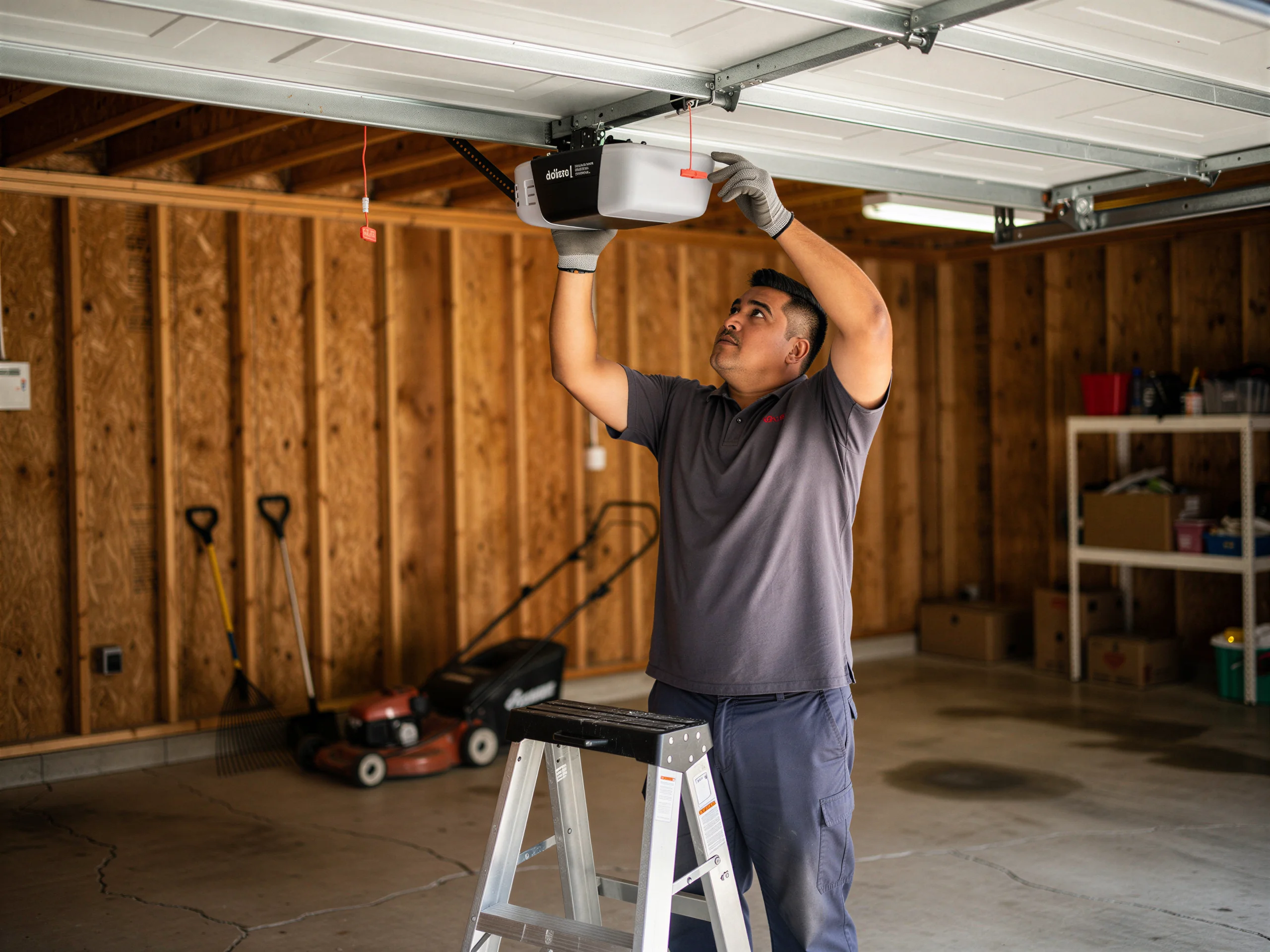
Seabrook's housing stock centers on 1991, which puts a lot of openers here at or past the point where the motor gear, the drive chain, or the circuit board is the original part from install day.
Three decades of wear
That matters for how a repair call goes: we're not guessing at a mystery unit, we're working on hardware that's had roughly three decades to wear in a MILD-with-occasional-freeze climate - not brutal on belts and gears, but enough seasonal swing to dry out old grease and crack worn seals.
Capacitor, gear, sensor fixes
A straightforward fix - a dead capacitor, a stripped gear, a sensor knocked out of alignment - usually runs under an hour once the truck is on site. The call itself takes longer, since this is a trip of about 10 miles from League City, not a same-block job.
Obsolete board, replacement talk
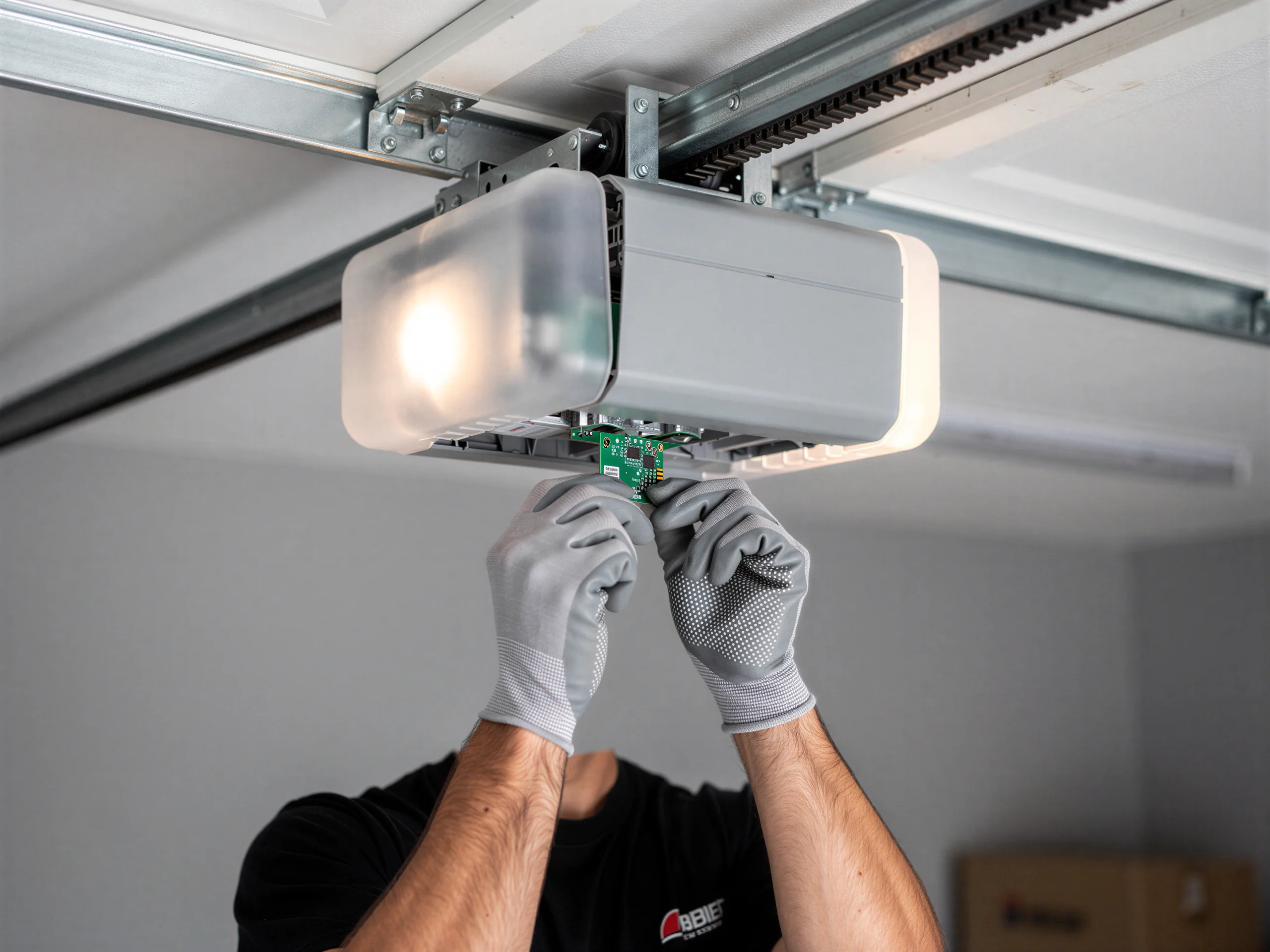
If the opener turns out to need a logic board that nobody stocks anymore because the unit is a 30-year-old model, we'll tell you straight - that's a replacement conversation, not a repair one, and we'd rather say so on the first visit than the third.
What Is on the Truck
For a town built out mostly in the late 1980s and early 1990s, the truck carries parts sized for that generation: standard 1/3 and 1/2 horsepower chain-drive motor gears, drive sprockets, capacitors, and the photo-eye sensor pairs that era of opener commonly shipped with and that commonly fail first. We also carry wall control stations and remote receivers, since a lot of these units are past the point where the original remote even still pairs reliably.
What we don't carry is every obsolete circuit board ever made. If your opener is a specific older model with a board that's been discontinued by the manufacturer, we'll know that on inspection rather than after ordering a part that doesn't exist anymore. That's the honest limit of a service truck - it stocks what fails most, not every board from every decade.
The DIY Question
Some of this is fair to try yourself. Reprogramming a remote, cleaning sensor lenses, checking the wall switch wiring - none of that requires a truck.
Motor gear and chain tension
Where homeowners get into trouble is the motor gear and the drive chain tension, especially on a unit this age where the housing plastic is brittle and the fasteners have corroded slightly from humidity cycles typical of this part of the coast.
Check sensor lights yourself
If your opener runs but the door doesn't move, or moves then reverses, that's very often a sensor alignment issue you can check yourself before calling anyone - look for a light on each sensor eye, low to the ground, lined up with its partner.
Logic or limit switch issues
If both lights are solid and the door still won't close, stop there. That's a logic or limit-switch problem, and taking the motor housing apart on a unit this old risks cracking a part that was already brittle before you touched it.
The Symptom
The call we get most from this part of the service area is the opener that runs the motor but the door doesn't move - a worn or stripped drive gear, which is close to a textbook failure for a chain-drive unit installed when these houses were built. Close behind it: the door that reverses right after it starts closing, which on a 1991-era build is almost always a sensor that's drifted out of alignment or a sensor eye that's taken enough weather exposure over the decades to go unreliable.
Less common but still frequent: a remote that's stopped working entirely, often because the opener predates rolling-code security and the receiver board itself is failing, not the remote battery. We see this pattern often enough here, given the age of the stock, that it's usually our first guess before we even open the housing.
Talk to a local pro
Garage door service in League City?
Same-day service with honest, upfront quotes.