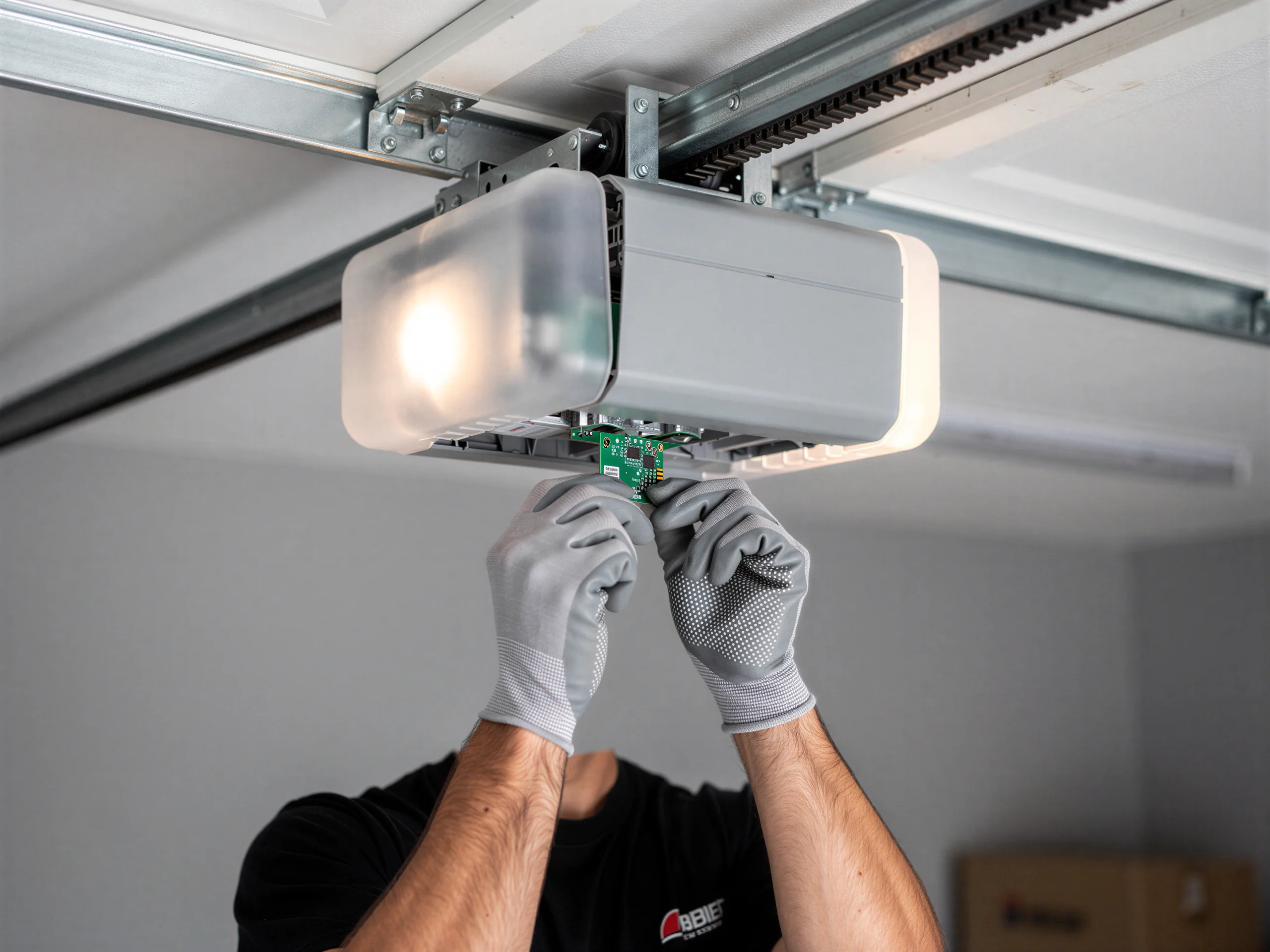
What Is on the Truck
Deer Park's housing stock centers on 1981, which means most garage doors here were paired with openers built in the chain-drive era before belt-drive units were common and before today's DC motors.
Logic boards and capacitors
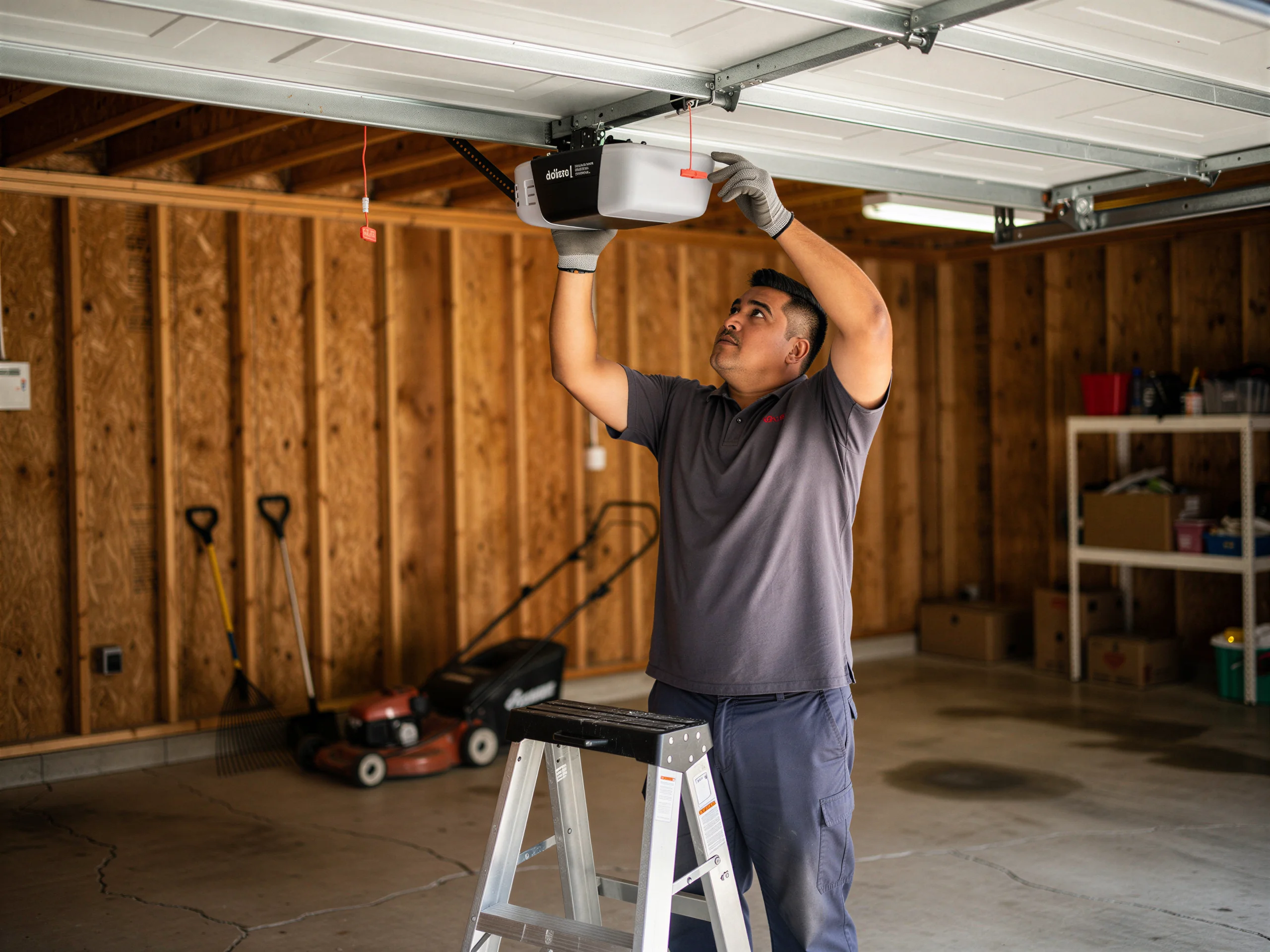
We carry logic boards, drive gears, chain tensioners, and capacitors sized for those units, along with the newer circuit boards and safety-sensor kits that replaced originals after federal photo-eye rules took hold in the early 1990s.
Heat-blown capacitors
A house built in 1981 that still has its first opener almost always needs one of two things: a gear set worn to plastic dust, or a board with a blown capacitor from decades of heat cycling in an attached garage.
Two drive gear sizes
We stock both sizes of drive gear because Deer Park's doors split pretty evenly between single and double openings from that build era. What we don't carry on the truck is obsolete remote-only openers from the 1970s with no safety reversal at all - if we find one of those, replacement is the only honest answer, not a repair.
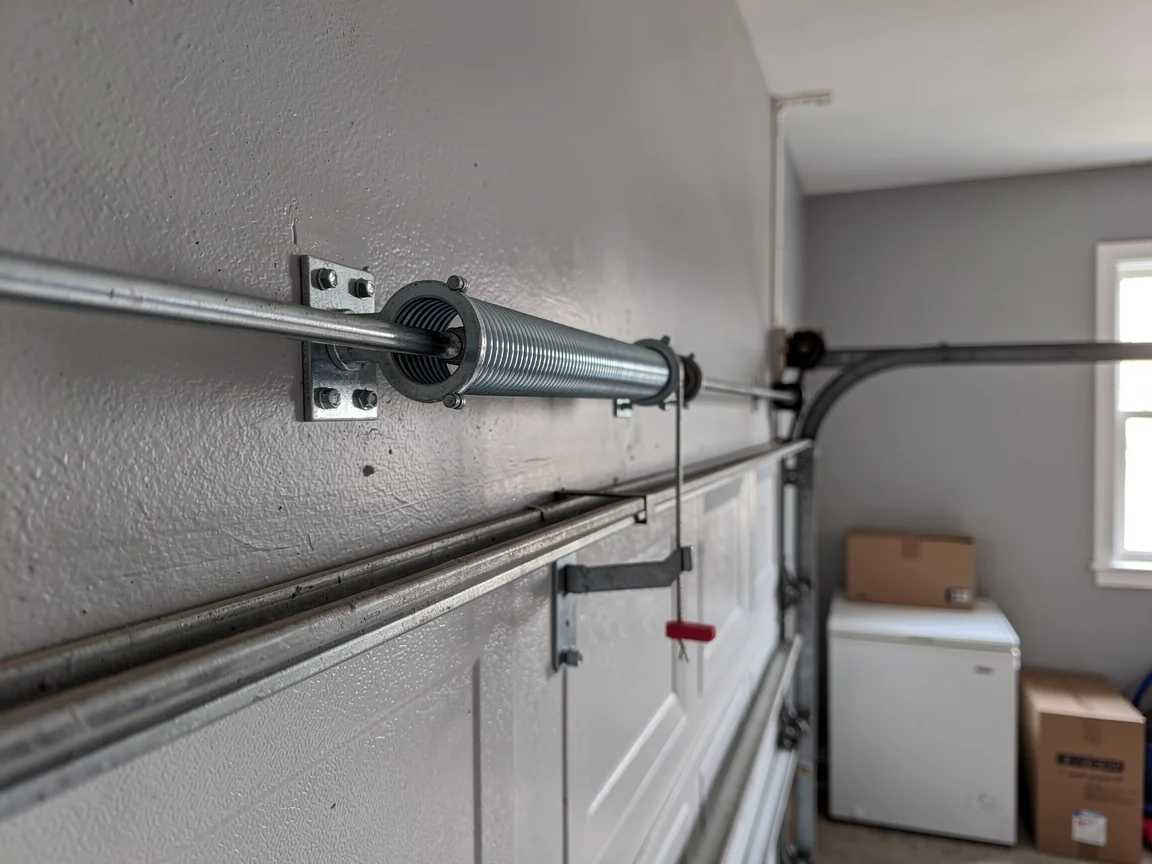
Booking a Visit
We run out of League City, about 14 miles from Deer Park, so when you call we ask what the opener is doing before we load the truck - grinding, reversing without touching the floor, or just silent. That tells us whether to bring a gear kit or a board. We don't keep a branch in Deer Park, so there's no walk-in counter here, but the drive time is short enough that same-day scheduling is normal, not a stretch. If your opener is original to a house built in the early 1980s, mention that on the call. It changes what we load before we leave League City, and it saves a second trip.
The Symptom
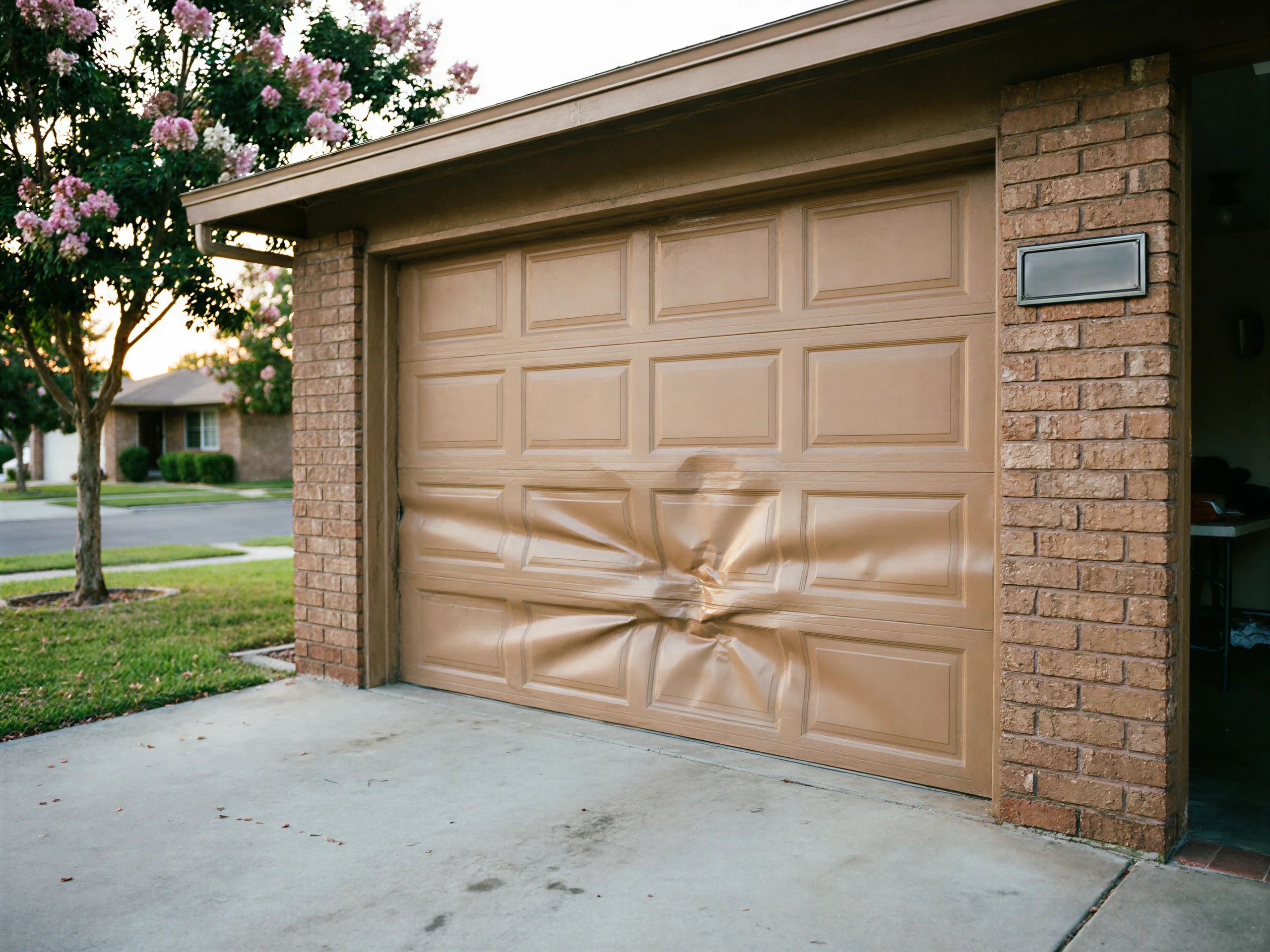
The complaint we hear most from this stretch of Deer Park is an opener that runs but the door barely moves, or moves and then reverses for no reason.
Nylon gear worn out
On a unit this old, that's almost always the drive gear - a nylon part designed to strip before it strains the motor, and after forty-plus years of cycling it's usually stripped.
Unresponsive wall button
The second most common call is a door that won't respond to the wall button at all, which on 1980s-era openers usually traces to a dead capacitor on the circuit board rather than the motor itself.
Corroded control box contacts
Houses in this mild climate band don't deal with hard freeze cycles cracking housings, but they do see humidity swings that corrode old contact points inside the control box over the years. We check the board before we touch the motor, because swapping a motor to fix a board problem is a wasted job.
How Long It Takes
A gear replacement on an opener from this era runs under an hour once we're on site. A board swap is similar, assuming the board is a common one we stock - most from the 1980s-90s production run are. Where it stretches out is when the opener is old enough that the manufacturer discontinued the exact board and we have to source a universal replacement and re-pair the remotes and keypad, which can add another visit. We'll tell you on site which situation you're in before we start, not after.
What the Repair Takes
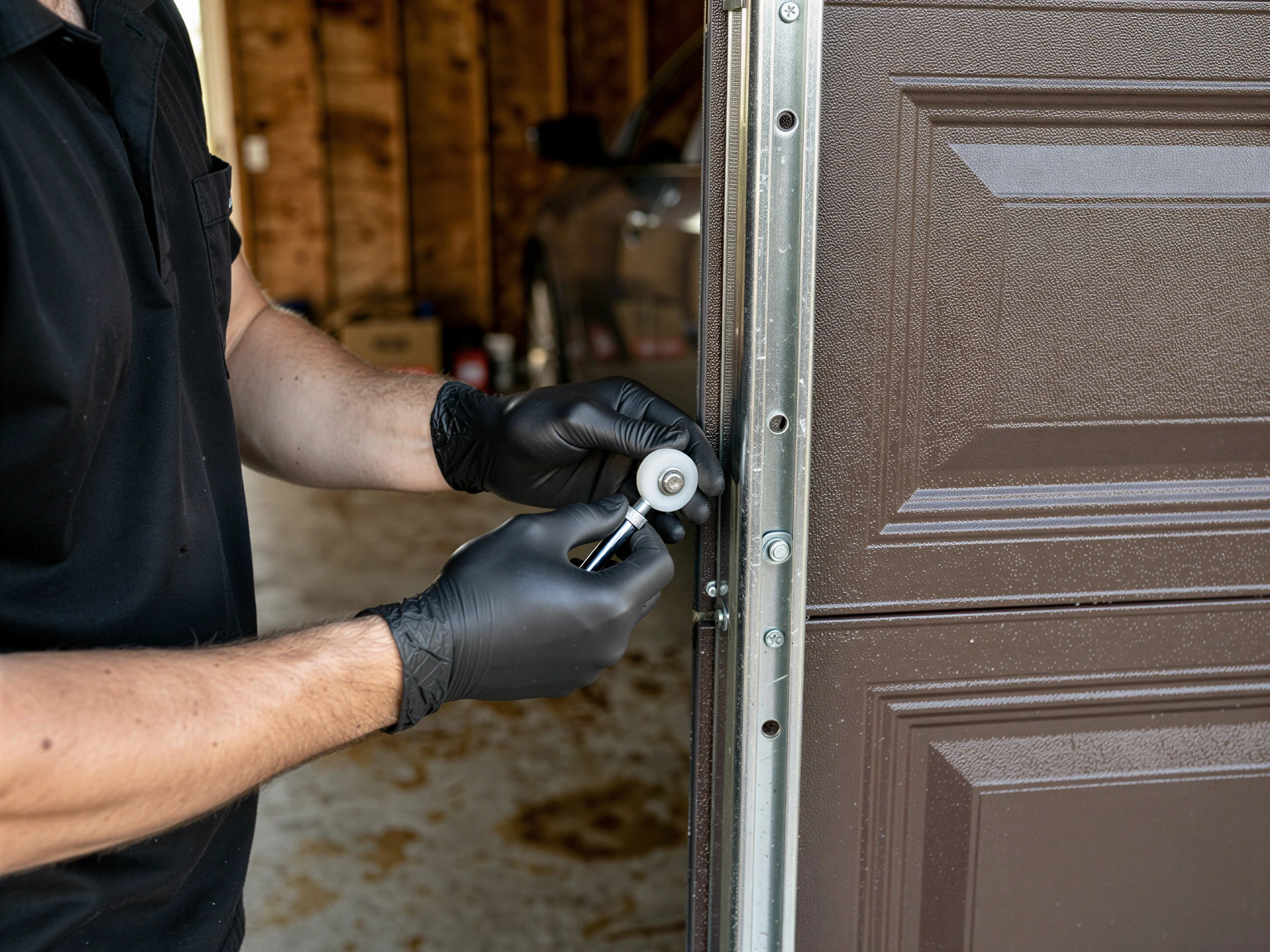
Most of these jobs are a gear, a board, or a sensor pair - parts we carry, work we finish in one visit. The limitation worth saying plainly: if the opener is original to a house from the early 1980s and the motor windings themselves have gone, we won't chase that repair. A rewound motor on a forty-year-old frame costs close to what a new DC opener costs, and the new one comes with a rolling-code remote and a battery backup the old one never had. We'll say so on site rather than bill you for a repair that doesn't hold.
Talk to a local pro
Garage door service in League City?
Same-day service with honest, upfront quotes.