What Is on the Truck
We carry lift cables in the two gauges that cover almost every door built the same era as the typical Deer Park house - mid-century single-car openings and the wider two-car doors that came later in the same build run.
Galvanized cable and drums
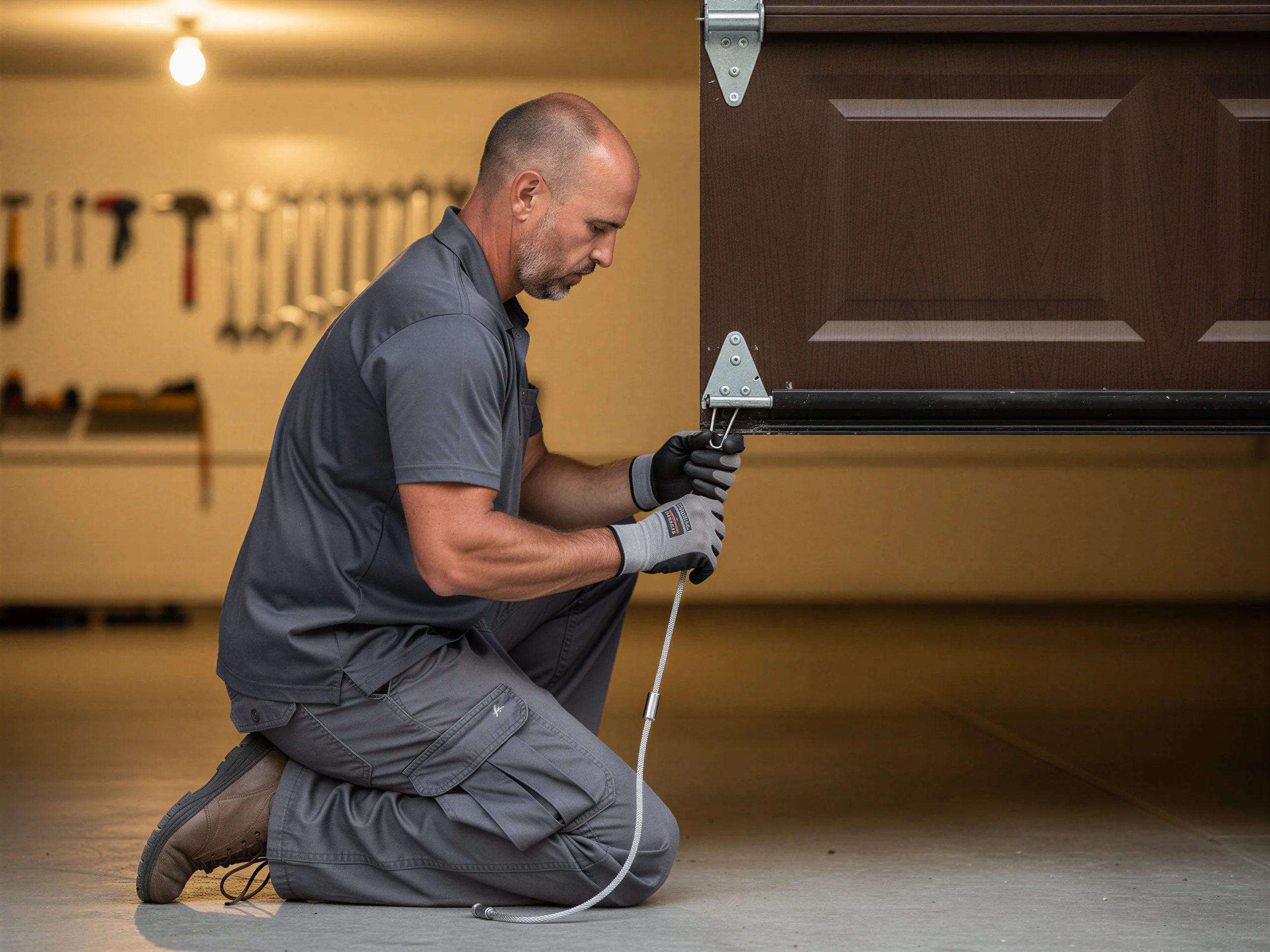
Most of what we pull out here is galvanized aircraft cable that's gone from silver to rust-orange, usually at the drum end where it wraps and unwraps thousands of times a year. We also stock the matching drums, since a cable that's frayed enough to need replacing has usually chewed a groove into the drum it rides on, and putting a new cable on a scored drum just buys you another call in a few months.
Cable outlived its coating
With a median build year of 1981 for houses in this part of town, a lot of the original torsion hardware is still in place - not necessarily failing, but old enough that the cable has outlived its coating.
Bracket gaps from remodels
We don't carry every bracket or jamb cone ever made, so if a door has non-standard hardware from a past remodel, that's a parts-order situation, not a same-visit fix. We'll tell you straight if that's what we're looking at before we start.
Booking a Visit
We cover Deer Park out of League City, about 14 miles away, so when you call we're scheduling a drive, not a walk from around the corner.
No branch nearby
That's worth knowing up front - we're not going to tell you we have a branch down the street, because we don't. What we can tell you is when the truck can realistically get there and what it's loaded for once it does.
Describe the failure symptom
If you can tell us whether the door won't move at all, moves unevenly, or made a loud bang before it quit, we can load the right cable and drum sizes before we leave rather than guessing on site.
Crooked door, snapped cable
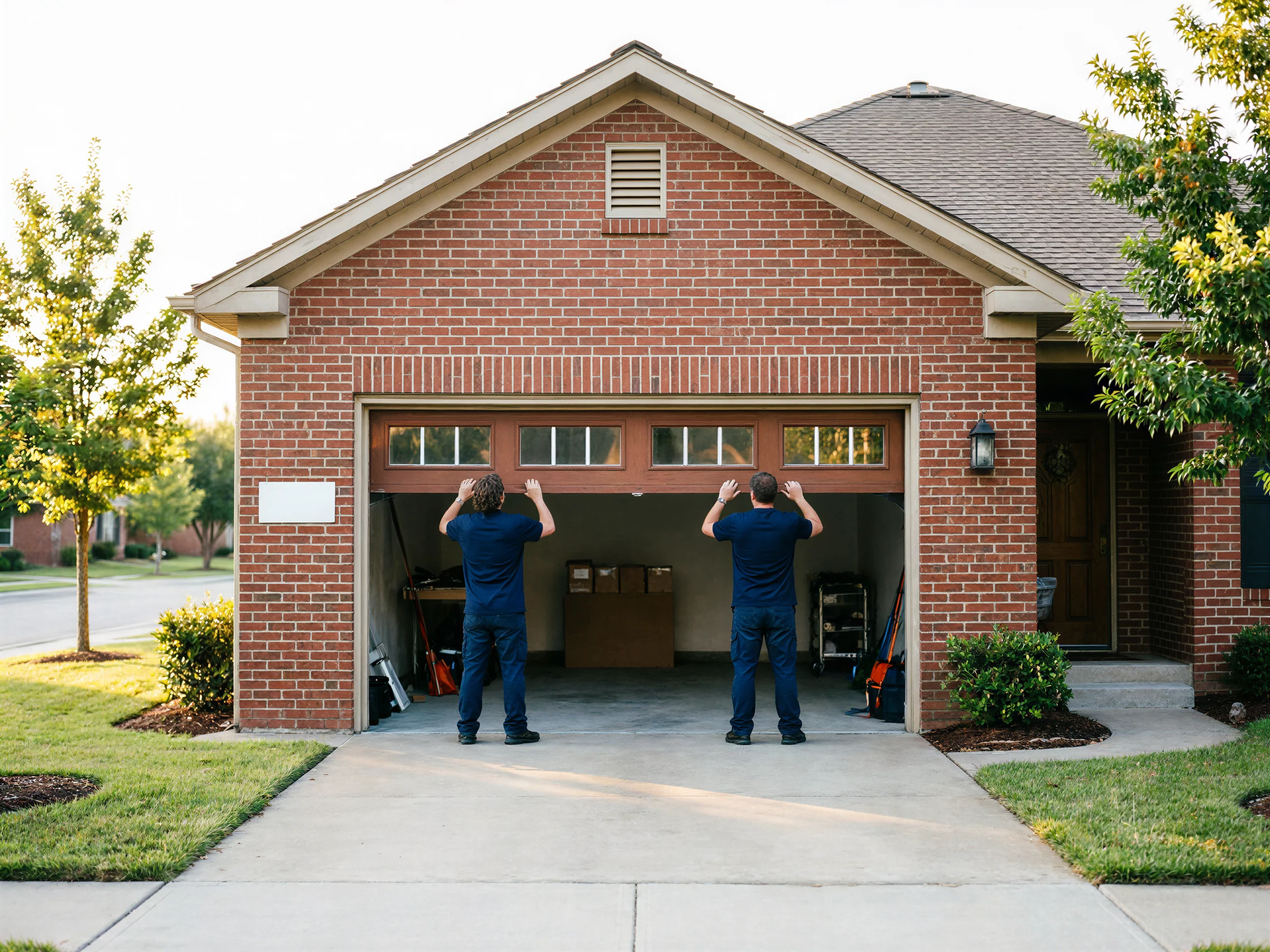
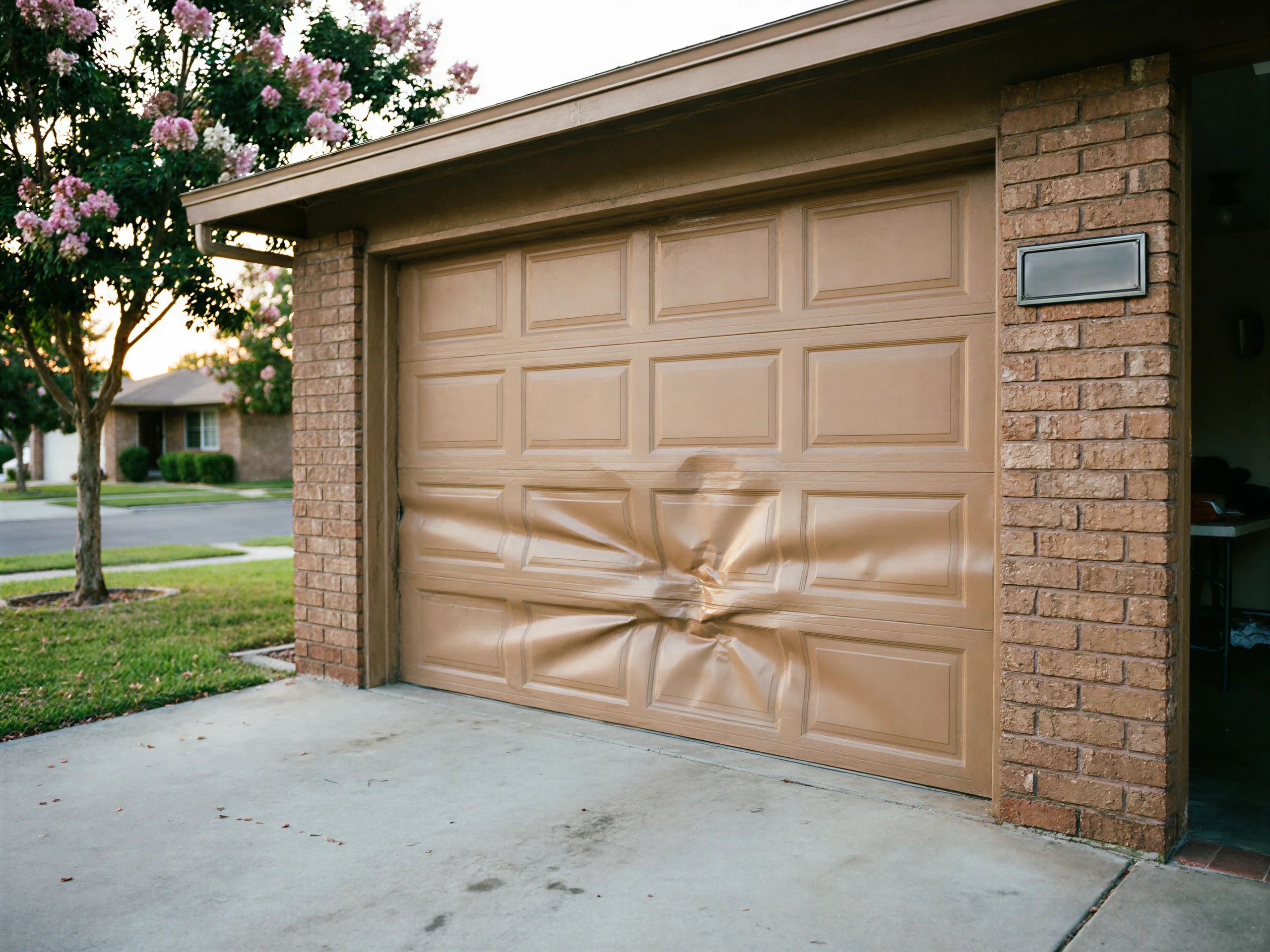
A door that's sitting crooked in the opening with one side low is almost always a snapped cable, and that detail alone tells us a lot about what's riding in the truck when we pull up.
The Symptom
The giveaway is a door that drops unevenly - one corner lower than the other, or the whole panel sitting a few inches off square in the track.
Bang or slow strand fray
Sometimes there's a loud bang first, as the cable lets go under tension and the drum spins free. Other times it's quieter: the cable frays strand by strand near the bottom bracket until it's thin enough to part on an ordinary open, and you just notice the door won't lift past a foot or two before it binds.
No redundancy on cables
On a house from this era - Deer Park's housing stock centers on 1981 - the spring and cable setup is usually original torsion, which means a single cable on each side carrying real load with no redundancy if one side goes.
Coating worn by air
We see this more here than on newer stock because the galvanizing on a cable that old has had three or four decades of mild, humid Gulf-area air working on it. It's not a dramatic climate, but it's consistent, and consistent is what wears a coating down over 40 years.
How Long It Takes
A straightforward cable swap on a single door, once we're on site with the right cable and drum, is a same-visit job - we're not waiting on parts for the common sizes. Where it runs longer is when the drum underneath is scored from the old cable riding a frayed groove, or when the opposite side's cable is close enough to failure that replacing only one side would just mean a second call in a few months. We'll point that out and give you the choice rather than quietly doing a half-fix.
We don't give you a number here that isn't backed by what we see on site, so the honest answer is: plan for us to be there a while if it's a two-cable job with drum replacement, and plan for a shorter stop if it's one clean cable swap on hardware that's otherwise in good shape.
What the Repair Takes
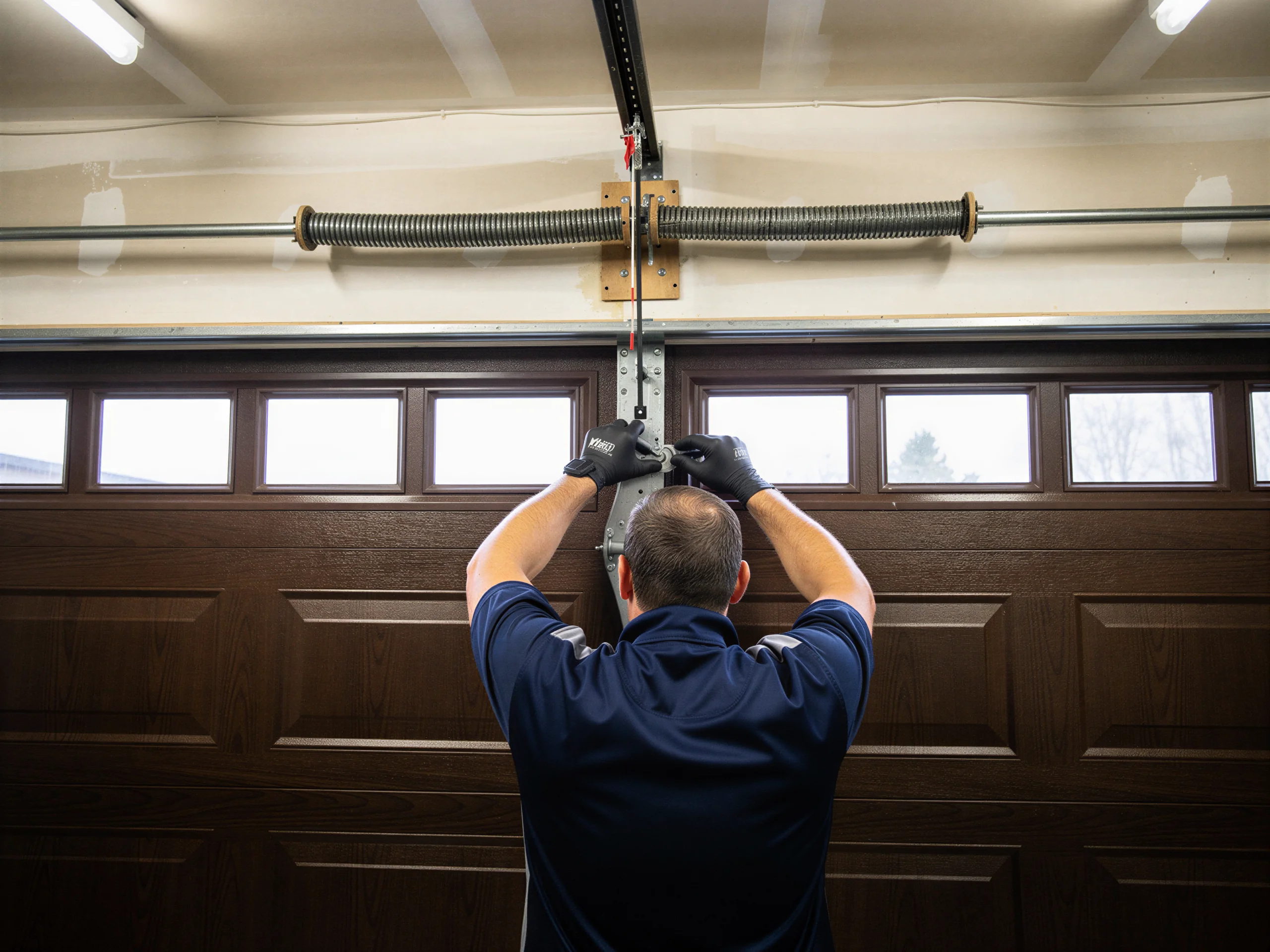
A cable repair isn't a spring repair, and conflating the two is where a lot of quotes go wrong. The cable is the wire rope; the spring is what's actually storing the lift force.
Check the spring too
If your door dropped suddenly and won't move, there's a decent chance the spring let go too, not just the cable - and we'll check both before we quote anything, because replacing a cable on a dead spring just means the door drops again the next time someone tries to open it.
Cable run and re-tension steps
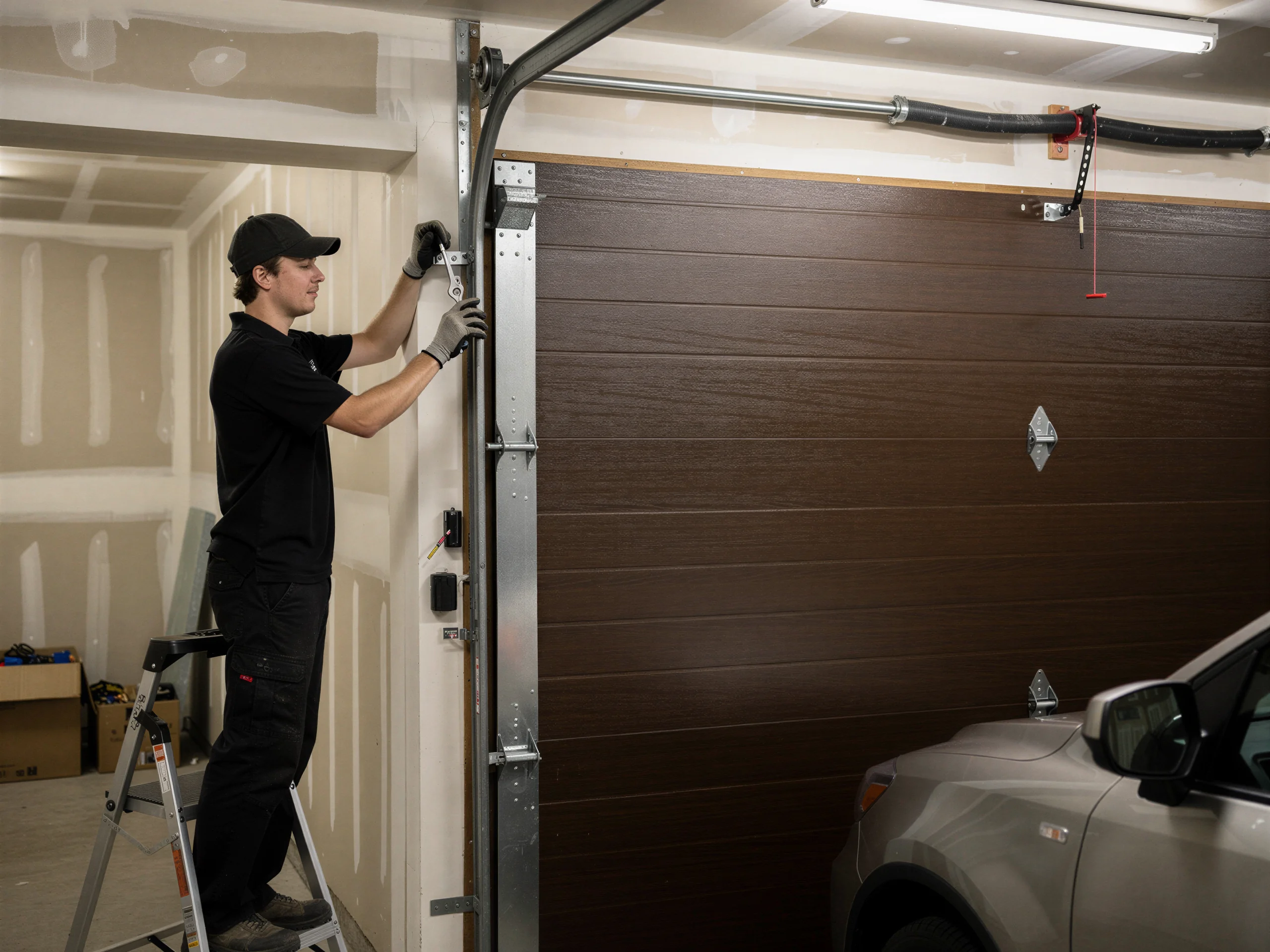
On the 1981-era torsion setups common around Deer Park, the repair itself is mechanical: unload the spring tension safely, pull the old cable off the drum and bottom bracket, run the new one, and re-tension.
Rushed jobs cause callbacks
It's not glamorous work and it doesn't take exotic parts, but it does take doing the tension release correctly - that part, more than the cable itself, is where a rushed job turns into a second service call.
Talk to a local pro
Garage door service in League City?
Same-day service with honest, upfront quotes.