Where This Job Goes Sideways
It's an 11-mile run from League City to La Marque, and that drive shapes how this job gets quoted before anyone's even on site. A panel job isn't a same-day impulse call like a broken spring - we need to see the door, or at least get good photos of the track width, panel height, and whatever's stamped or printed on the inside skin, before we load the truck.
Wrong panel means return
Guess wrong on a steel panel profile and you're driving back with the wrong part, and that's 22 miles wasted for nothing. The bigger issue in La Marque specifically: a lot of the housing stock here went up around 1978, which puts these doors a full generation ahead of the newer construction you see in parts of League City's service area.
Older rib patterns and widths
Across the broader area the median build year runs closer to 1983, with plenty of stock from the 80s and 90s - but La Marque sits on the older end of that curve. Older doors mean panel widths, rib patterns, and bracket spacing that newer manufacturers don't carry anymore.
Assume obsolete profiles
We go in assuming we're matching an obsolete profile, not assuming the big-box universal panel will just bolt on. That's why we ask for the make and the panel count up front on the phone. It saves a second trip.
What Is on the Truck
We carry common steel panel sections in the sizes that fit 1970s and 1980s residential doors - the flush and short-raised-panel styles that were standard before the deeper embossed look became common.
Special-order discontinued profiles
We don't carry every discontinued profile ever made, and we won't pretend otherwise: if your door is a style that hasn't been produced in twenty-plus years, we may need to special-order the section or talk you through a full door swap instead of chasing one bent panel.
Hinges and touch-up paint
Hardware-wise, we bring standard end hinges, center hinges, and the fasteners that match older 2-inch and 2.25-inch sections, since those turn up constantly on doors from this era. We also bring touch-up paint stock in basic colors, because a single replacement panel on a faded 45-year-old door is never going to match perfectly - we tell customers that before we start, not after.
Excluded jobs need separate trips
What we don't load for a standard panel call: full replacement doors, insulation retrofits, or opener parts. Those are separate jobs with their own trip, even though they often get mentioned in the same phone call once someone sees the whole door up close.
What Causes It Around Here
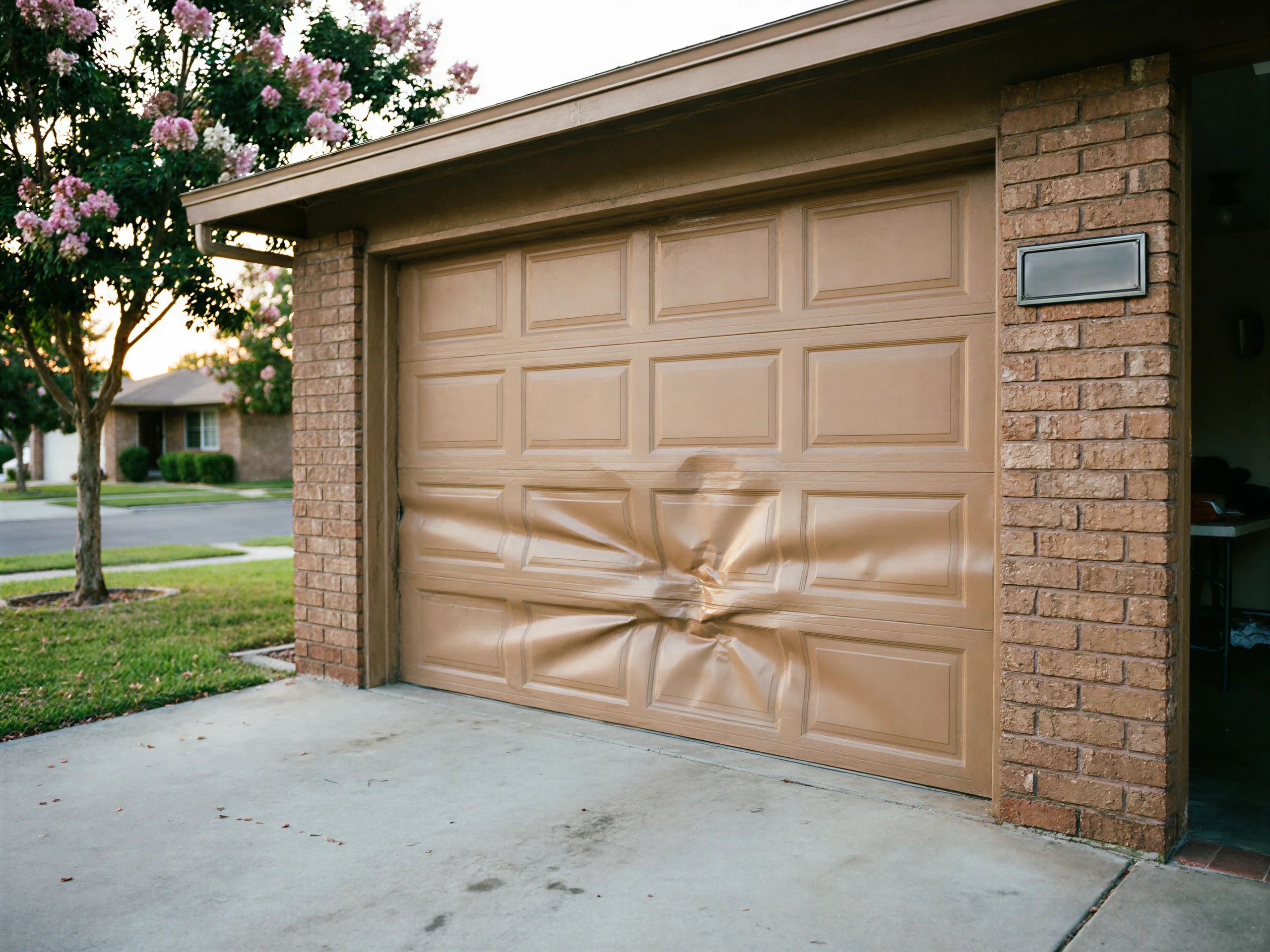
On a door built in the late 1970s, the steel skins are thinner than what's rolled today, and after four-plus decades the bottom two panels take the brunt of it - car bumpers, trailer hitches, kids' bikes, the occasional trash can. Dents in that gauge of steel don't pop back out; they crease, and once a panel creases along a seam it stops sealing against the next one.
The climate here is mild with occasional freeze risk, which isn't the main driver of panel failure the way it would be in a harder freeze-thaw region - this isn't a frost-heave problem. It's simpler than that: old steel, old seams, decades of impact. Rust along the bottom panel edge shows up where water sits after rain and doesn't fully drain off the slab, which is common on older La Marque driveways that weren't graded the way newer subdivisions are.
La Marque's median household income runs around $70,632, noticeably below the roughly $94,643 median across the wider service area, and that gap shows up in the repair conversation - more owners here ask us to replace the one or two damaged panels instead of the whole door, which is often the right call on a door that's otherwise sound.
The Symptom
The giveaway is almost always visual before it's functional: a horizontal crease or a cracked seam on the bottom or second panel, sometimes with the steel skin starting to separate from the foam or cardboard backing behind it.
Moisture behind cracked skin
The door still opens and closes, which is why people put off the call - but a cracked panel lets moisture behind the skin, and once that starts the panel degrades fast, especially through a humid season. A second symptom: the door binds or scrapes at one specific point in the track every cycle, not randomly.
Dent pushing roller out
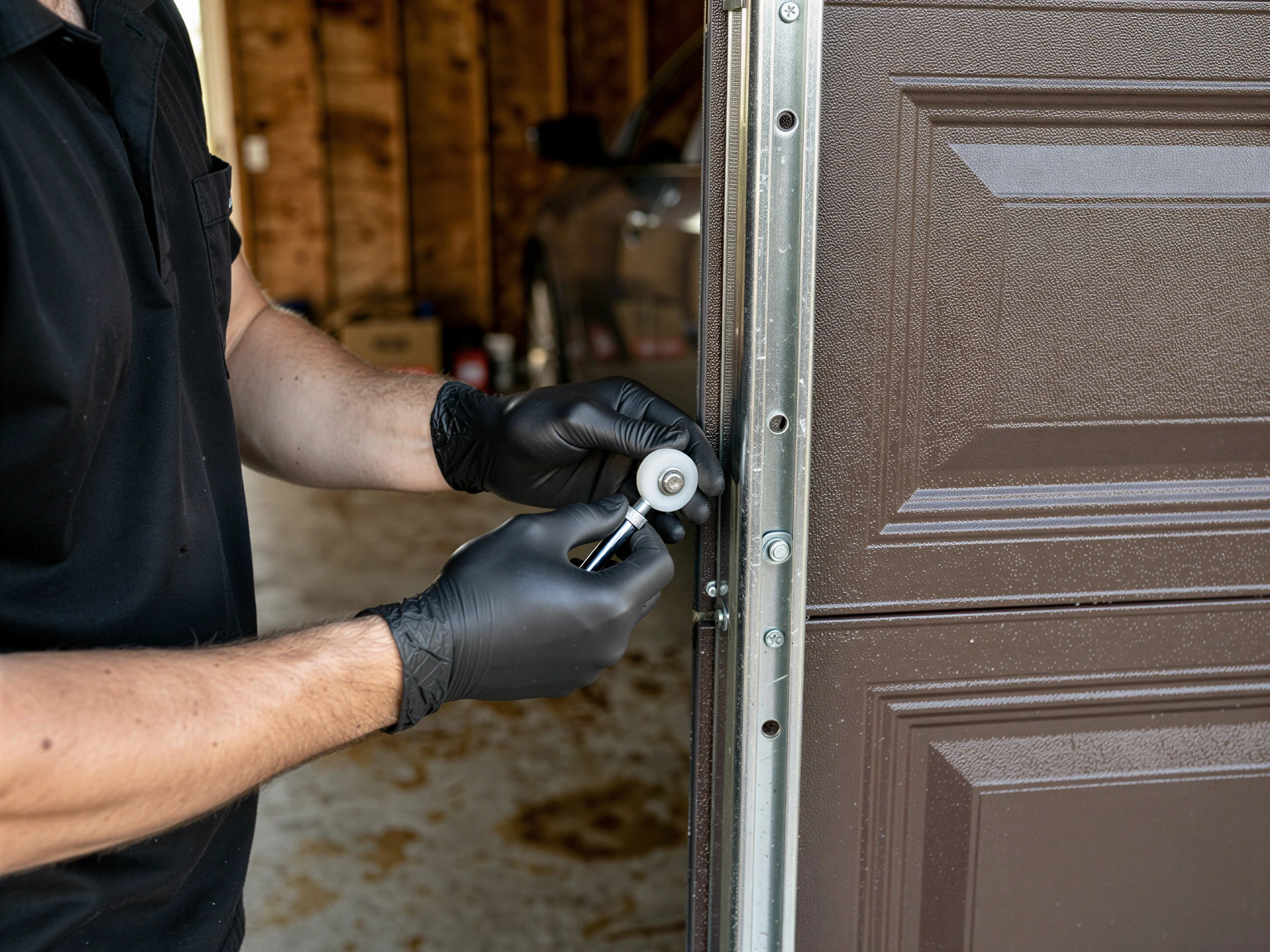
That usually means the dented panel is pushing the roller out of alignment at that spot, not that the track itself is bent. We check that difference on site before quoting, because replacing a panel to fix a track problem doesn't solve anything.
Pops from brittle seams
If you're hearing a pop or a metallic crack when the door closes on a cold morning, that's worth a look too - on older steel, brittle seams can finally give after years of minor flexing. We'd rather see it before it turns into a full section that won't hold its shape anymore. See our general La Marque door page for other issues, or the League City panel replacement page for how we handle the job closer to home.
Talk to a local pro
Garage door service in League City?
Same-day service with honest, upfront quotes.