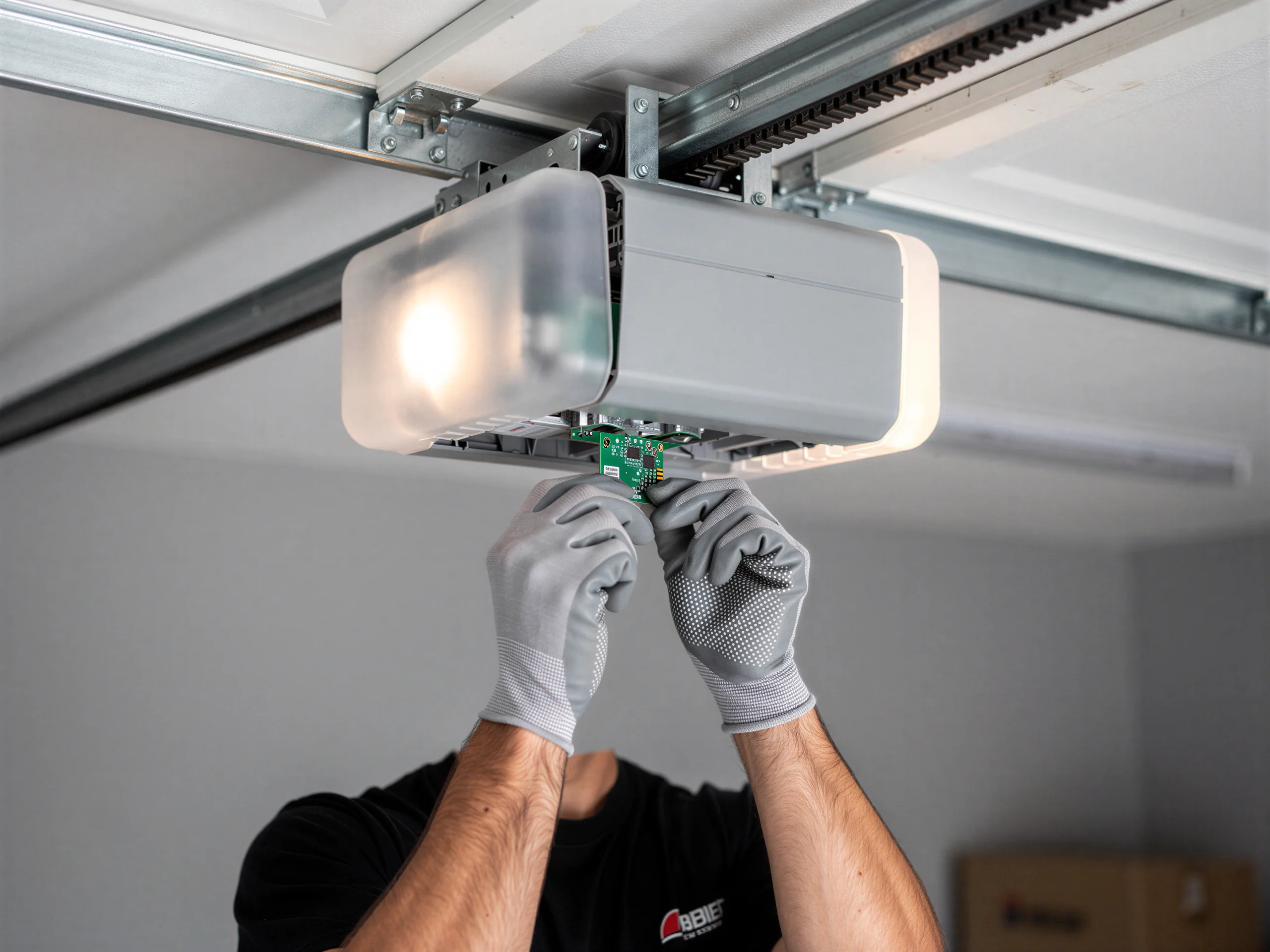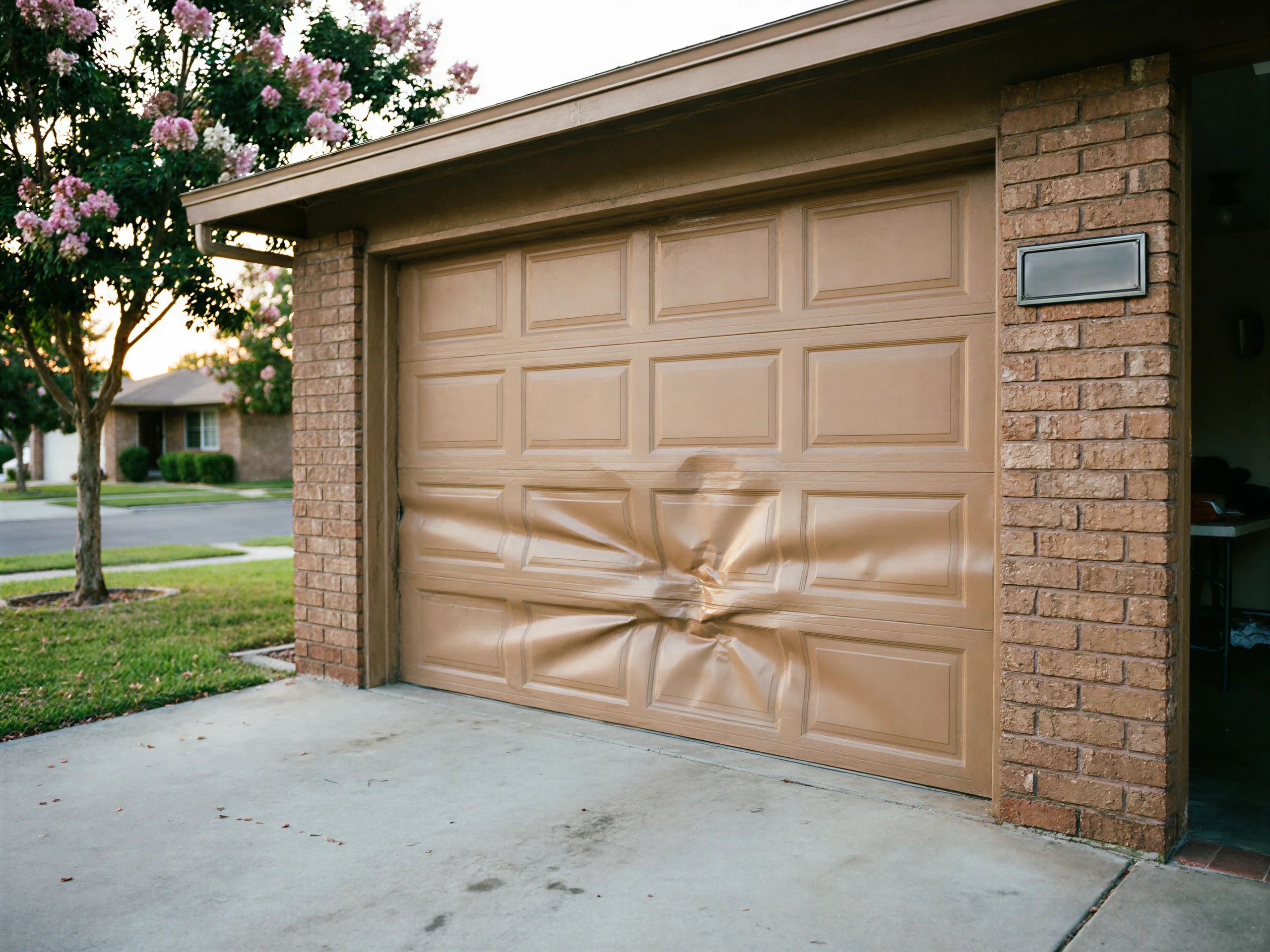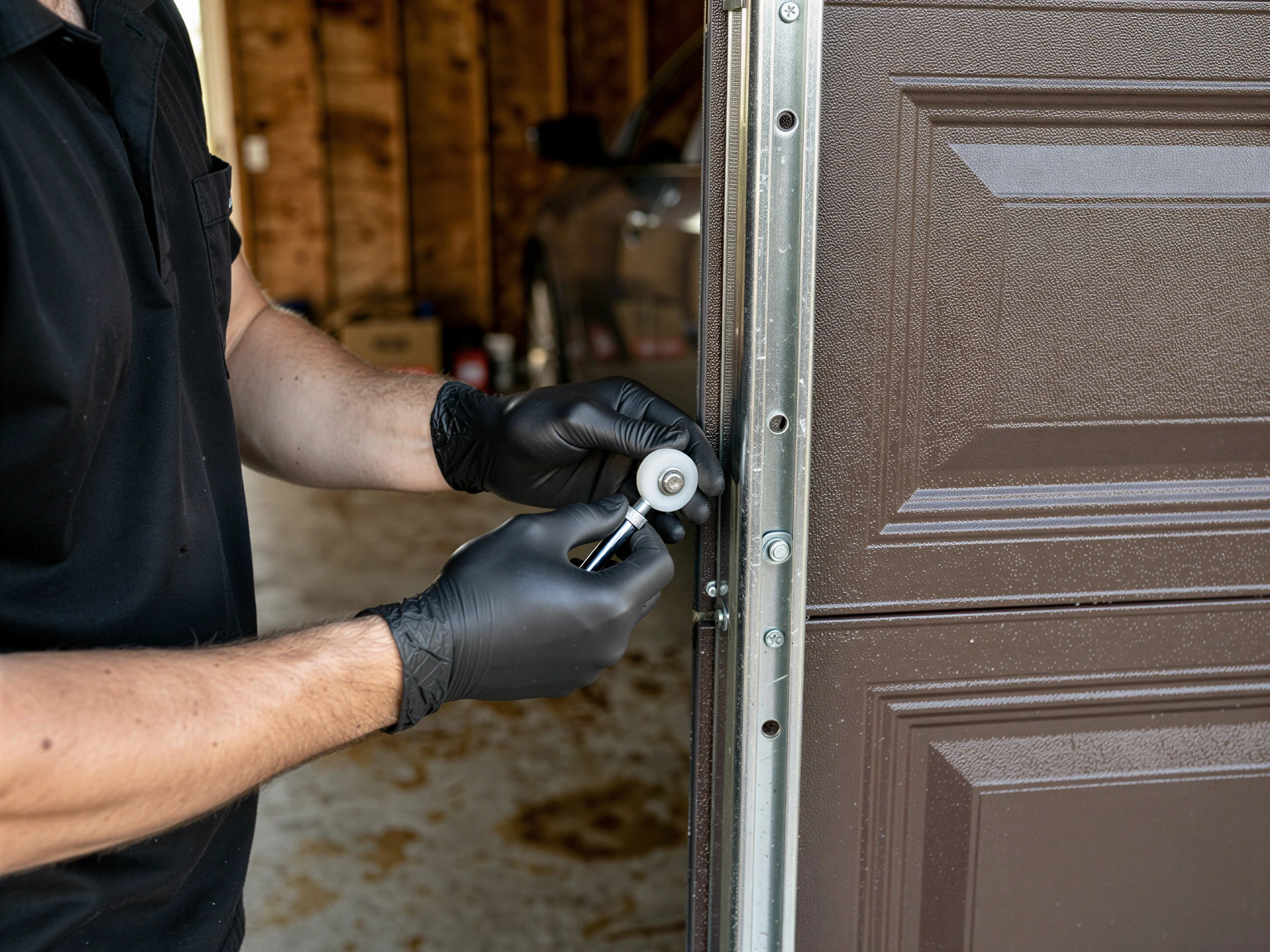
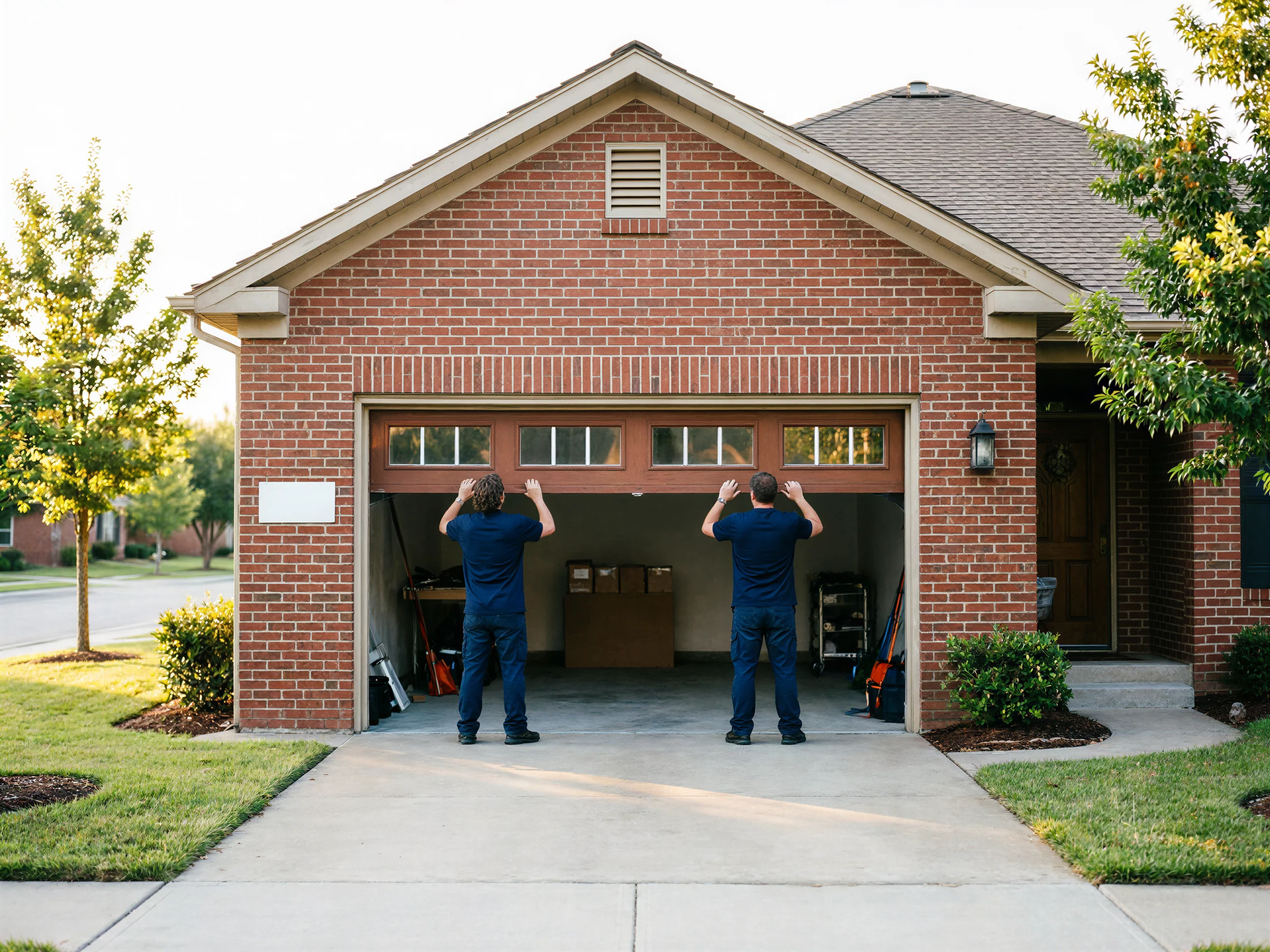
Where This Job Goes Sideways
In La Marque, the fault almost never starts with the new door. It starts with the opening the old one came out of. Most of the houses here went up around 1978 - a few years before the broader League City service area's median build year of 1983 - and that gap matters more than it sounds.
Lighter 1970s build materials
Builders working the late '70s used lighter jamb lumber, single-layer steel sections with no insulation, and tracks sized for doors that weighed a third less than what's sold today.
Bowed jambs and shimming
Pull the old door off a 1978 opening and you often find the jambs have bowed a quarter inch or more out of square, the header isn't doubled, and the old track was shimmed with whatever scrap was on hand that day. Hang a new, heavier insulated door on that frame without correcting it first and you get a door that binds on one side within the first winter.
Phone quotes skip walkthroughs
This is the step that gets skipped when a job is quoted over the phone instead of walked in person - and it's the biggest reason a new door install in a 1978 house goes sideways before the opener is even hung. See the La Marque overview for how this plays out house to house.
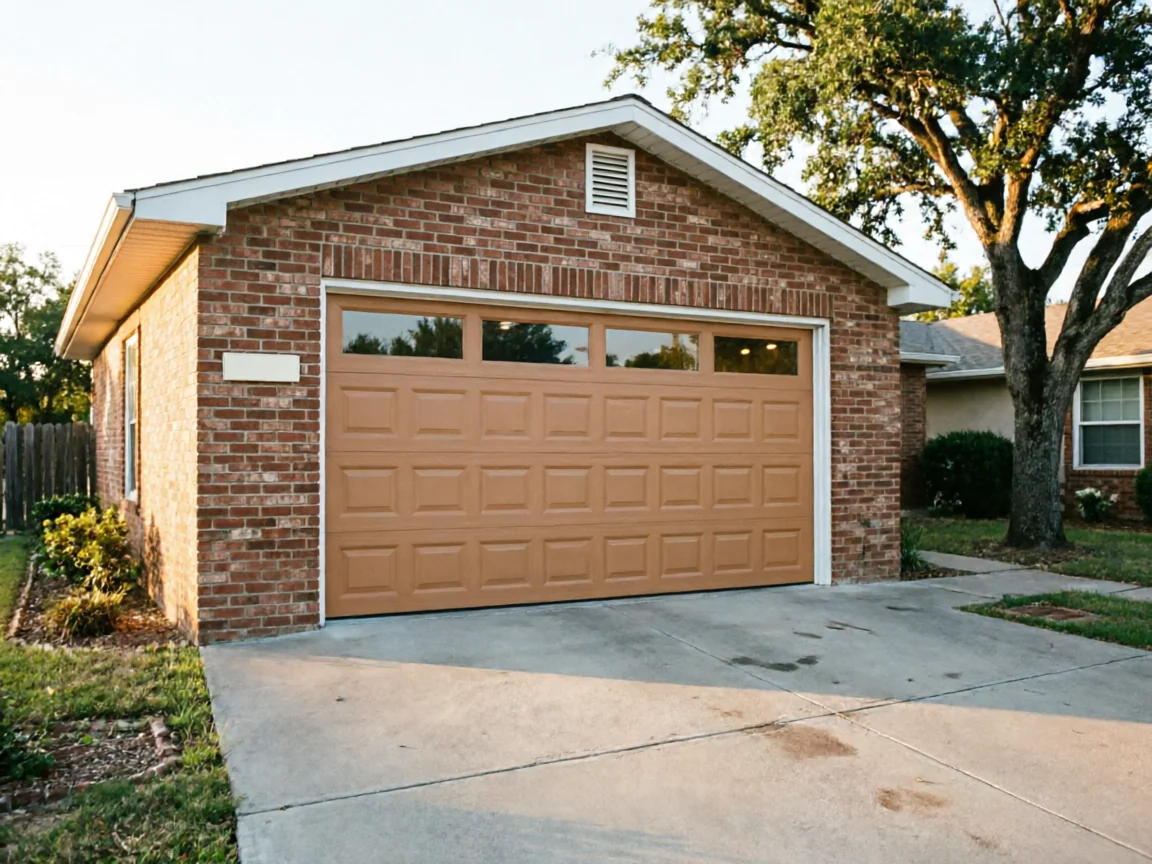
What Is on the Truck
For a new install on an opening this age, the truck carries more than the door itself. Along with the sections, hardware kit, and torsion spring sized to the actual door weight, there's jamb shim stock, a square, and replacement header lumber, because a 1978 opening rarely comes back square once the old door is off.
Insulated steel as default
Insulated steel sections are the default for anything going into these houses now; the single-layer doors common to that build era don't hold up well against the area's mild-but-humid climate, and the owner usually notices the difference in the garage attic space before the first summer is out.
Header rebuild or track shift
The limitation worth saying up front: this isn't a same-day swap on every job. If the opening needs a header rebuild or the track spacing has to shift because the new door is a different thickness, that's a second trip once the lumber and hardware are on hand - parts for odd-width 1970s openings aren't something every supplier stocks off the shelf.
Many original openings remain
Across the roughly 41,000 owner-occupied houses in the wider service area, a fair number still carry original openings from this era, so this isn't a one-off case for La Marque specifically.
What Causes It Around Here
The climate here runs mild with the occasional freeze morning, not the deep cold that cracks hardware outright, but the swing still shows up in old torsion springs that have been sitting on an original 1978 install for decades. Combine that with Gulf Coast humidity working on unpainted track bolts and galvanized hardware, and the failure mode around La Marque tends to be corrosion and fatigue rather than a sudden snap from cold.
Income plays into it too. La Marque's median household income runs lower than the $94,643 average across the broader service area, and it shows in which doors get replaced versus repaired. A lot of these 1978 openings have had the same door patched two or three times instead of swapped outright, which means by the time a new install finally happens, the opening itself needs more correction than a newer house would.
The Symptom
The giveaway on a 1978 La Marque house is usually a door that looks fine closed but drags or chatters about two feet up, where the old track bows slightly from decades of a too-heavy spring compensating for worn rollers. Homeowners often describe it as the door "catching" rather than binding, because it only happens partway through the cycle, not at the top or bottom.
Rust at the bottom panel seam is the other common tell, especially on doors that sit low to grade with no drainage gap - not a defect specific to any one brand, just what happens to steel that's spent over forty years in this climate. Neither symptom means the opener is bad; it almost always traces back to the track and the opening, not the motor. If a homeowner in La Marque is quoting a new door because of noise rather than age, it's worth checking the track alignment first, since a straightened track sometimes solves it without a full replacement - the honest answer, even though it's a smaller job than a full install.
Talk to a local pro
Garage door service in League City?
Same-day service with honest, upfront quotes.