Where This Job Goes Sideways
Most houses in Santa Fe went up around 1991, which puts the original garage doors squarely in the early steel-panel era - raised-panel steel sections, usually non-insulated or lightly insulated, hung on hardware that was standard for that decade.
Hail and trailer damage
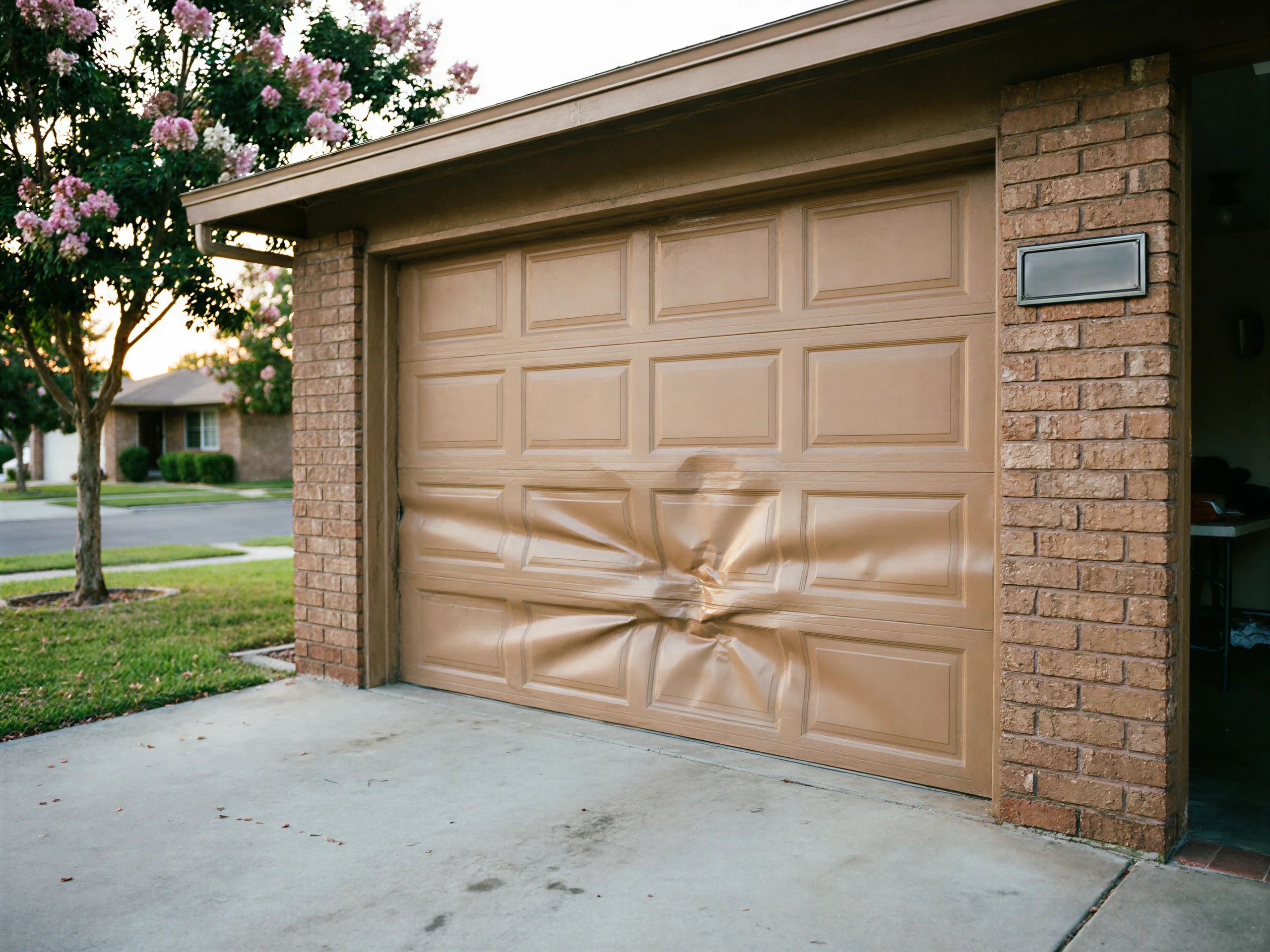
Thirty-plus years on, those panels have usually taken a hit or two: a trailer backing in wrong, a basketball, a run of hail. The trouble is finding a match. Door lines from the early 90s have been through several redesigns since, and the exact panel profile and color your door shipped with often isn't made anymore.
Matching profile and color
We can usually get close on profile and color, but "close" is the honest word - we'll tell you upfront if an exact match isn't realistic so you're not surprised on install day.
Full door or visible seam
Where we can't match, the choice is between a full door replacement or living with a visible seam. That's not a sales pitch, it's just the reality of a 30-year-old product line. We'd rather say that now than after we've charged you for one panel and you're staring at a mismatch.
The DIY Question
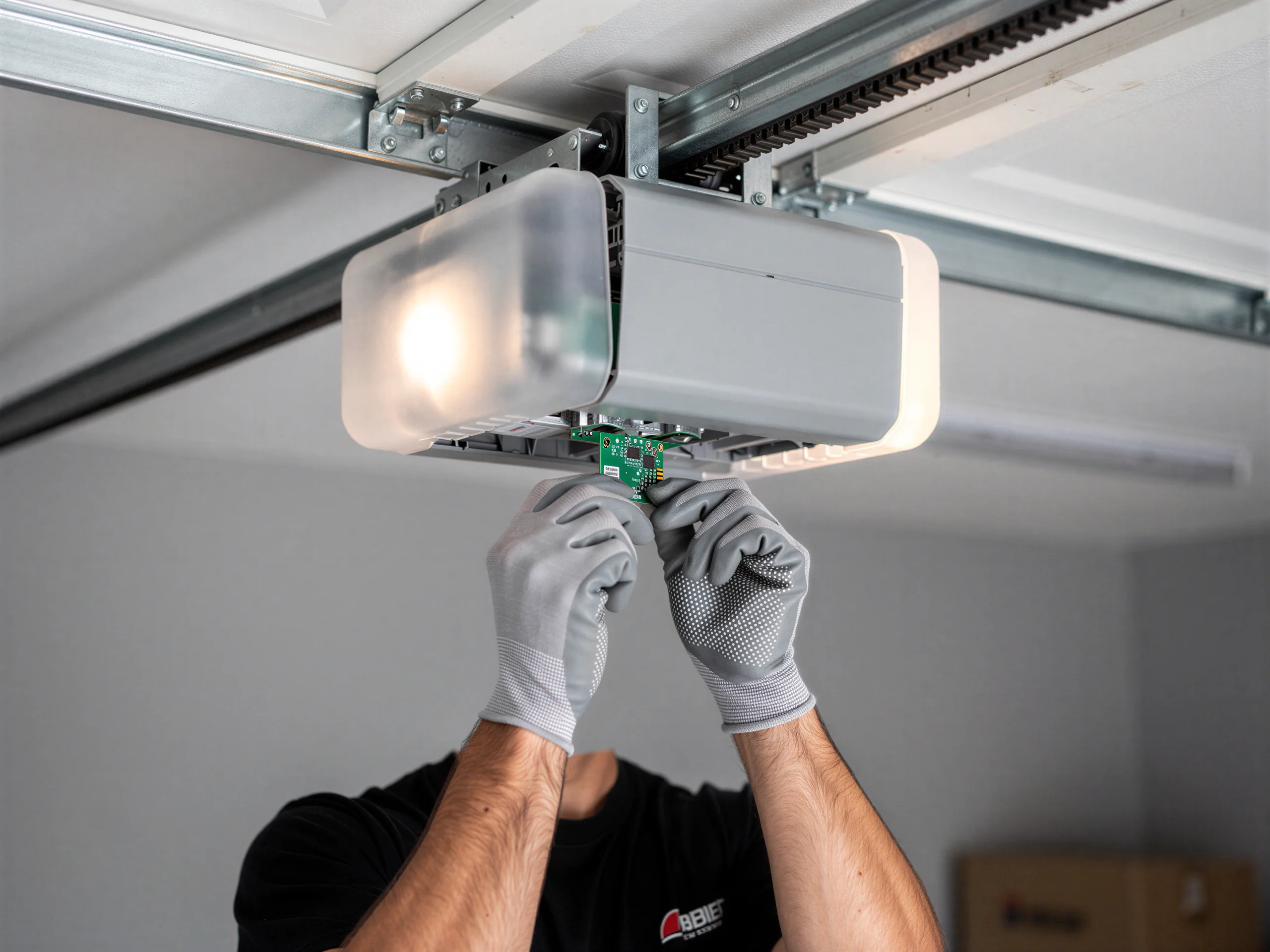
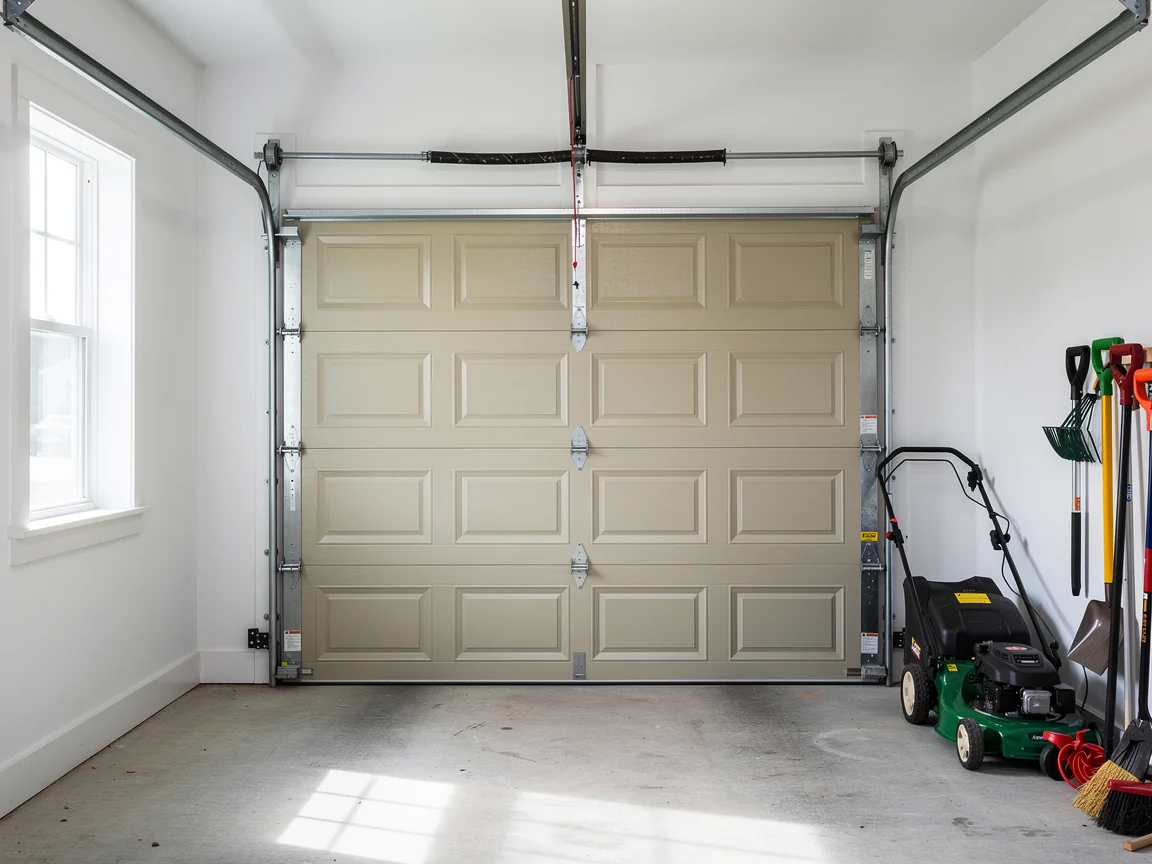
A single dented panel looks like a bolt-off, bolt-on job, and sometimes it is. But doors from this build era in Santa Fe often ran on torsion or extension springs sized for the original panel weight, and swapping in a panel of different gauge or insulation changes that balance. Get the weight wrong and the opener strains, or the door won't sit flush at the bottom. If you're just replacing a single bottom panel with an exact factory match on a door with no other issues, it's within reach for someone comfortable with hand tools. If the track is bent, the panel is structural (bottom or has the strut), or you're not sure the replacement matches gauge-for-gauge, that's where we'd tell you to call instead of guessing. We're not going to pretend every panel swap needs a pro - some don't.
What Causes It Around Here
The Gulf climate here runs mild with occasional freeze nights, which isn't the extreme-heat or deep-freeze stress that cracks panels outright.
Sagged panel insulation
What we see more in Santa Fe is slower wear: steel panels from the early-90s stock that have thinned with surface rust at the bottom seam, or insulation that's sagged inside an older sandwich-style panel after three decades of humidity cycling.
Impact on soft seams
Add an impact - a car bumper, a wind-blown branch - and a panel that was already soft at the seam folds instead of just denting. On newer doors elsewhere in the broader service area, the same impact might just scuff the paint. Here, with original hardware and original panels still common, the same hit is more likely to mean a replacement conversation rather than a touch-up.
Booking a Visit
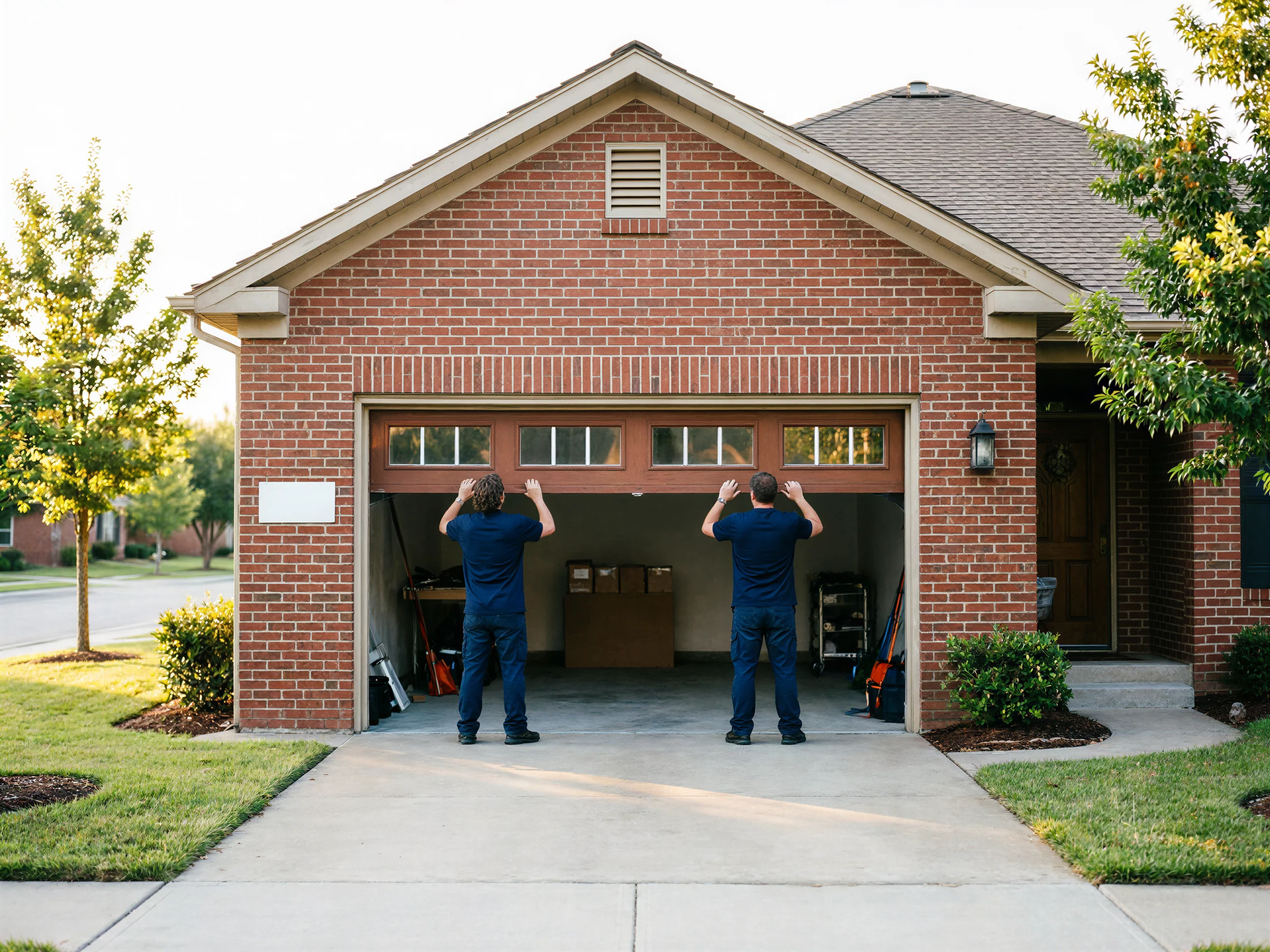
We cover Santa Fe from our base in League City, about 7 miles up the road, so a visit means scheduling rather than a same-area walk-in. When you call, having the door's brand and the approximate age (1991-era build is a useful starting point for most Santa Fe homes) helps us bring the right panel stock and fasteners on the first trip instead of a second one. If you can get a photo of the damaged panel and the full door, that speeds up the match search before we're standing in your driveway.
What the Repair Takes
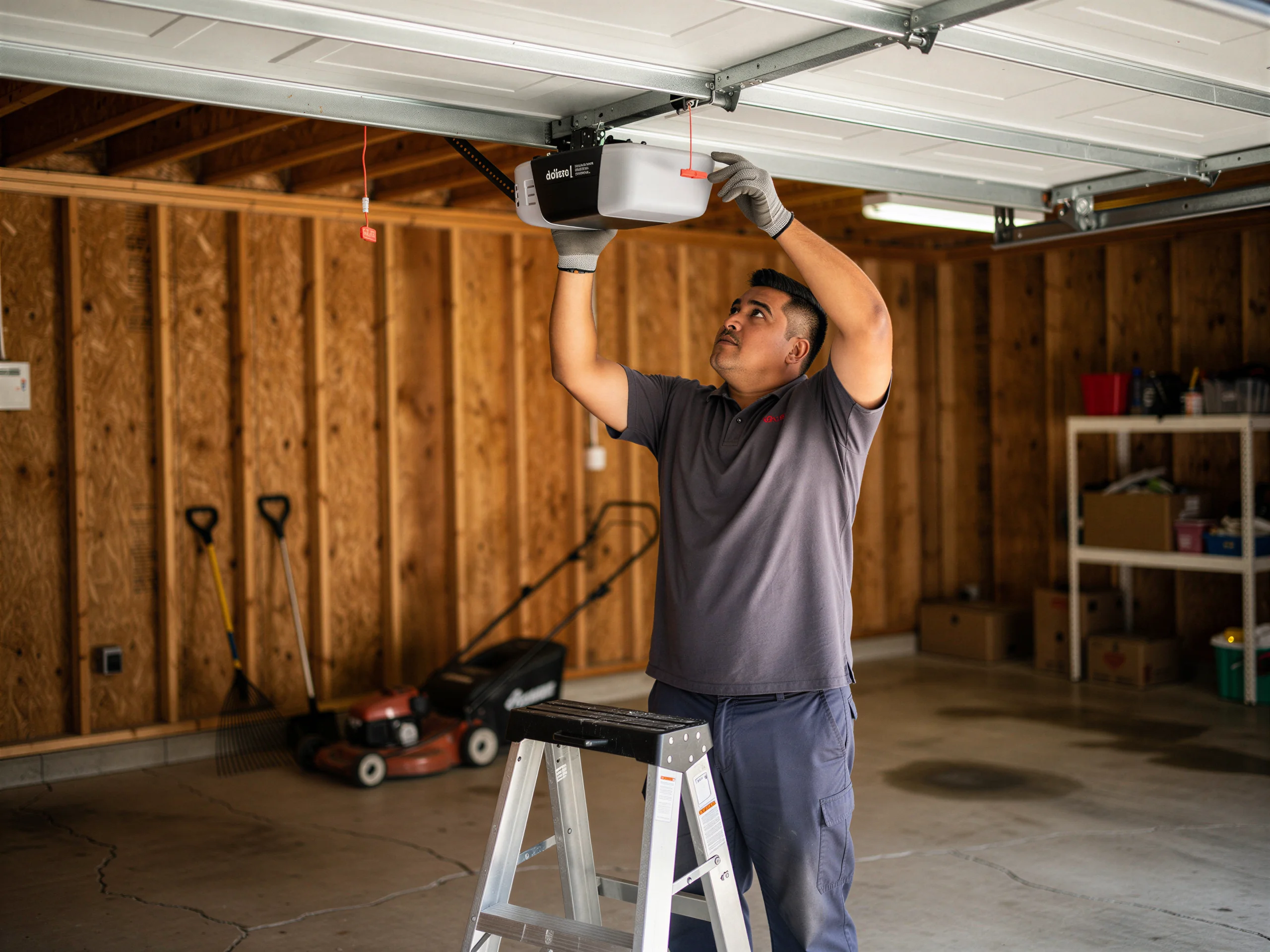
Panel replacement starts with identifying the exact section - top, bottom, or a middle panel - and whether the door's track and springs are otherwise sound.
Single-panel swap sequence
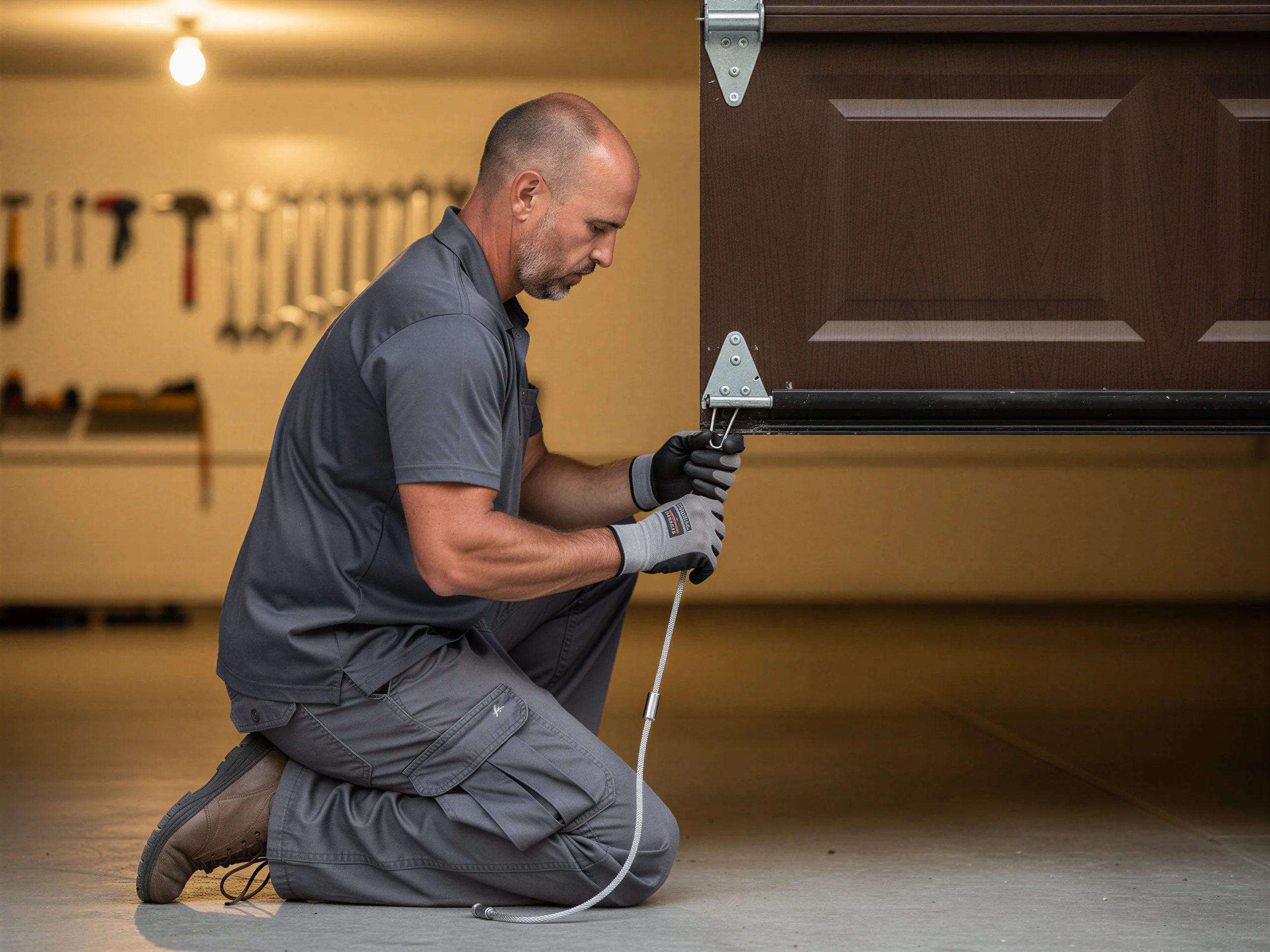
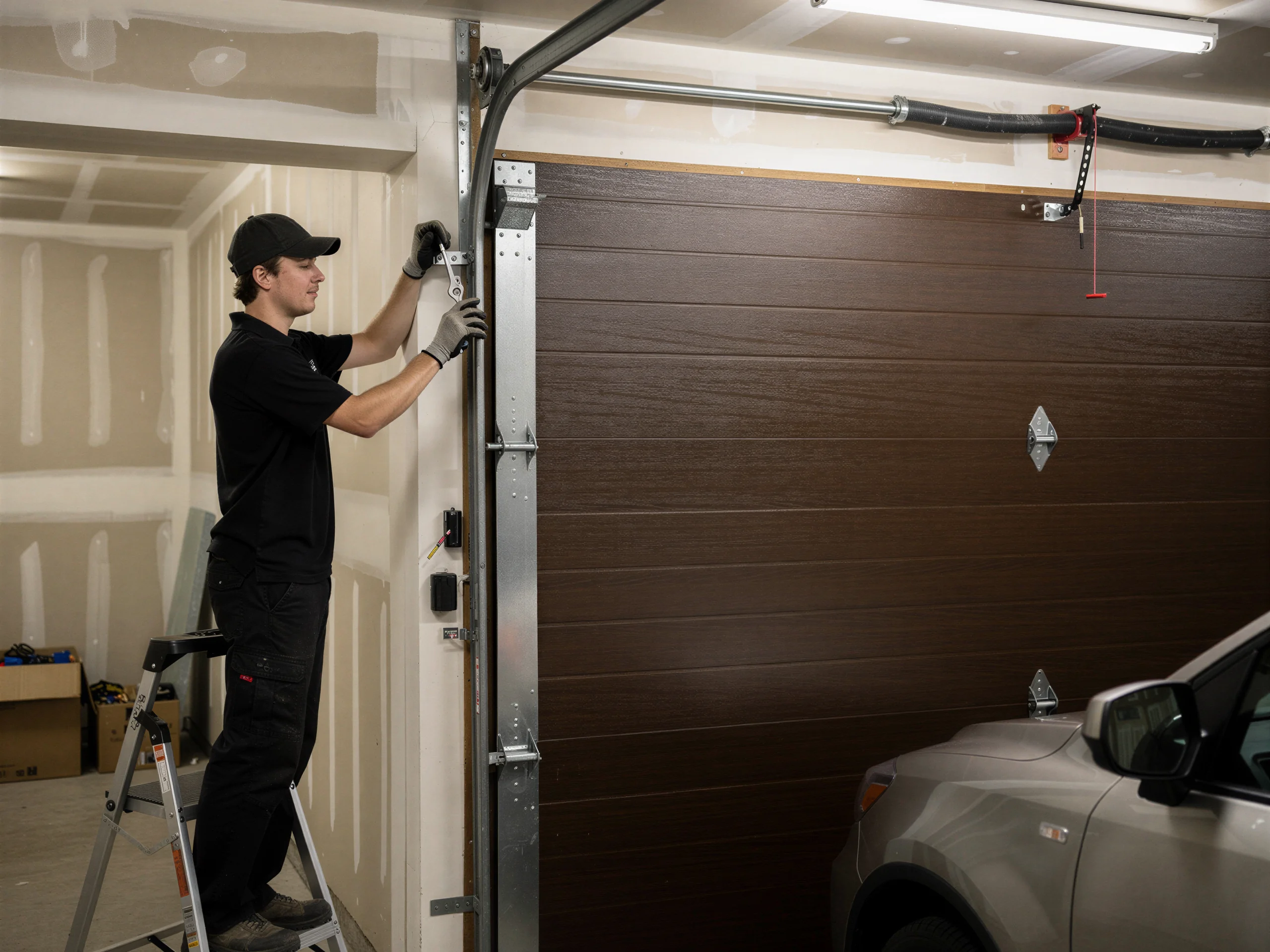
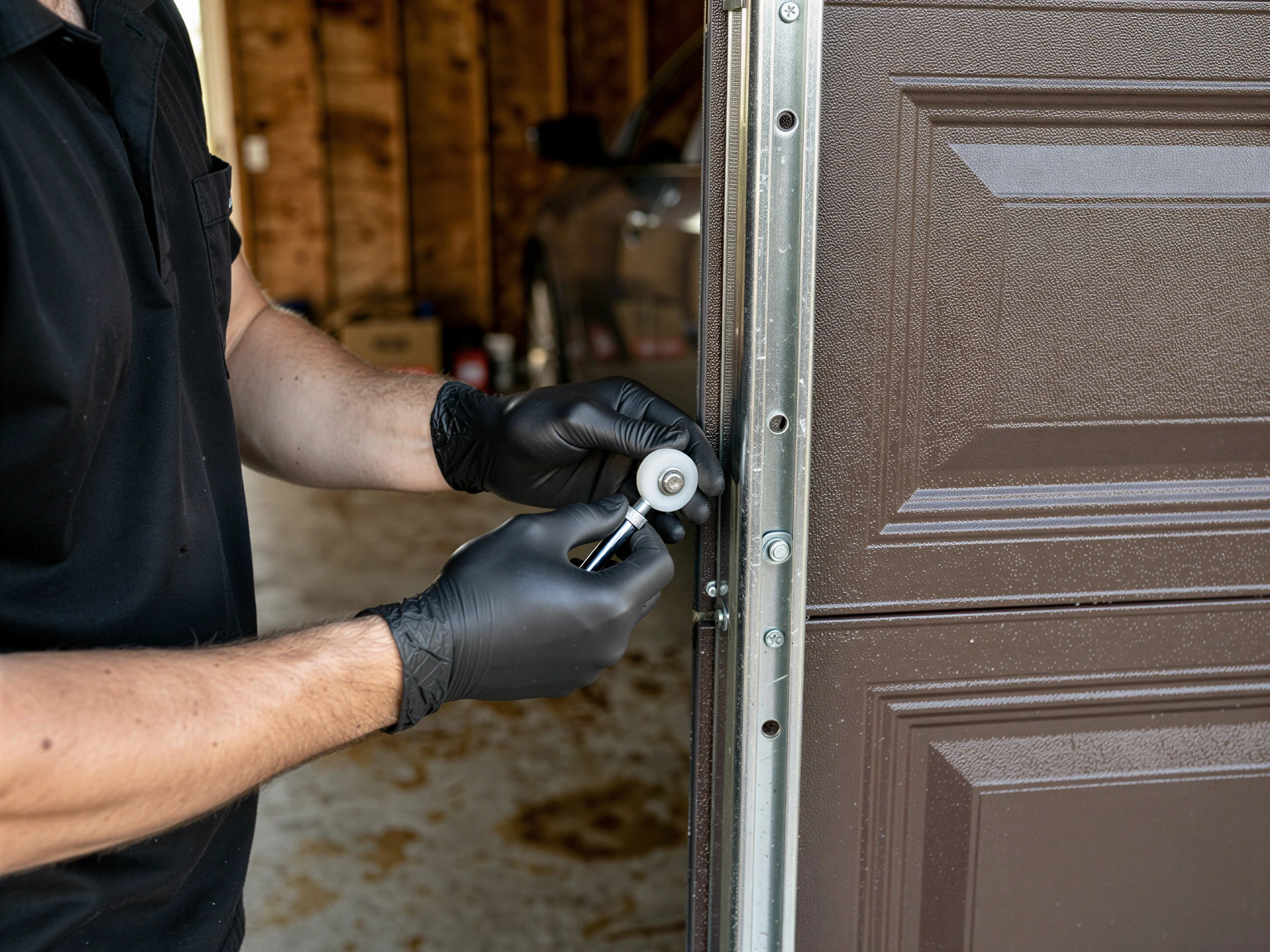
On a straightforward single-panel swap with a matching part in stock, it's a disconnect, unbolt, lift-out, and reinstall job, re-securing the hinges and rollers to the new section and checking the door balances the same as before.
Tension matched to panel
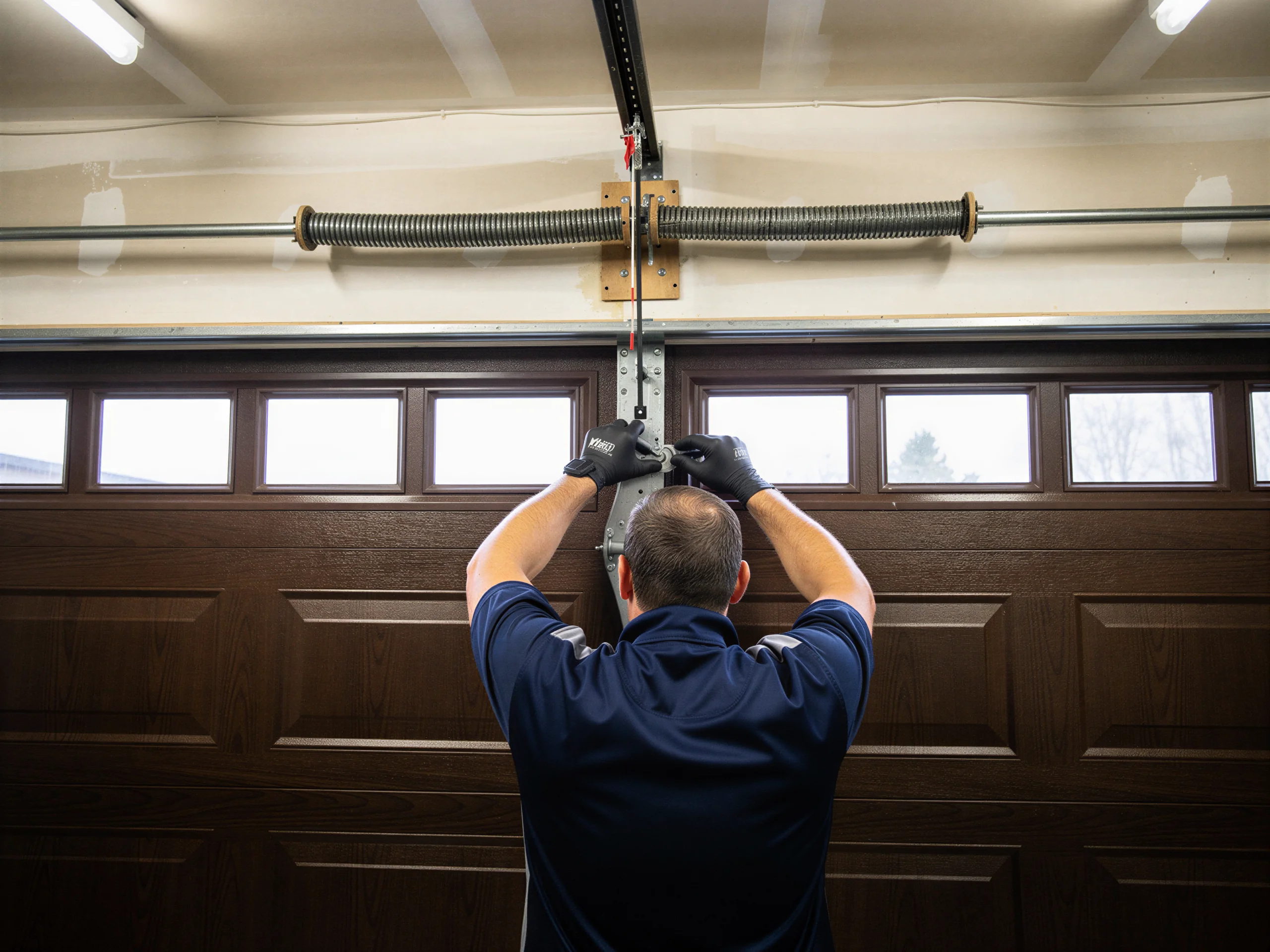
On an older Santa Fe door, we're also checking the spring tension against the new panel's weight, since even a small difference in gauge changes how hard the springs have to pull.
Hinges and rollers too
If the hinges or rollers on the damaged section are also worn - common on hardware that's been in place since the original 1991 install - we'll flag replacing those at the same time rather than reusing parts that are already near the end of their life.
How Long It Takes
A single matched panel, with sound track and springs, is usually a same-visit repair once the part is in hand. The slower part is upstream of the job itself - tracking down a panel that matches a profile from a door that's been through a few design changes since 1991 can take longer than the install. We won't quote a turnaround on sourcing until we've actually identified the panel, because guessing there helps nobody.
Talk to a local pro
Garage door service in League City?
Same-day service with honest, upfront quotes.