Booking a Visit
We run this job out of League City, about six miles from Kemah, so there's no branch office or drop-in counter here - every install starts with a call and a measuring visit scheduled around your day.
Short route, quick measure
That drive matters less than it sounds: six miles is a short run for the truck, and it means we can usually get a measure done and a door ordered without the back-and-forth that longer routes require.
Opening size and insulation
What we ask for upfront is the same no matter where you live: rough opening width and height, whether you want insulated panels, and if the opener is staying or going. Kemah's homes, with a median build year around 1995, are mostly younger than much of the broader area we cover, where the typical house dates closer to the early 1980s.
Sizing never quoted by phone
That gap is the reason we don't quote a door size over the phone - a home built in the mid-90s was framed to different standards than one built fifteen years earlier, and the opening itself can run a few inches off from what you'd guess. We'll give you a firm price and install date at the measure visit, not before.
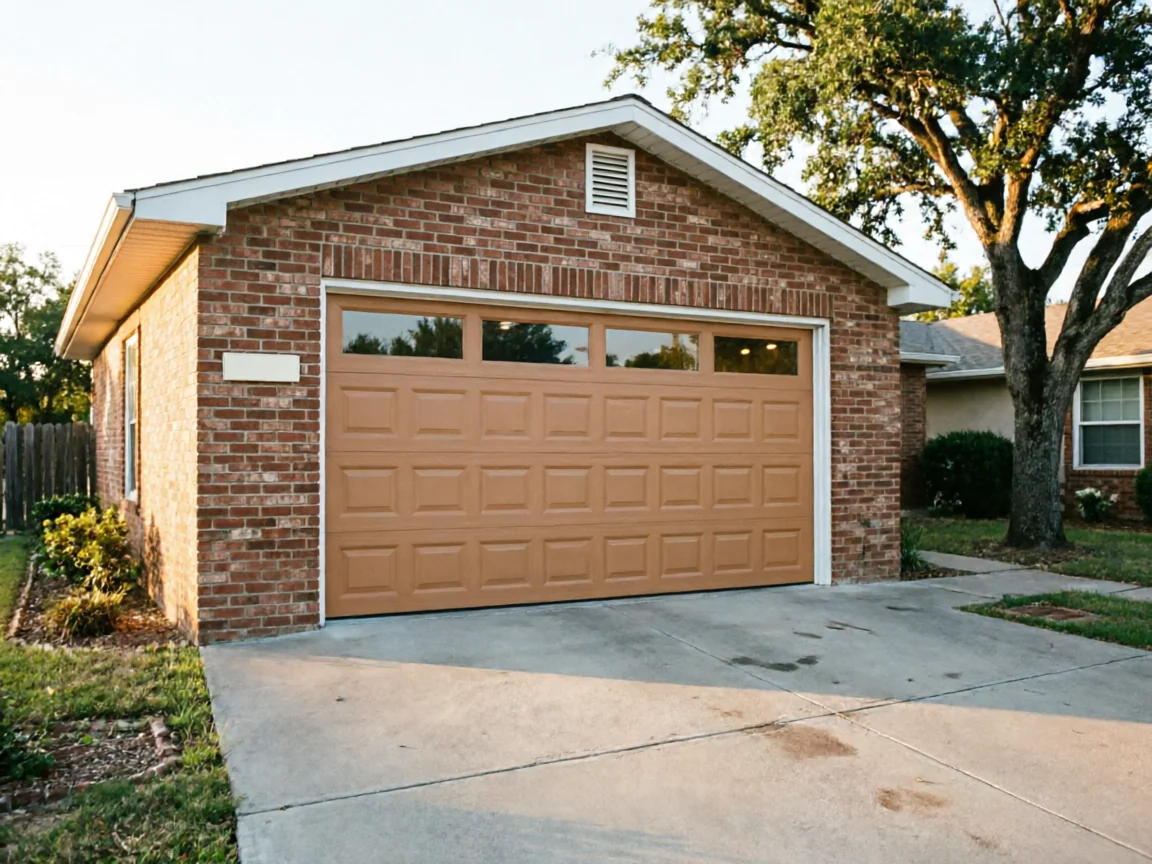
What the Repair Takes
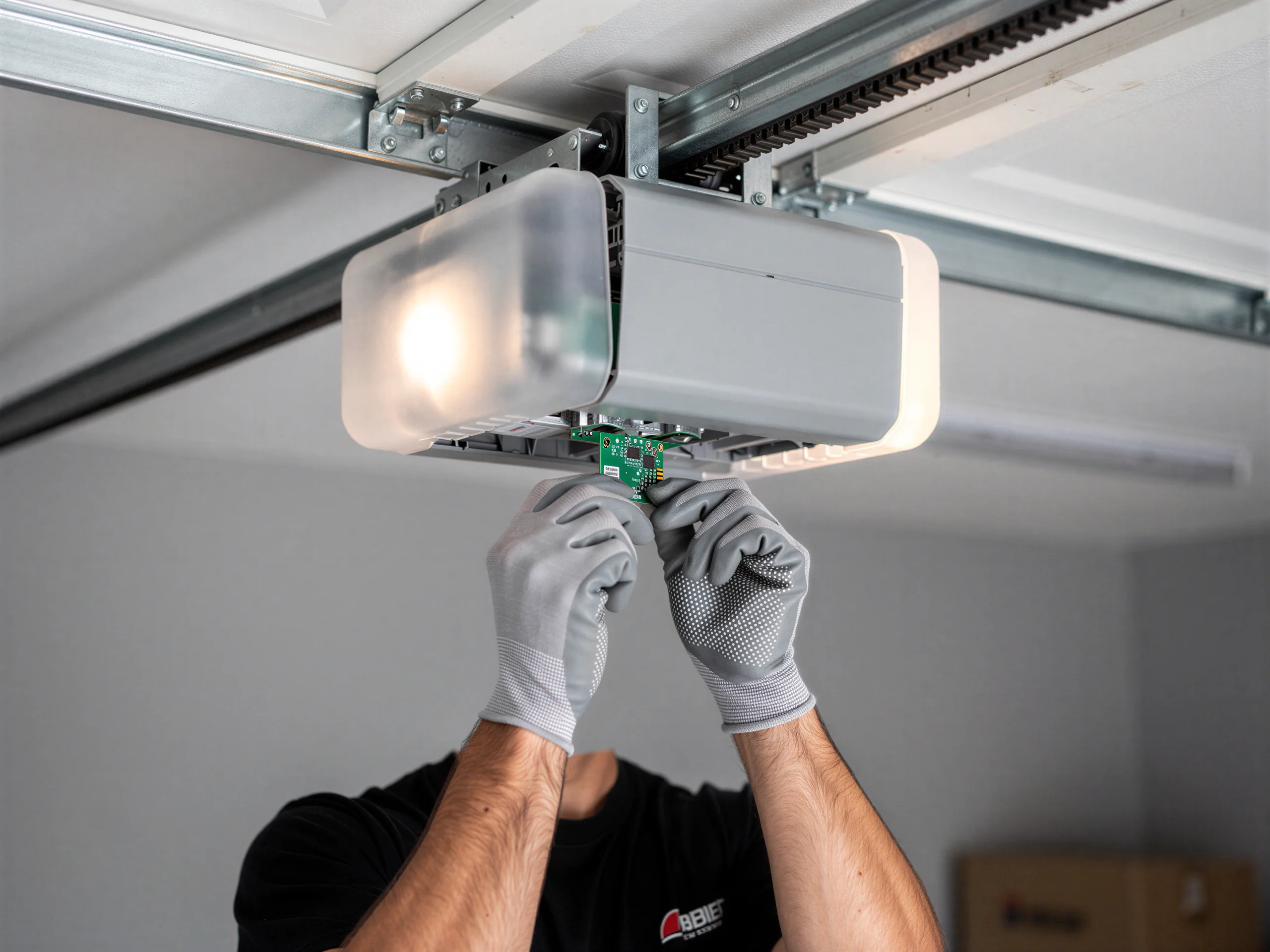
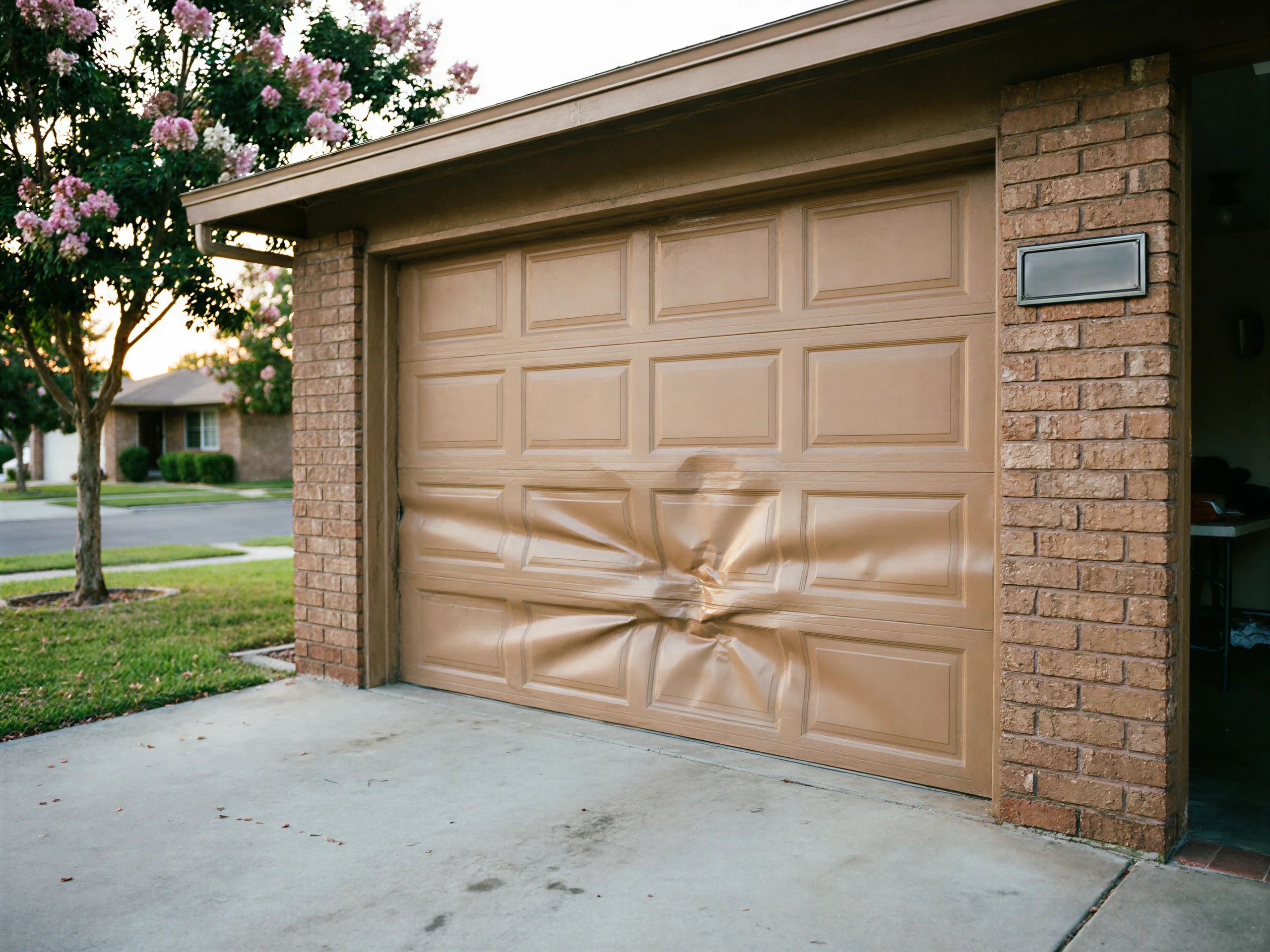
"Repair" on an install job usually means dealing with what's already bolted to the frame - the old door, the track, and often an opener that's outlived its usefulness.
Fewer 1980s hardware issues
Because Kemah's housing stock mostly went up in the 1990s rather than the 1980s or earlier, we're not fighting the same hardware we see on the older end of the service area. Most of what we pull off here is a steel sectional door on a standard torsion spring setup already, not the older extension-spring or one-piece doors that show up on 1960s and 70s houses elsewhere.
Typical same-day swap steps
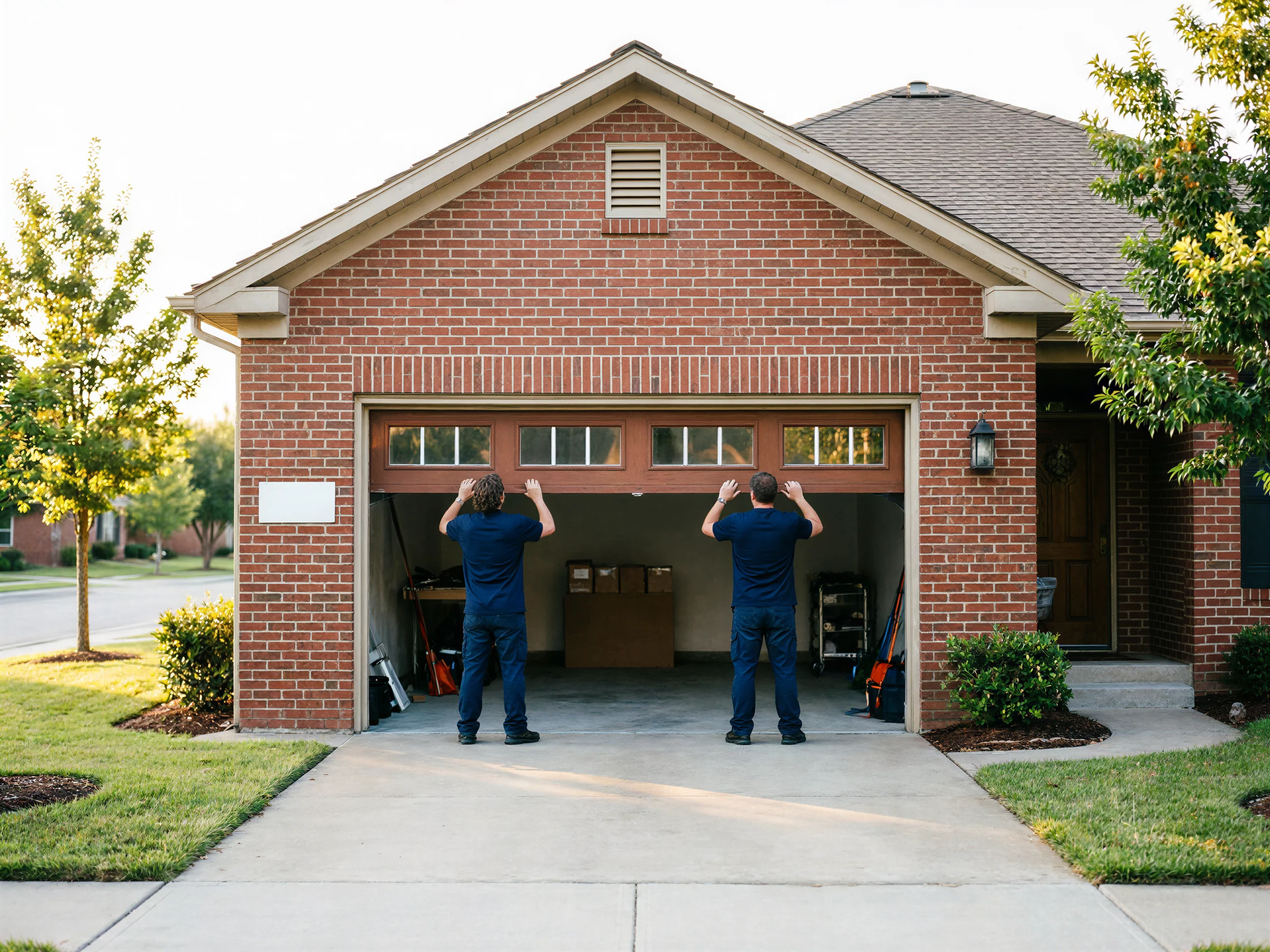
That matters for timeline. Swapping a 1990s-era sectional door for a new one is usually a same-day job: disconnect springs, unbolt track and panels, set the new jambs if needed, hang the new door, tension the springs, and run the opener through a cycle.
Shimming off-square openings
If the old opening was framed slightly off-square - which happens even in newer construction - we shim and adjust rather than reframe, and we'll tell you if that's not holding. The one thing that slows an install down isn't the house, it's the door itself: a custom width, a specific insulation rating, or a particular panel style can mean an order wait before we're back on-site to hang it.
What Is on the Truck
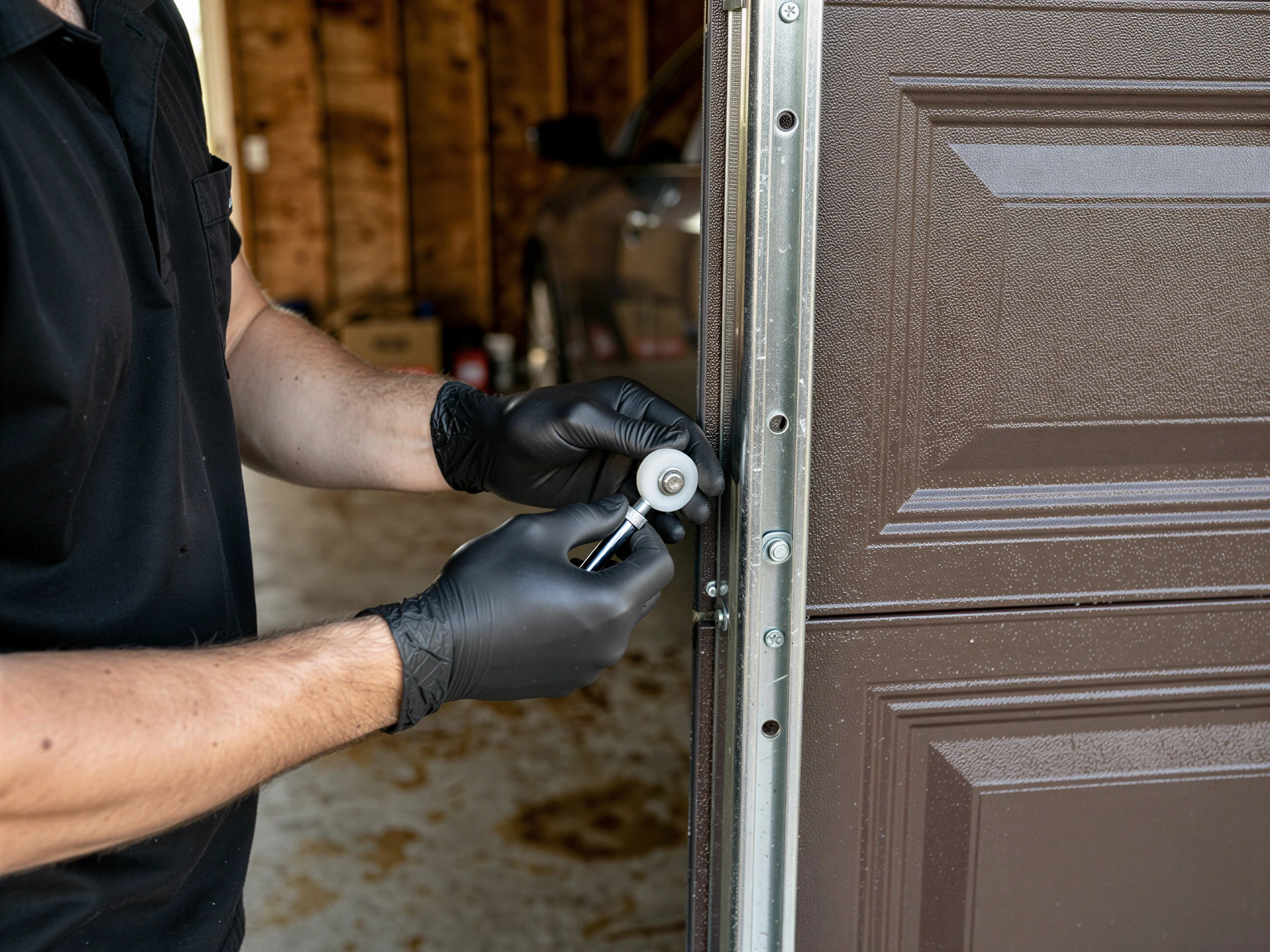
For a Kemah install we stock toward the sizes and styles that actually fit 1990s-built openings - standard 16x7 and 9x7 steel sectional doors, torsion spring sets sized for typical residential door weight, and openers with the belt or chain drives that match that generation of garage framing. We don't carry every custom width or glass-panel option on the truck; those get special-ordered after the measure visit.
The Gulf-adjacent climate here is mild with occasional freeze risk, which shapes what we bring more than it shapes the install itself - weatherstripping and bottom seals rated for humidity and the occasional cold snap, rather than heavy-duty cold-climate kits you'd see further north. We also carry basic reinforcement hardware for wind load, since the whole area sits close to open water.
If you need something outside standard stock - a tall door for a lifted garage, a carriage-style wood-look panel, or an opener with specific smart-home integration - we'll note it at the measure visit and order it rather than try to make a stock part work where it shouldn't.
The DIY Question
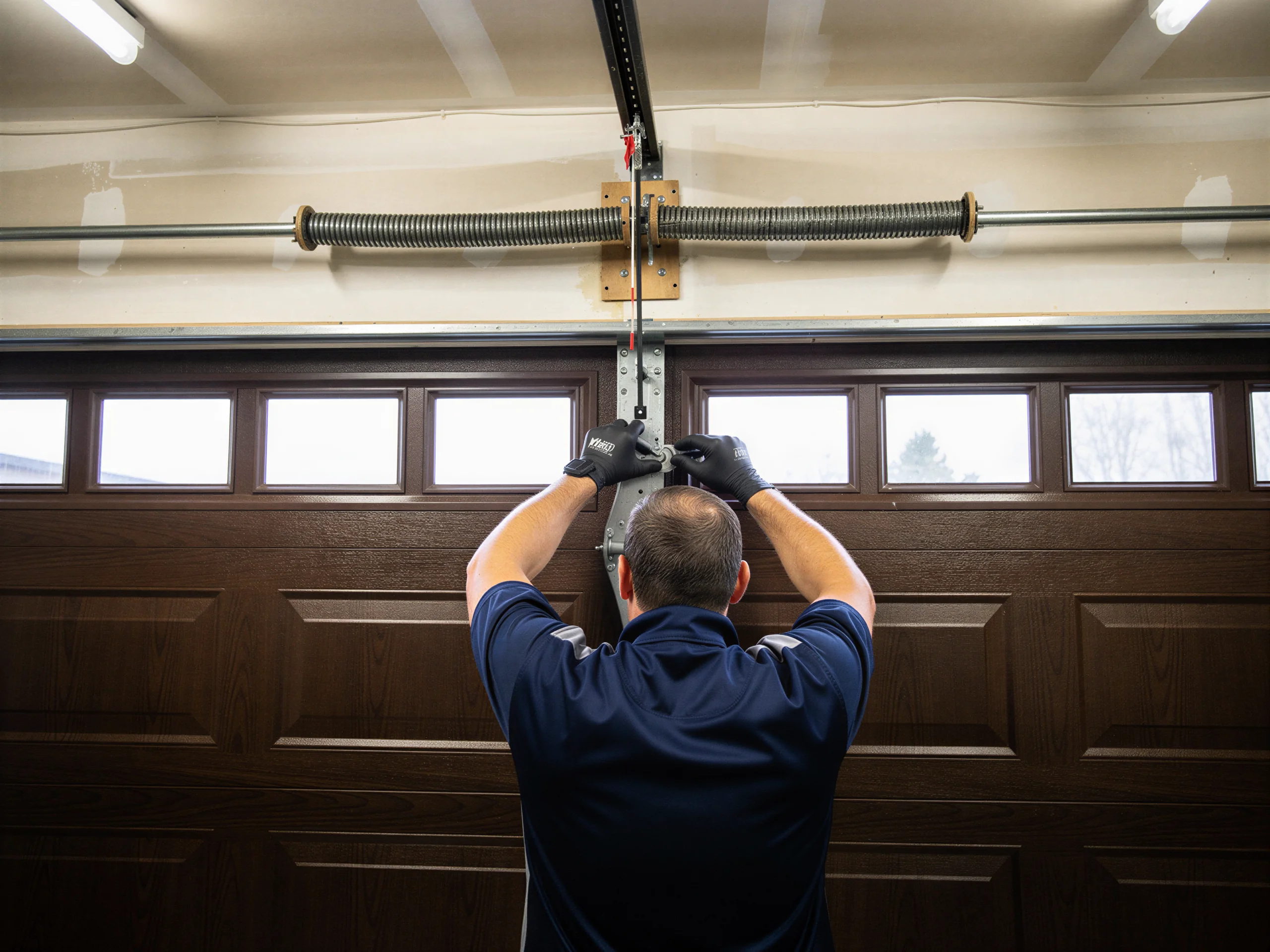
A new garage door looks like a weekend project until you get to the springs. A torsion spring on a standard residential door is wound under enough tension to break a bone or worse if the winding bar slips, and that's true whether the door is brand new or thirty years old. We don't recommend DIY spring work, full stop - that's not us protecting the job, that's just what the hardware does if you get it wrong.
Where a homeowner can reasonably do their own work is cosmetic: swapping handles, repainting panels, adding a keypad. Swapping the whole door and spring system is a different category of job, and it's one where a mismatched spring size - easy to get wrong without a torque chart - can wreck a new door's track in the first few openings.
If you're set on doing the demo yourself to save on labor, we can still handle the install and hookup. Just know that mismatched opening prep is the single most common reason an install visit runs long, and it's easier to avoid by having us do the whole thing in one visit.
Talk to a local pro
Garage door service in League City?
Same-day service with honest, upfront quotes.