Booking a Visit
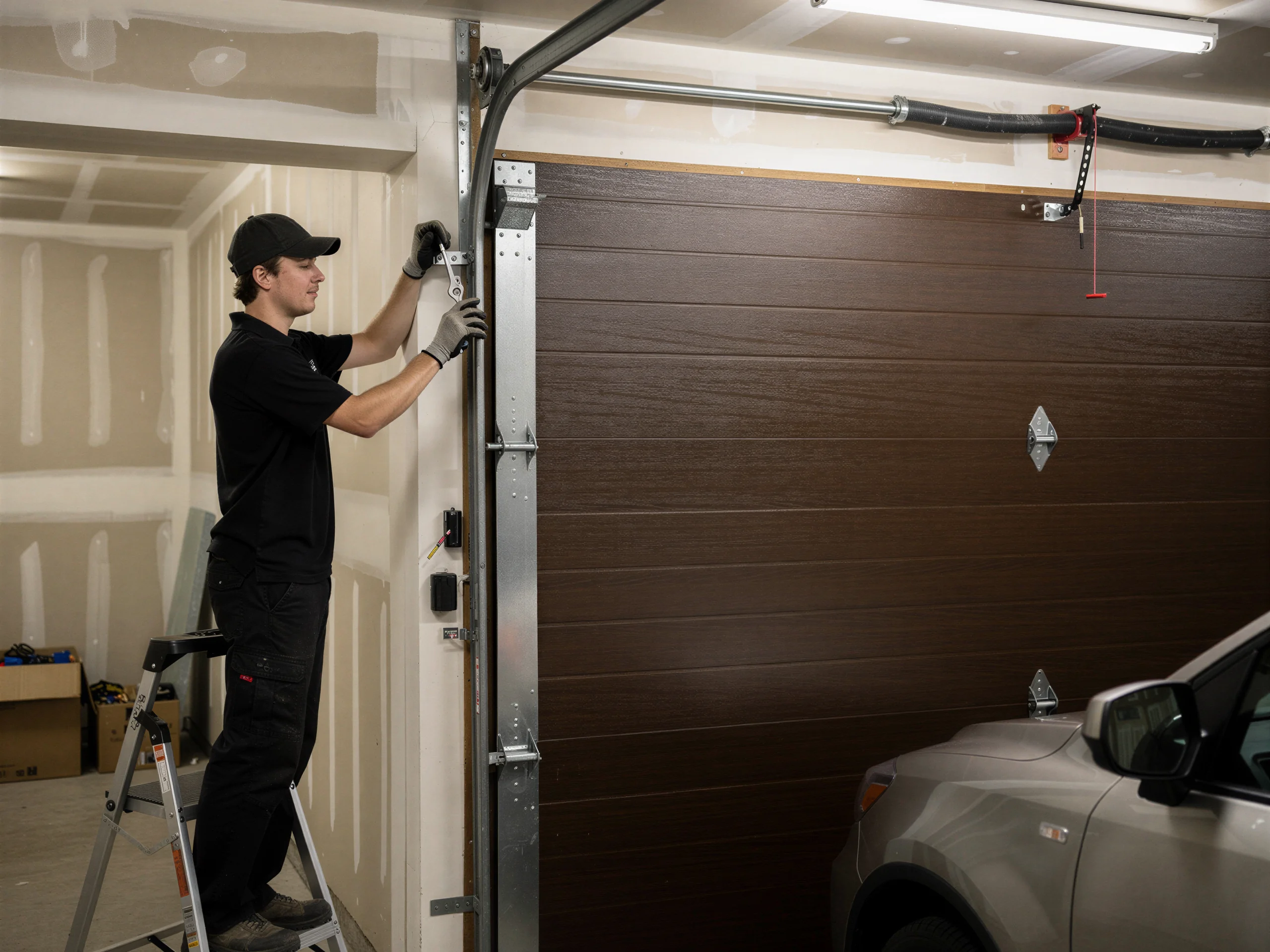
Kemah is a small place - about 772 households - so we don't run a crew stationed here. We cover it out of League City, six miles up the road, and most calls get worked into the same route as the rest of the service area.
Six miles, known layouts
That six miles matters less than people think; what matters is that we know what's behind the door before the truck leaves the yard, because a town this size doesn't throw a lot of surprises at us.
Year built and symptoms
When you call, tell us the year the house was built if you know it, and whether the door is sticking, grinding, or just sitting dead. That's usually enough to guess the spring size and opener type before we're on site, which saves a second trip if a part isn't on the truck.
Windows, not same-day slots
Because Kemah has fewer rooftops than the bigger towns nearby, we don't get the call volume that lets us promise a same-day slot the way we might for a bigger zip code. We'll give you an honest window when you book, not a guess padded to sound good.
What the Repair Takes
Across the wider service area, the housing stock runs from 1956 up through 2014, with a lot of it dating to the 1980s and 90s.
Kemah's 1995 torsion setups
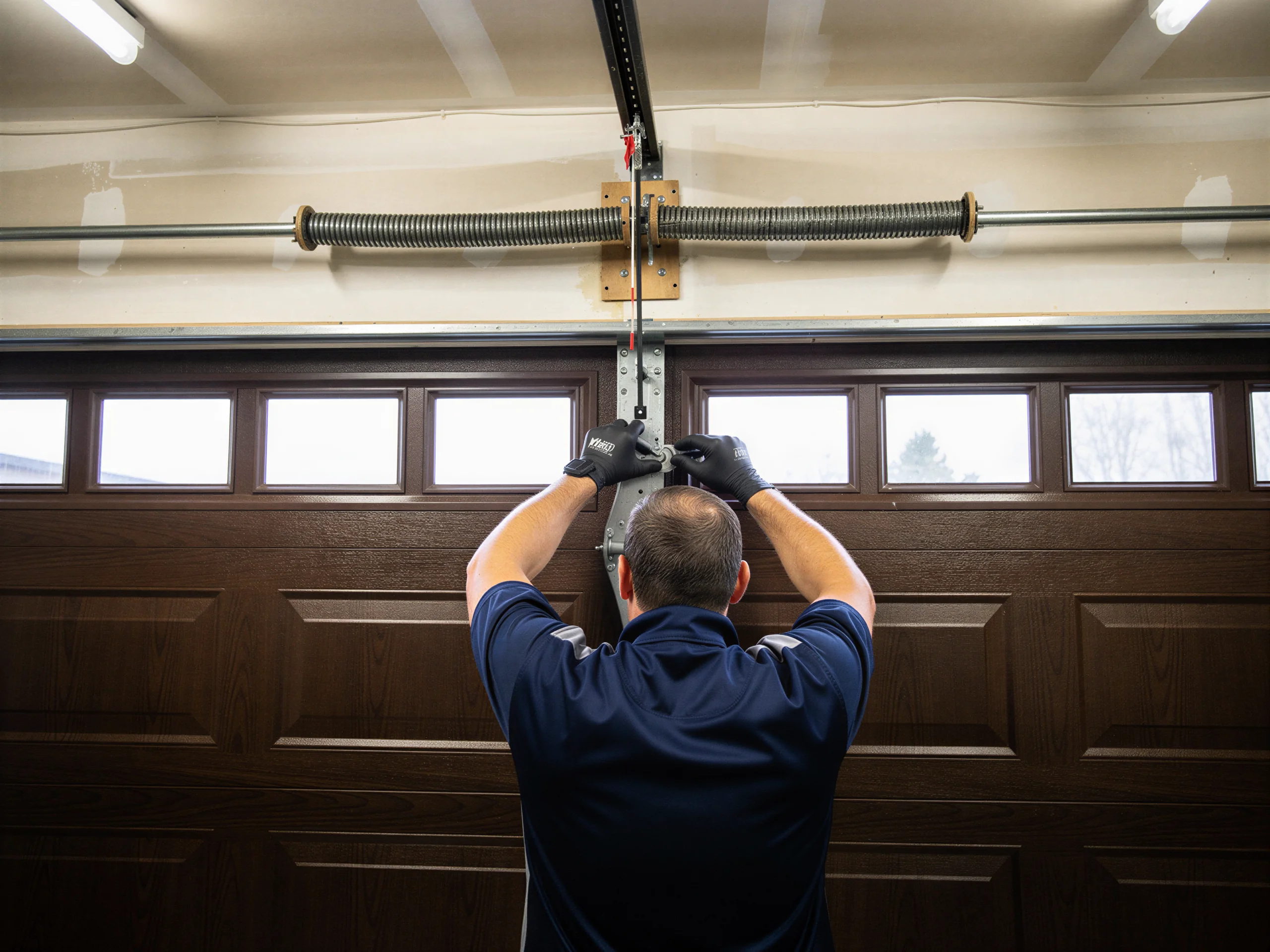
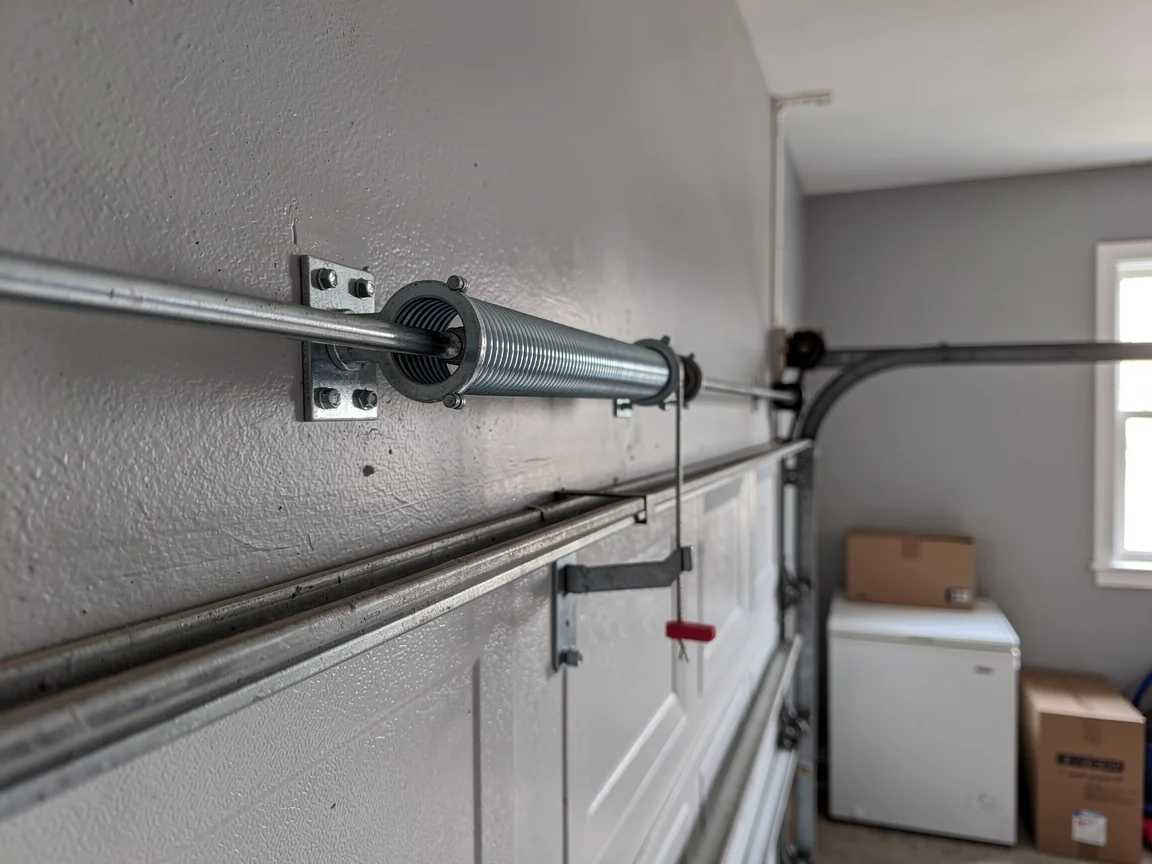
Kemah skews newer than that average - the typical house here was built around 1995 - which means we're mostly dealing with steel sectional doors on torsion springs rather than the older extension-spring, wood-panel setups you find in the oldest pockets nearby.
Standardized torsion parts
That's good news for repair speed: torsion hardware is more standardized, parts are easier to match, and the openers tend to be chain or belt-drive units from a narrower window of years than you'd see on a 1960s house. The climate here is mild with occasional freeze risk, not the kind of extreme heat-cycling that cracks panels or the hard freezes that seize up cheap rollers.
Salt air corrosion
What we see more of in Kemah is salt air and humidity working on hardware - hinges, end bearings, and cable ends corrode faster near the water than they do further inland. If a spring's been under load for twenty-some years in that air, it's usually the first thing we check, even before the opener logic board gets blamed.
What Is on the Truck
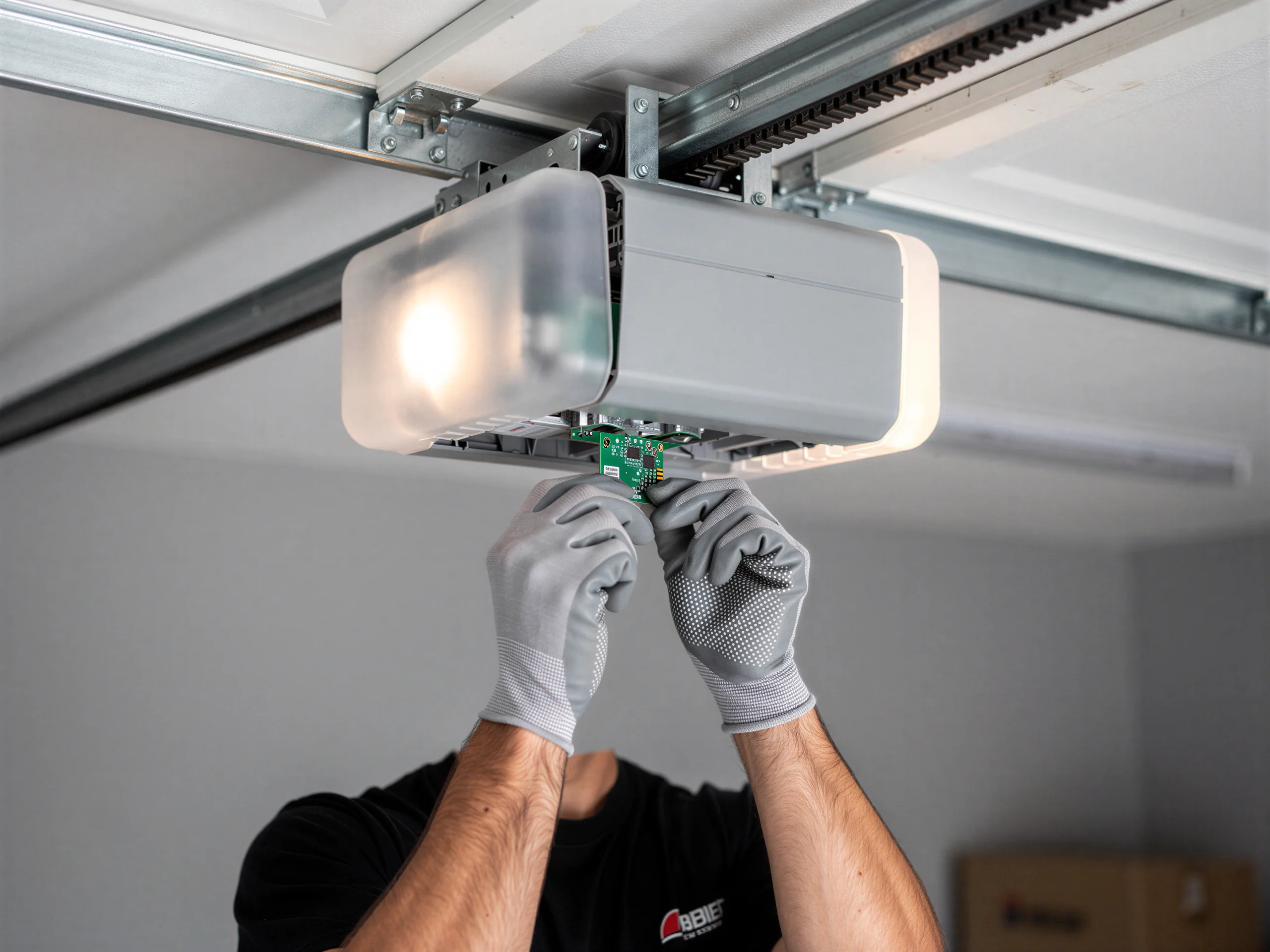
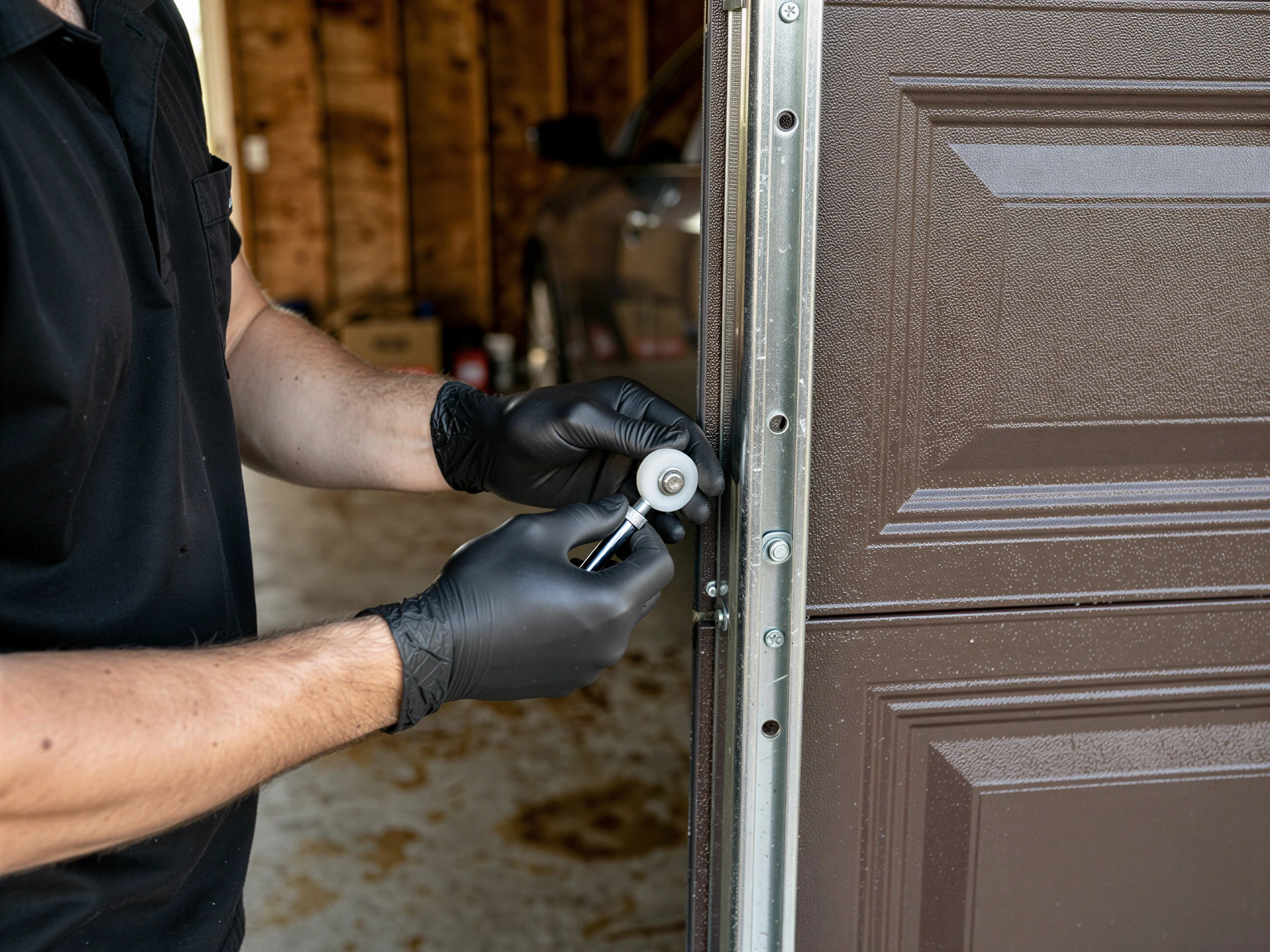
For a town built mostly in the mid-90s, we stock torsion springs in the sizes that match that generation of doors, plus standard-width nylon and steel rollers, galvanized cable, and the sensor eyes and logic boards that fit the chain and belt openers common to that era.
Older extension-spring parts
What we don't carry as deep is the older extension-spring hardware or the oddball wood-panel parts you'd need for a 1960s door - those jobs usually mean an order and a second visit, and we'll tell you that up front rather than make you wait on site while we figure it out.
Residential-only door inventory
Kemah's smaller household count also means we don't get asked for exotic setups much - no high-end insulated glass-panel doors on commercial-scale openers, just standard single and double garage doors on residential track.
Focused inventory, one trip
That keeps the truck inventory focused rather than trying to cover every possible door width and spring rating, which is part of why we can usually finish a torsion spring or roller job in one trip here.
The DIY Question
A torsion spring under tension can put someone in the hospital, full stop - that's not a Kemah-specific fact, it's true everywhere, and it's the one thing we'll always say no to handing off as a homeowner job. Roller replacement, tightening loose hardware, lubricating hinges - fine, do it yourself if you're comfortable on a ladder. Springs and cables, call someone.
Where Kemah's newer housing stock actually helps you is diagnosis. If your house was built around 1995 and the opener's never been swapped, you're likely dealing with a chain-drive unit from that generation, and a lot of the 'dead opener' calls we get here turn out to be a worn drive gear or a logic board that's simply outlived its design life - not a dramatic failure, just a part that's done. That's a repair, not a replacement, in most cases. Where it isn't worth fixing is a door that's been patched three or four times already and is still on its original 90s-era springs; at that point the labor on another repair starts costing close to what new hardware would.
Talk to a local pro
Garage door service in League City?
Same-day service with honest, upfront quotes.