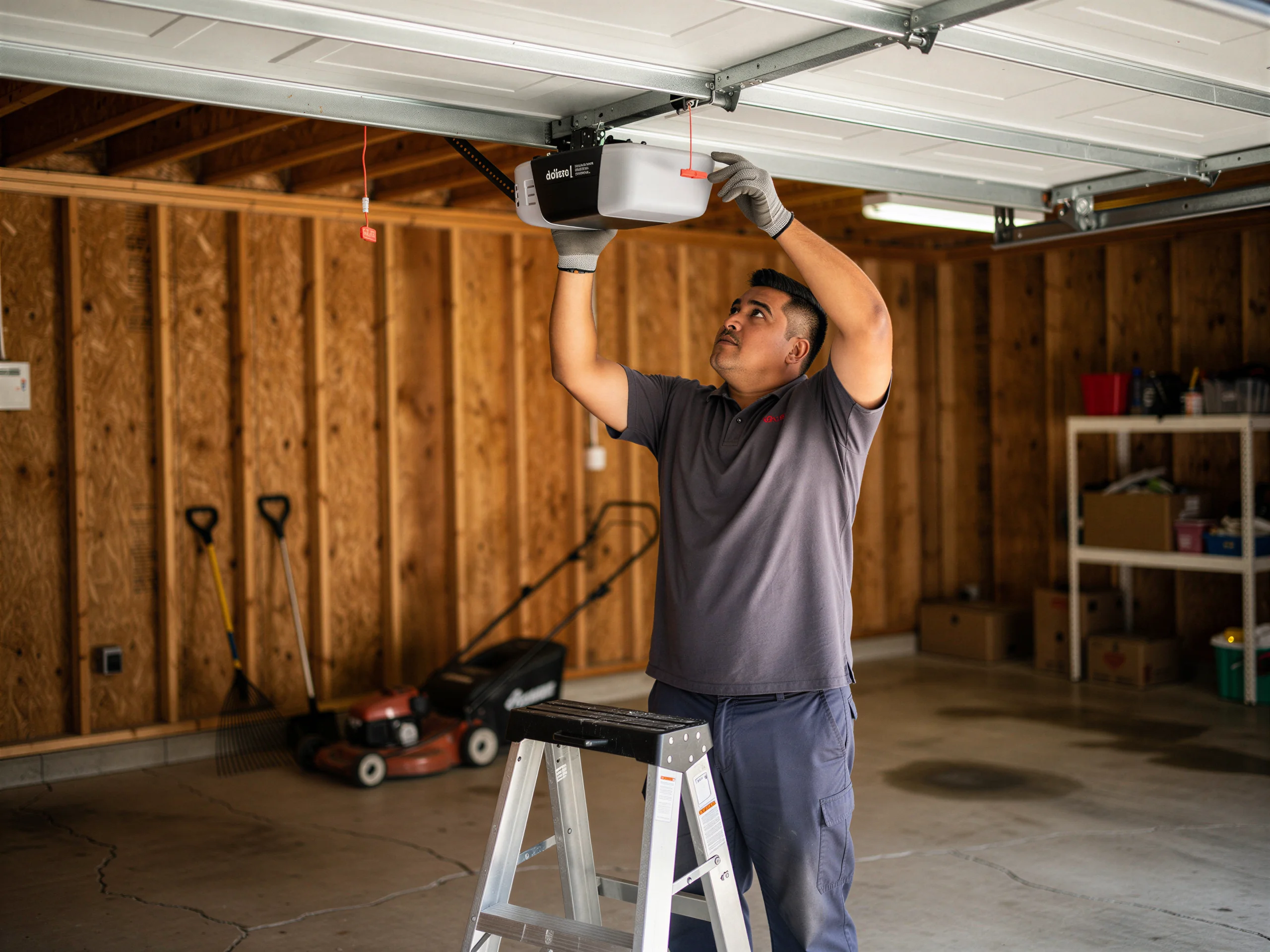
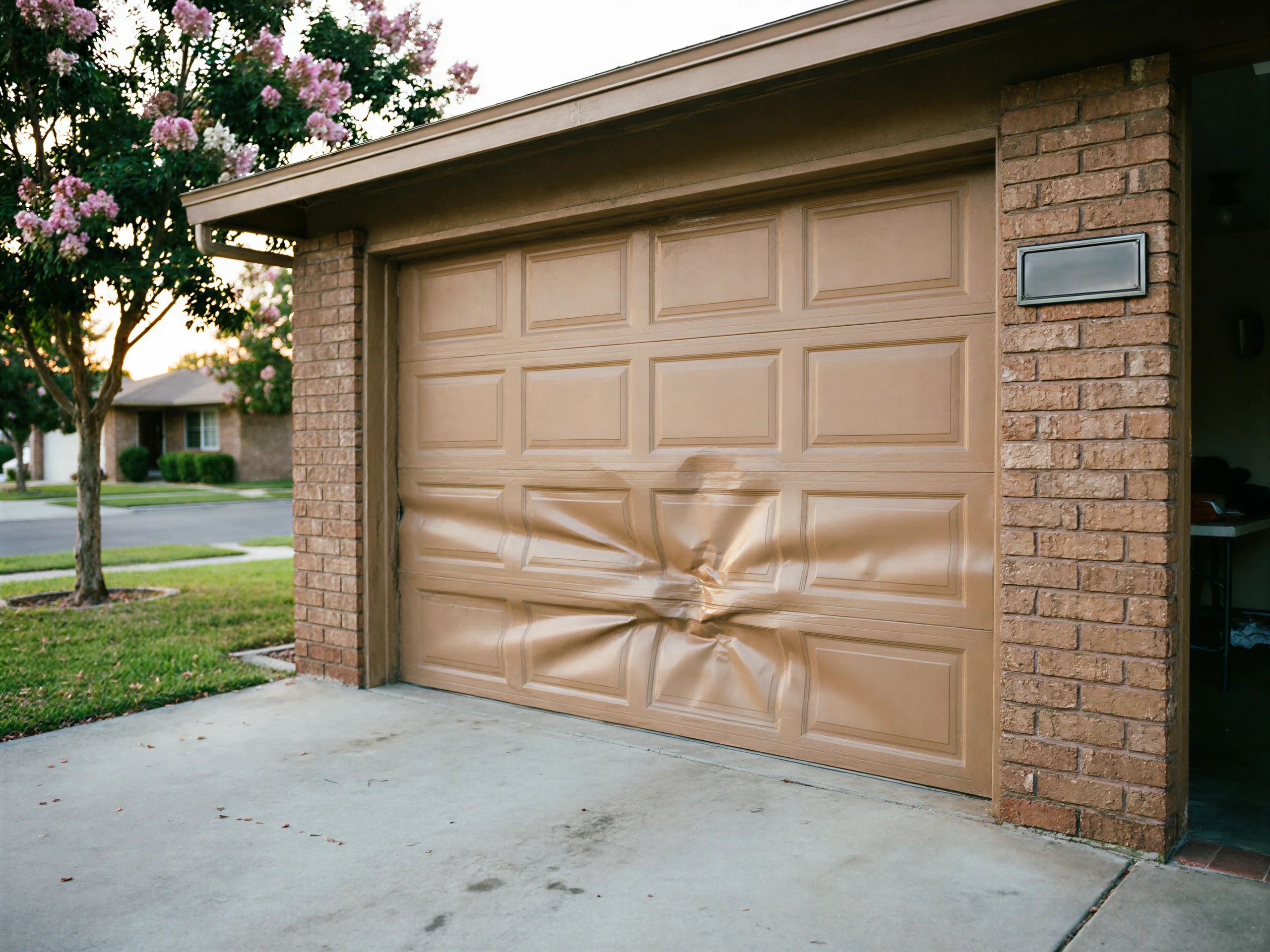
The Symptom
Dickinson's houses mostly went up around 1984, and the garage doors that came with them are the same age. That means a dent in one panel is rarely an isolated problem - it's the first visible crack in hardware that's been sitting unreplaced for close to forty years.
Backed-into panel damage
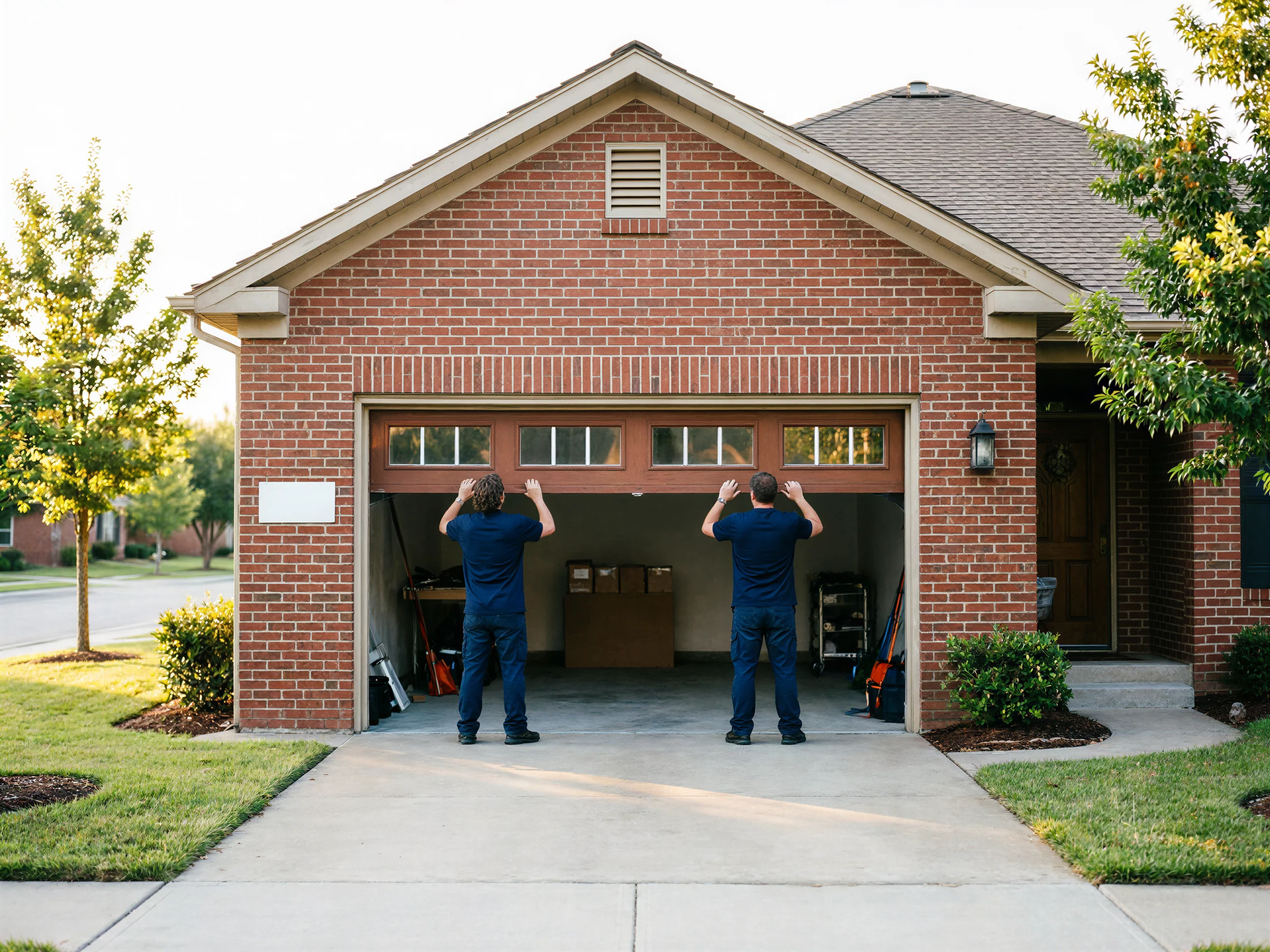
You'll usually see it after a backed-into door, a wind-thrown branch, or a trailer hitch clipping the bottom section. The panel buckles, the seam between sections gaps, and sometimes the track pulls slightly out of line where the damaged section used to hold it straight.
Original hinges and brackets
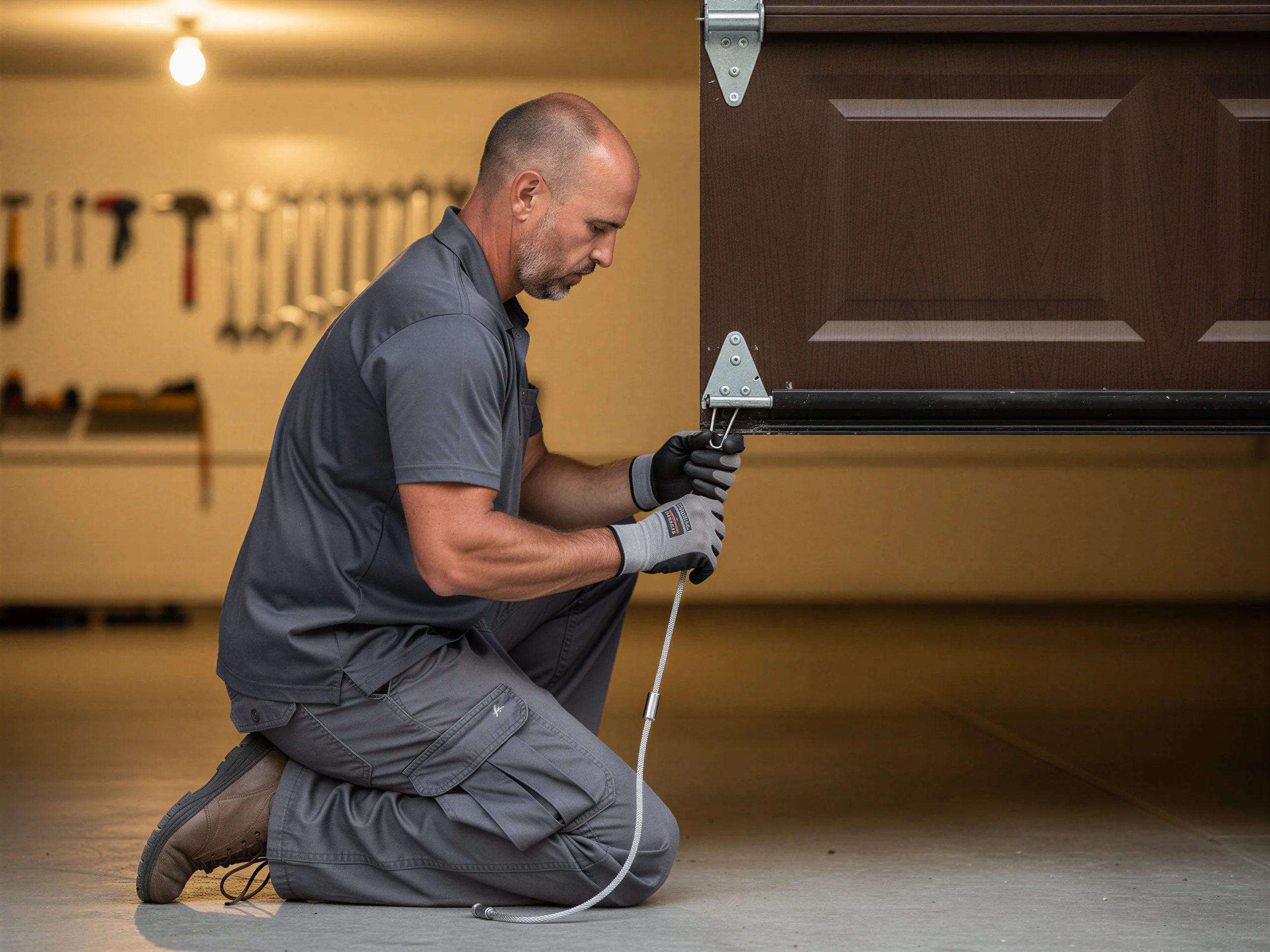
What we look for first isn't just the dent - it's whether the rest of the door, especially the hinges and the roller brackets on either side of the damaged panel, are original stock from the build year.
Fasteners around the panel
If they are, a panel swap has to work around hardware that wasn' built to current spacing standards, and that changes how the job gets done. On a door this age, the panel rarely fails alone; the fasteners around it are usually just as tired.
What the Repair Takes
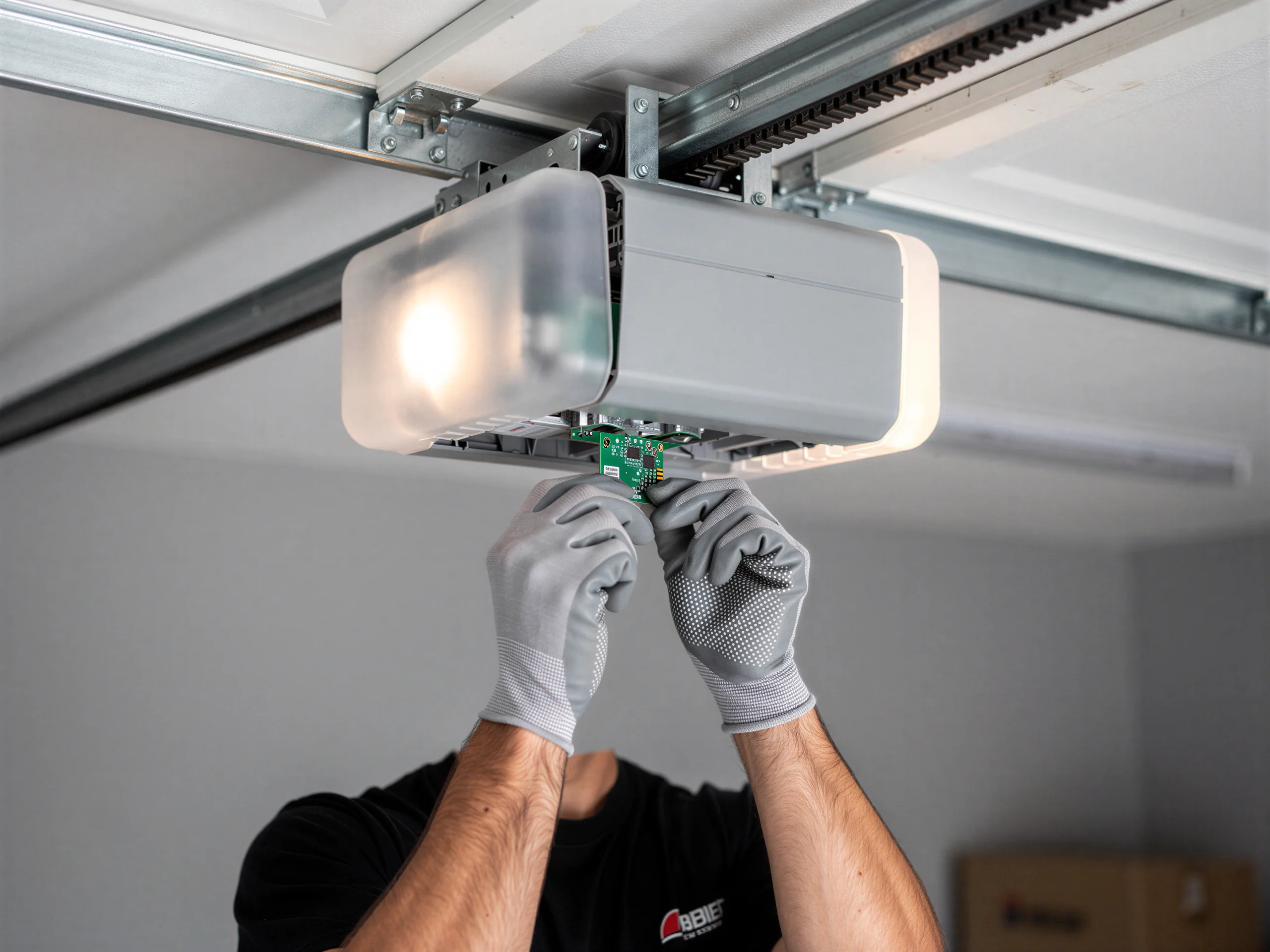
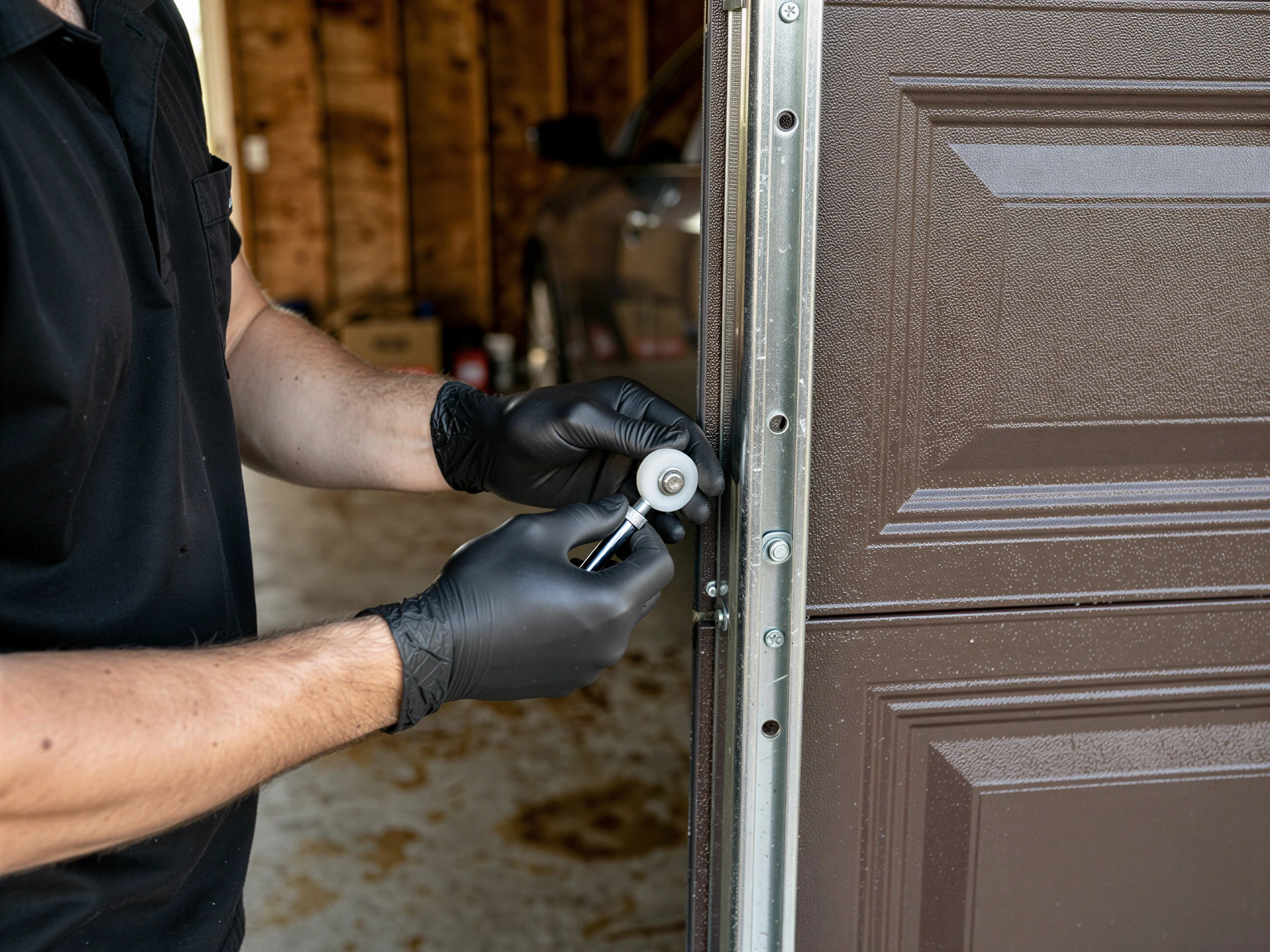
On a 1984-era door, the panel itself is only half the job. We pull the damaged section, check the hinges and rollers it was bolted to, and more often than not those get replaced along with it - not because we're padding the invoice, but because 40-year-old steel hinges don't hold torque the same way new panel hardware expects.
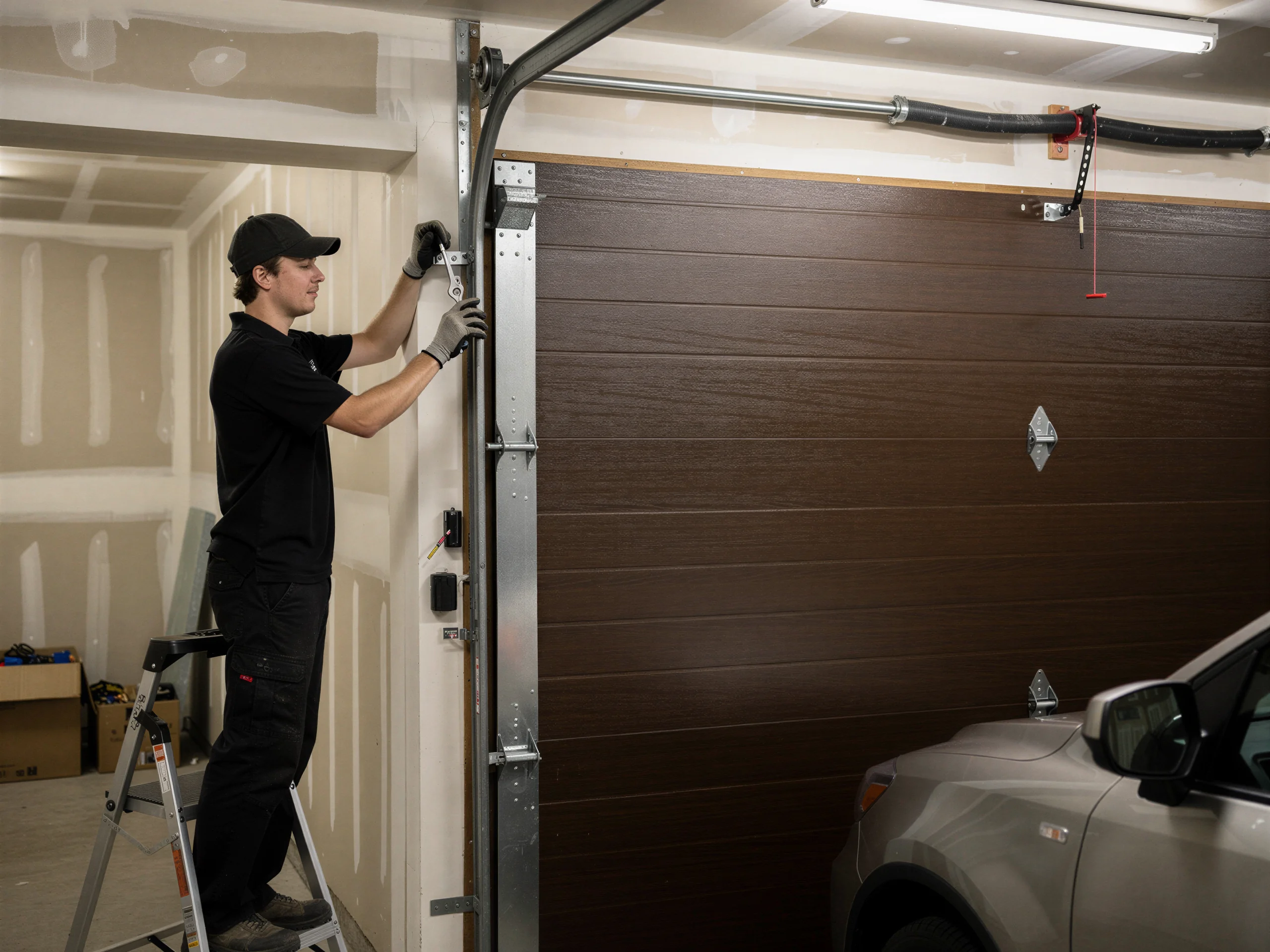
Straightening a bowed track
If the track on that side has bowed from the impact, that gets straightened or swapped too. The harder part is matching. Panel profiles and colors from the 1980s don't line up cleanly with what's stocked today.
Hidden-side panel matching
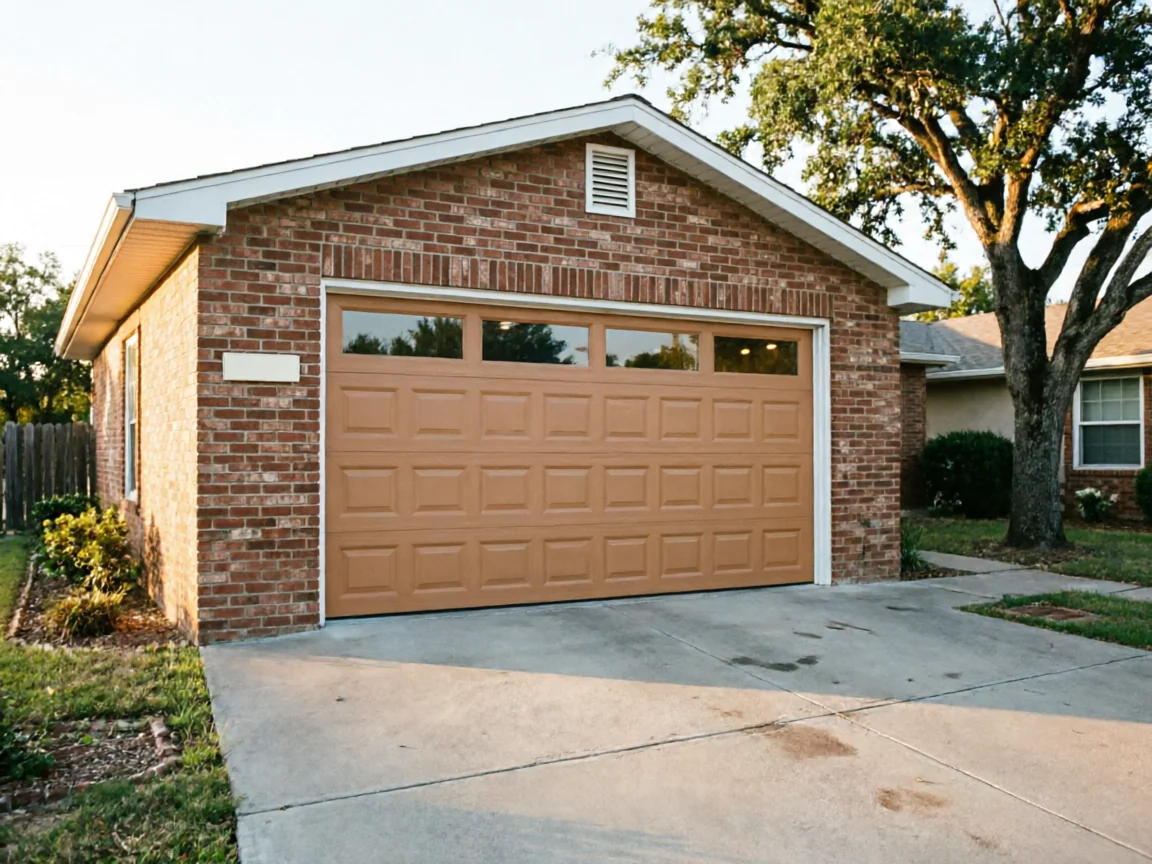
Sometimes we can source a close match for the back or side of the door where it won't be the first thing you see pulling into the driveway.
Honest full-door verdict
Sometimes the mismatch is obvious enough that the honest answer is a full door replacement instead of a patch that looks patched. We'll tell you which situation you're in before we order anything - guessing wrong on a panel order wastes your money and our trip.
How Long It Takes
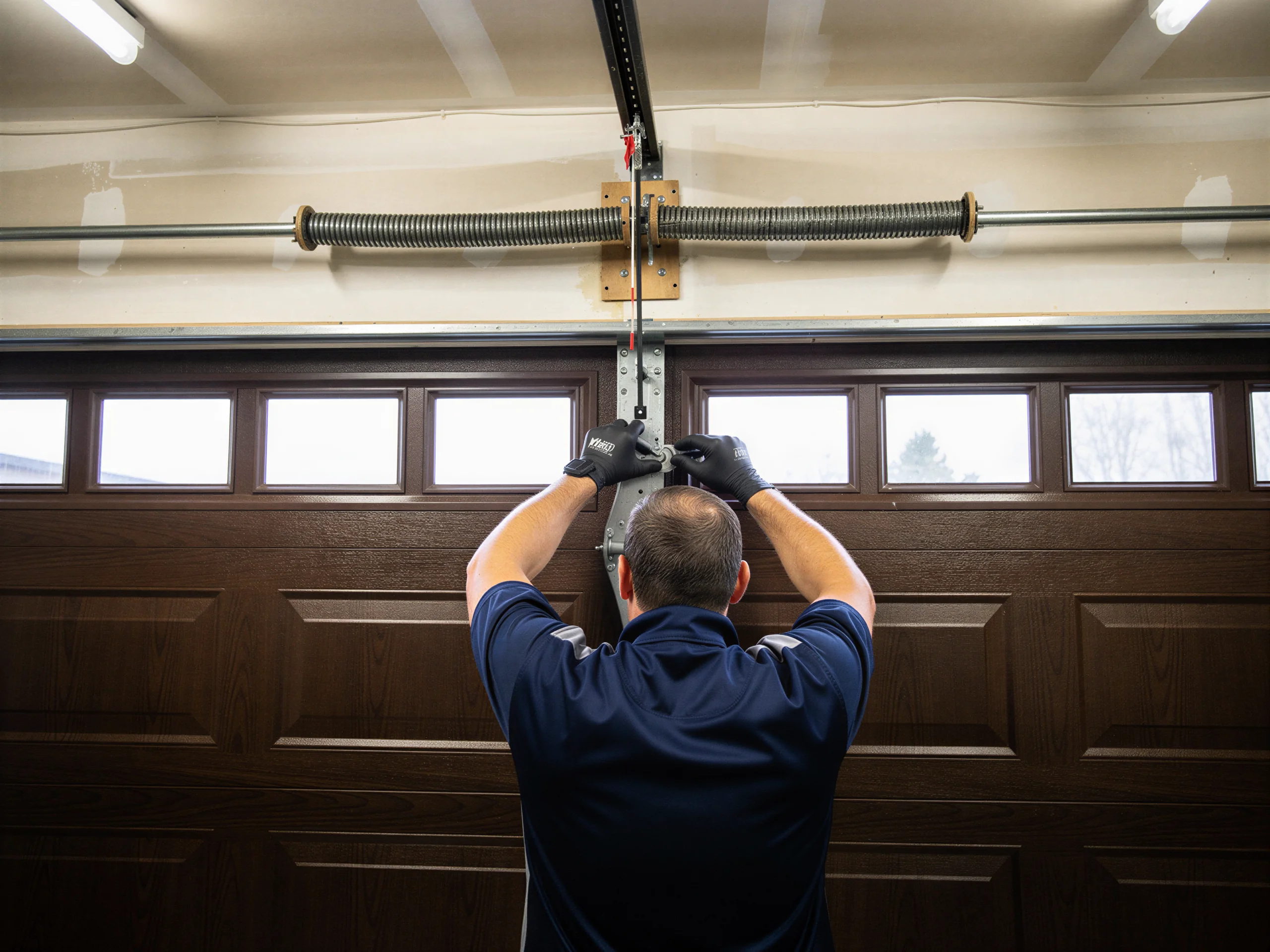
Once we've confirmed the panel style and it's in stock, the physical swap - pulling the damaged section, fitting the new one, resetting hinges and rollers, balancing the door - is a same-visit job.
Sourcing matching panels
What takes longer is the sourcing. A panel that matches a door built in 1984 isn't sitting on a shelf the way a panel for a 2015 door is.
Specialty supplier lead time
If it has to come from a specialty supplier instead of standard stock, that adds days before we're back out to install it, not hours. We travel the 4 miles from our League City shop for the install itself, so the drive isn't what adds time.
Track spacing and hinge fit
It's whether the exact panel exists anymore in a form that fits your door's track spacing and hinge pattern. We'll know that after we look at the door in person, not before.
The Cost of This Job
Dickinson's median household income sits at $82,018, noticeably below the $94,643 median across our wider service area, and that shapes the calls we get here: most owners want the single damaged panel fixed, not the whole door replaced, because a full door costs more than most budgets want to spend on a repair that started as one dent.
We don't have a published price list for panel work here, because the number swings on whether your panel is a standard stock item or a specialty match for a 1984 build. What we can tell you honestly is that a panel-only repair almost always costs less than a full door swap, and if the hinges and rollers around the damaged section need replacing too, that adds to the bill but keeps you well under new-door pricing. If the mismatch in color or profile turns out too obvious to live with, we'll say so before you pay for a patch you won't like looking at.
Talk to a local pro
Garage door service in League City?
Same-day service with honest, upfront quotes.