How Long It Takes
We don't run a branch in Bacliff - the truck comes from League City, about 7 miles up the road, so we're not going to promise you a window we can't back up with a local crew sitting idle nearby.
Single-cable repair time
What we can tell you is what the job itself takes once the truck is in your driveway: a single snapped cable on a standard double door is usually a same-visit fix, because it's a part we carry, not a part we have to source.
Both cables or drums
If both cables have gone, or the drums are chewed up from running on one cable for a while, that adds time. The honest answer is that the drive is the variable, not the repair.
Mostly 1990-era houses
Most of the houses in this part of the service area went up around 1990, which means a fairly consistent generation of door and hardware - that consistency is actually what lets us estimate the job length with any confidence before we've even seen it. A house built in 1960 or one built in 2015 could have almost anything behind the panel. A 1990 build usually doesn't surprise us.
The Symptom
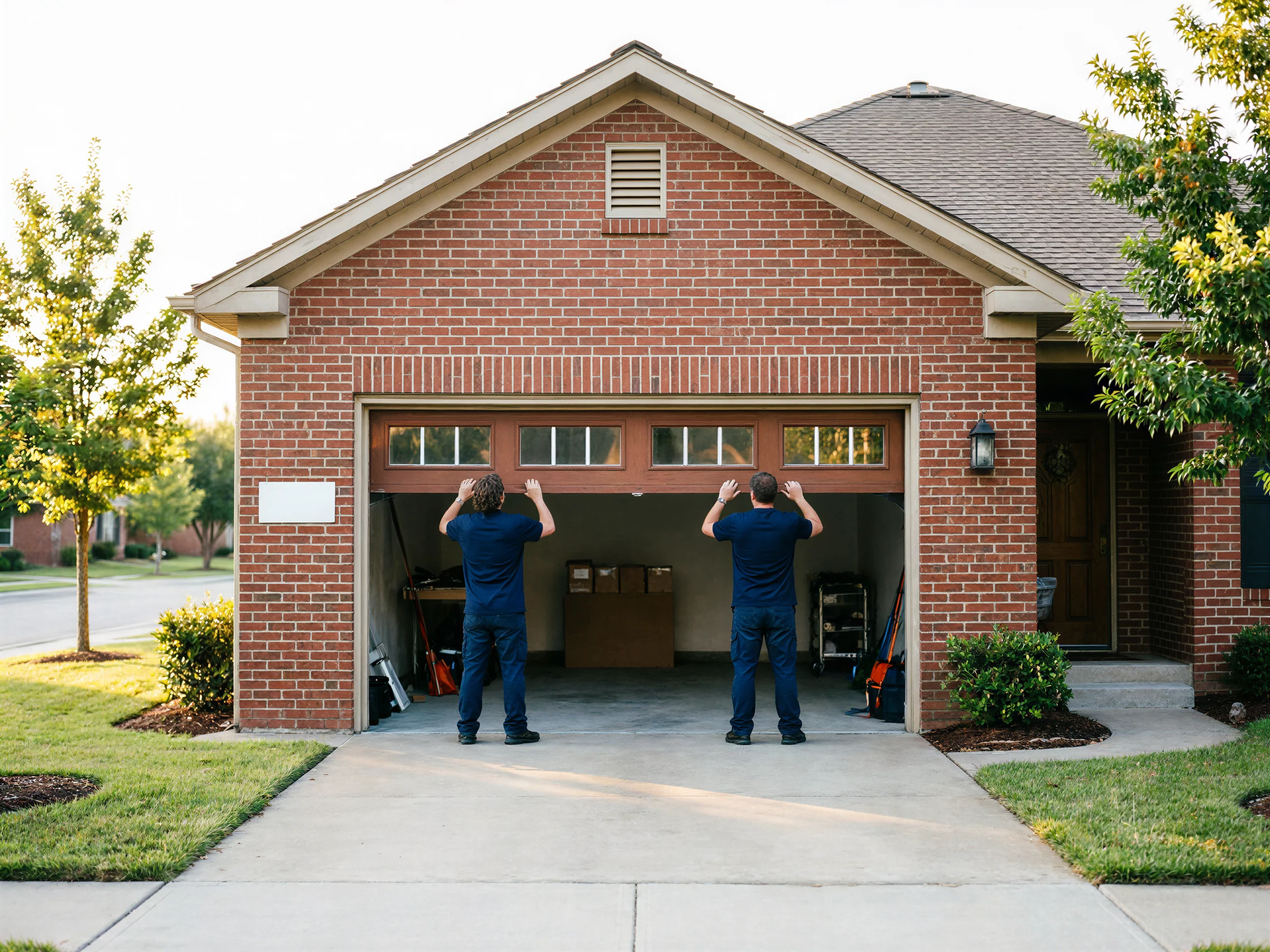
The door that drops hard on one side, or won't lift past a foot before the opener strains and stops - that's a cable off the drum or snapped outright, not a motor problem.
Slack cable, frayed ends
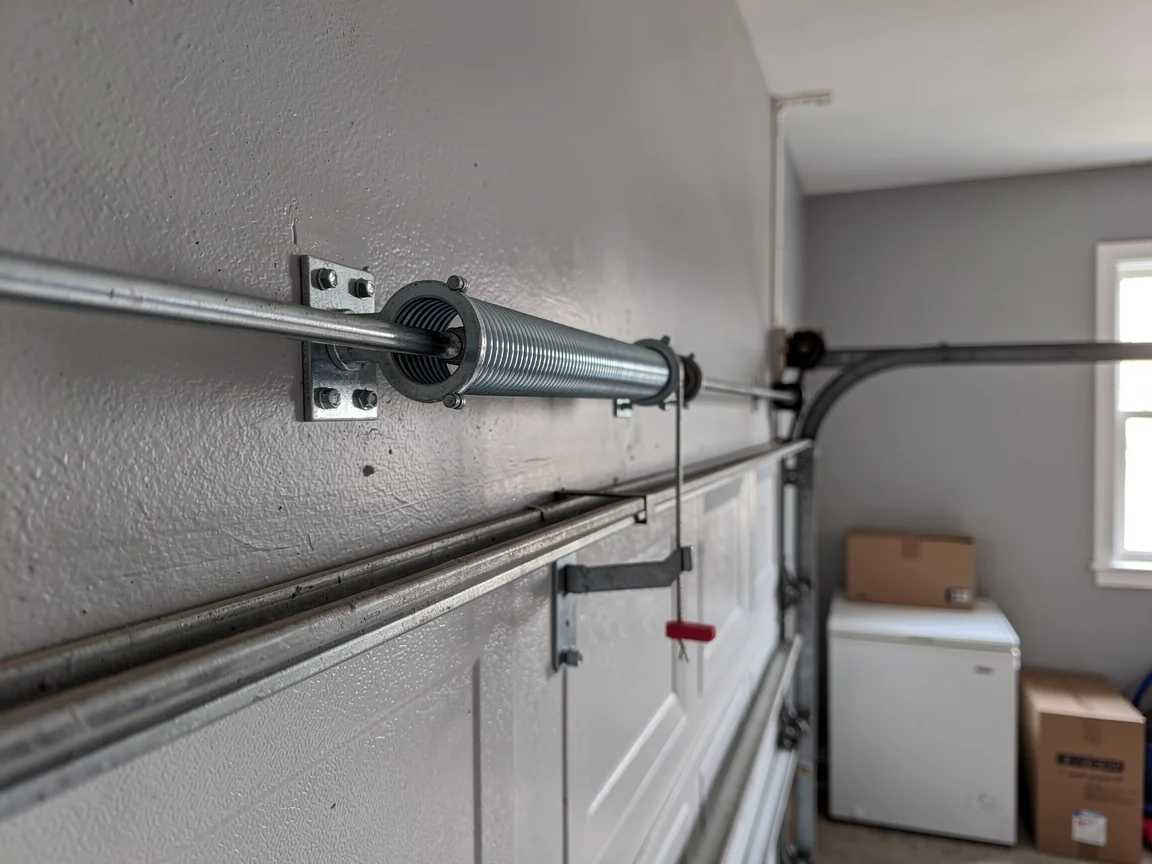
You'll often see the loose cable hanging slack at the bottom bracket, sometimes frayed into little wire hairs near the drum end before it finally let go. If only one cable has failed, the door usually hangs crooked, cocked up on the good side and dropped on the bad one.
Snap-and-thud sound
Some owners hear it before they see it - a snap, then a thud as the door drops the last few inches onto the track stops. If that's what happened, stop opening and closing it.
Single-cable load damage
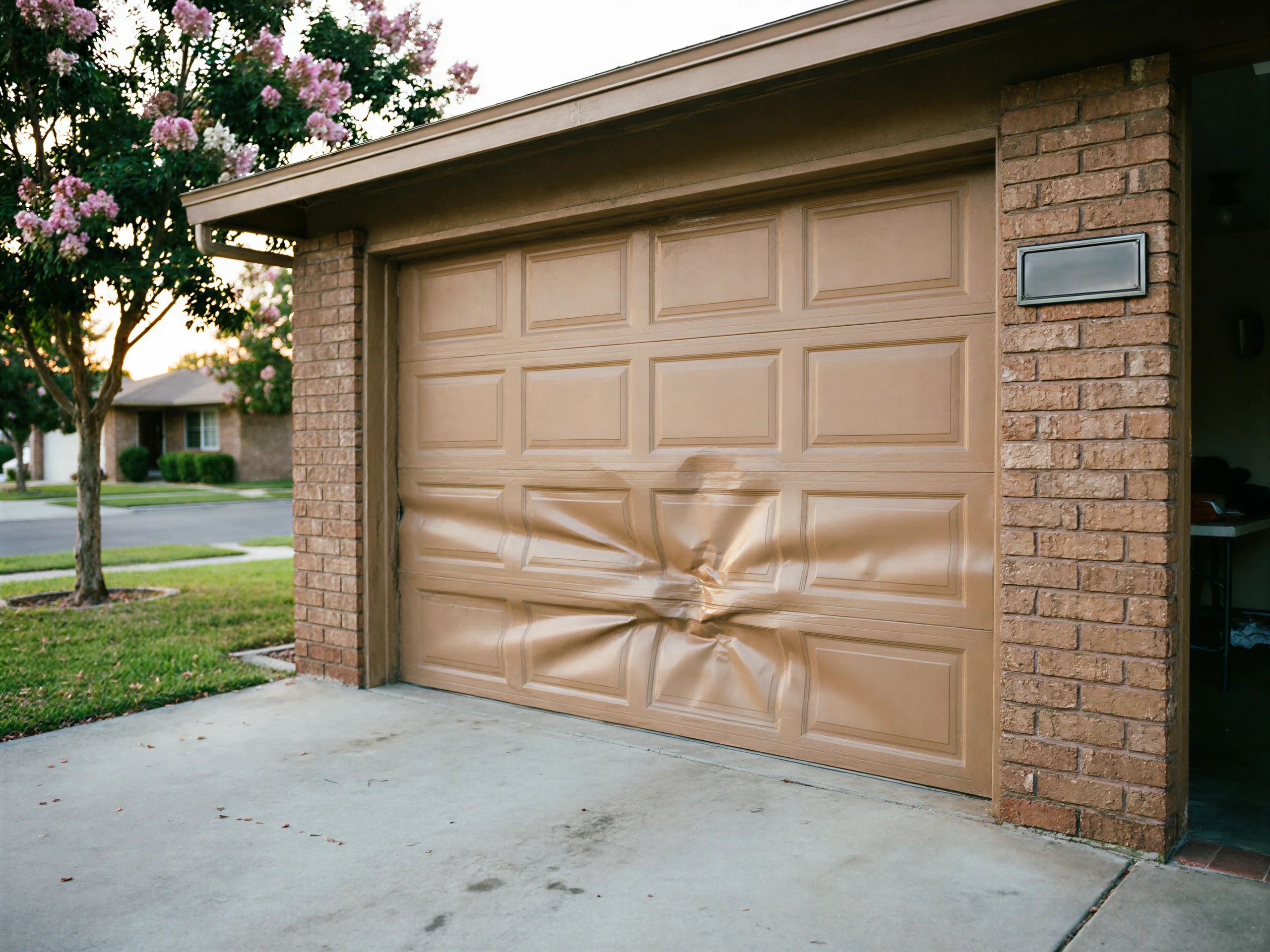
A door running on one cable puts the full load on a single track and spring, and that's how you turn a cable repair into a bent track or a cracked panel repair instead.
What Causes It Around Here
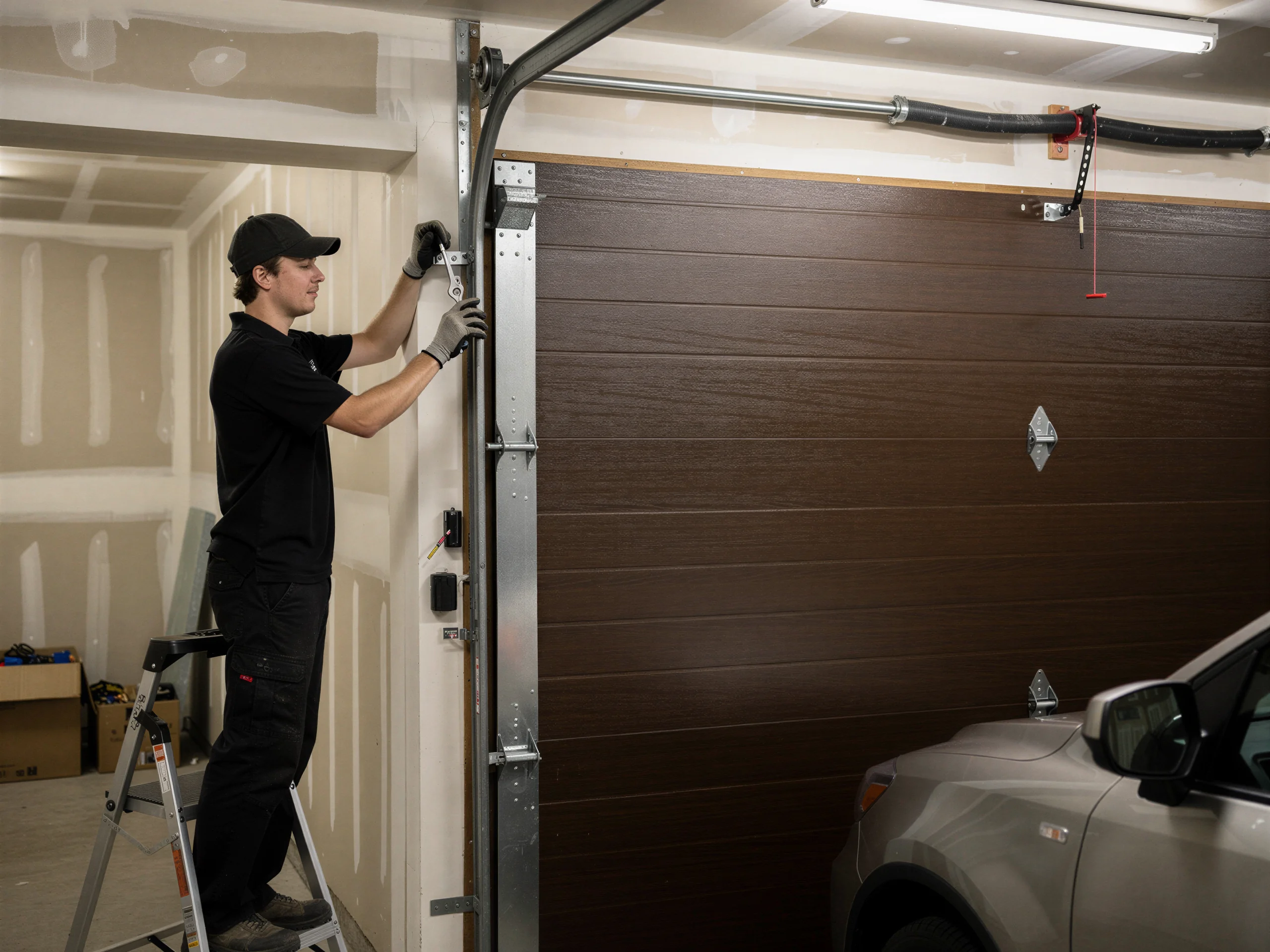
The doors on these 1990-ish Bacliff houses are standard steel sectional, usually a 16x7 double over the main bay, hung on galvanized aircraft cable running to a drum at each end of the torsion shaft.
Wire strand flexing
That's a durable setup, but cable is a wear part regardless of the house around it - thirty-plus years of daily cycles puts a lot of strand-flex on wire that was only ever rated for so many trips.
No true cold winter
This part of the coast sits in a mild band with occasional freezes rather than a true cold winter, which sounds like it should be easy on hardware - and mostly it is.
Cold-morning cable stress
But a cable already thinned by corrosion or fraying is more likely to let go on the handful of cold mornings a year when the steel contracts slightly and the tension on that wire spikes for the first lift of the day. It's not the daily weather doing the damage, it's that occasional cold snap finding the weak point.
What Is on the Truck
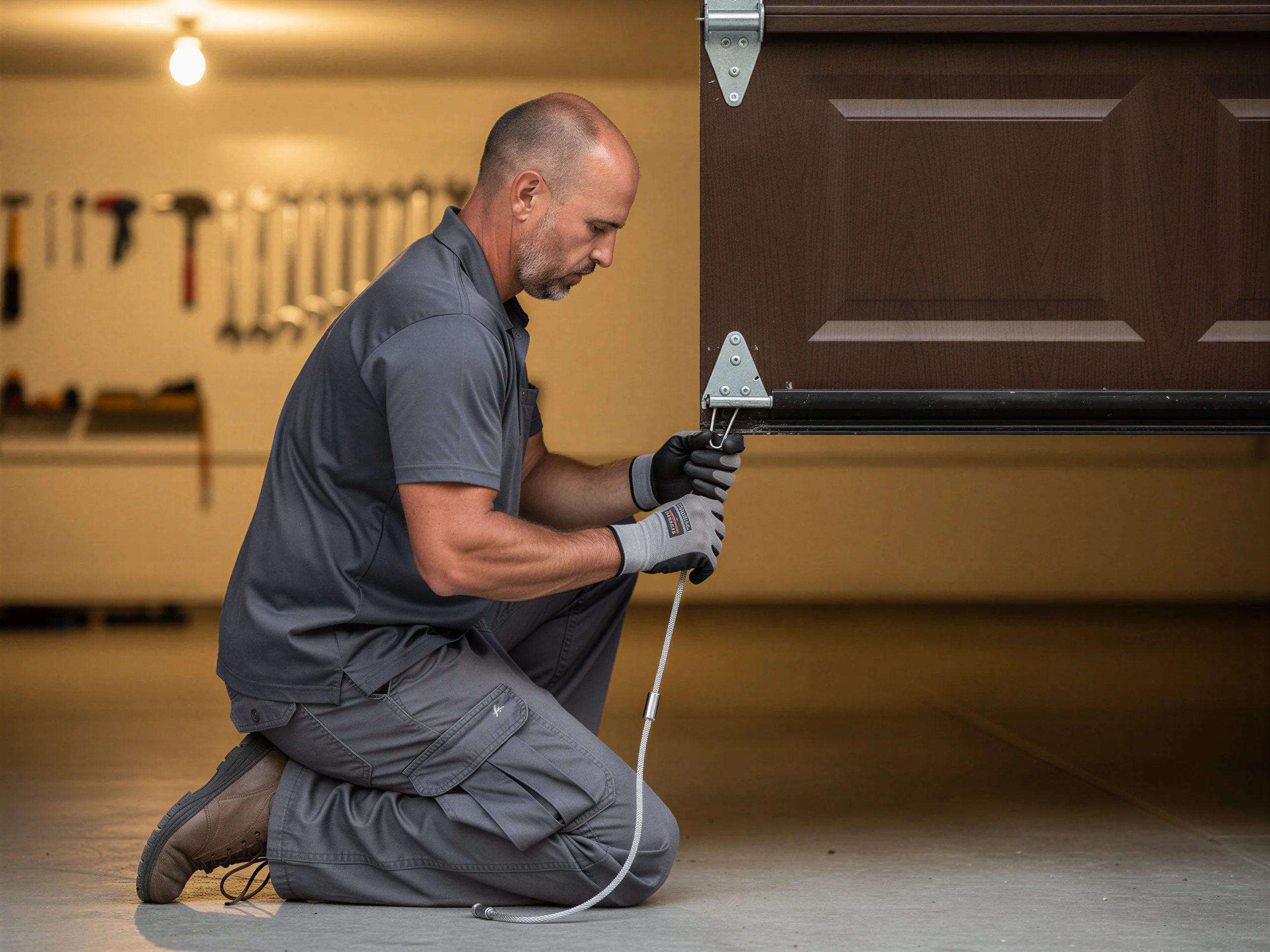
We carry galvanized aircraft cable in the diameters that match the drum and door-weight combinations common to the standard sectional doors built through the 1980s and 90s, along with replacement drums for the cases where the old drum has grooved unevenly and chewed through more than one cable. We also stock bottom brackets, since a cable rarely fails without taking some wear on the bracket it was anchored to.
What we don't carry is every spec for every custom or oversized door - if you've got something wider or heavier than a standard residential double, or a carriage-style door with non-standard hardware, that may mean a return trip once we've confirmed the part. We'd rather tell you that up front than guess on the truck and have you wait twice.
The DIY Question
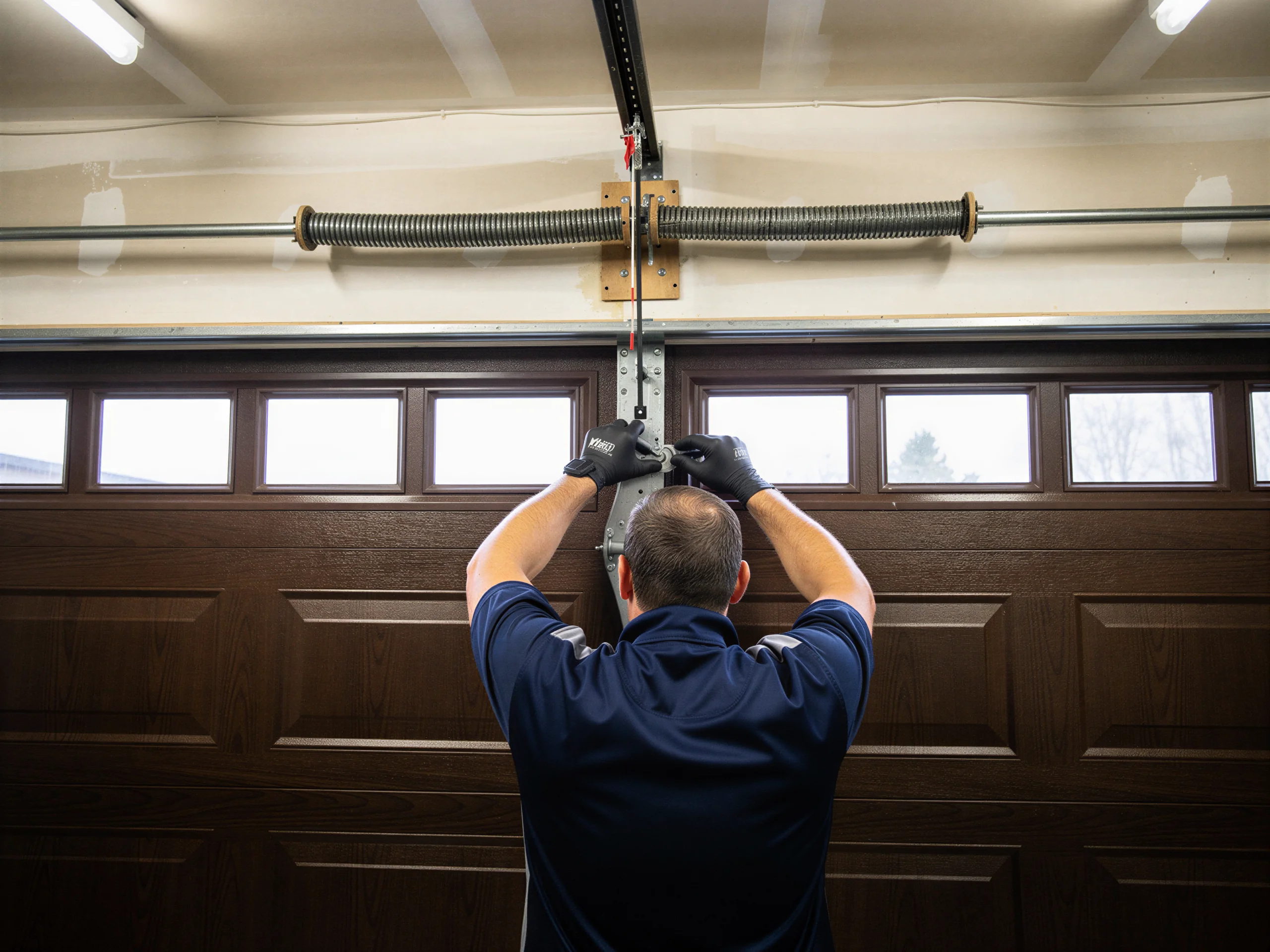
Don't do this one yourself. A garage door cable is under real tension from the spring system the moment the door is closed, and disconnecting or replacing it without releasing that tension properly is how people lose fingers or get hit by a bracket under load. This isn't a job where a mistake just means doing it over.
If you're handy and want to do something useful before we get there, it's fine to visually check whether one side is slack while the other is taut - that tells us which cable failed before we even open the door - and to make sure nobody uses the opener in the meantime. Past that, leave the spring side alone. A cable job is quick for someone who does torsion hardware regularly; it's not a Saturday project.
Talk to a local pro
Garage door service in League City?
Same-day service with honest, upfront quotes.